About Astragalus danicus Retz.
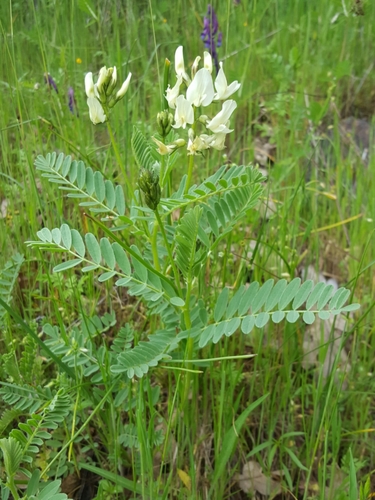
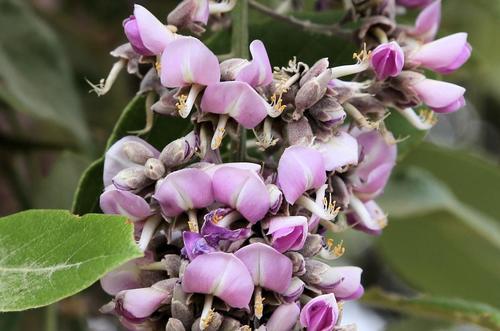
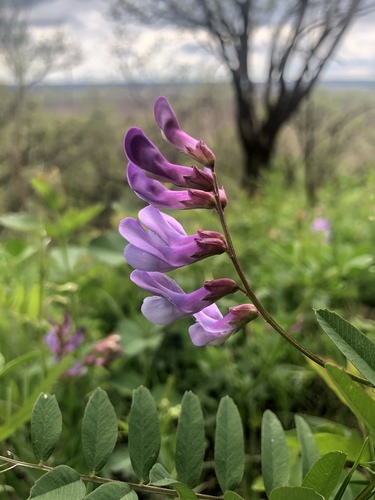
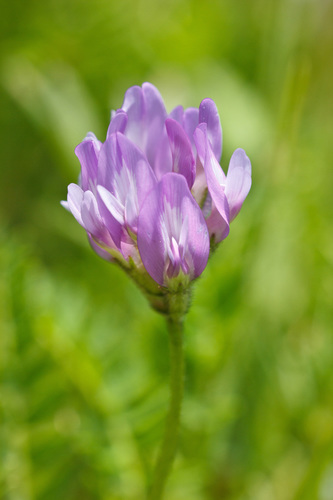
Astragalus danicus Retz. is a perennial herb that reaches around 30 cm (12 inches) in height. It produces pinnate compound leaves 3–7 cm long, which hold 13–27 hairy leaflets each 5 to 12 mm long. Its flowers are most commonly blue to purple, rarely white, measure 15–18 mm (0.6–0.7 in) long, and are clustered into short, compact racemes that appear similar to a single composite flower. After flowering, it forms dark brown fruit pods 7–9 mm (0.3–0.4 in) long that are covered in white hairs. There is some evidence that its seeds can persist in the soil seed bank, but the species has very poor seed dispersal, with seeds generally moving no more than 50 cm from the parent plant.
This species ranges across Europe, extending from Ireland and subarctic Russia southward to the Alps and central Ukraine. It grows in short, unimproved, dry grassland, most often over limestone or chalk substrate. It can also grow on sand dunes, sandstone sea cliffs, machair, and over mica-schist, and is rarely found on woodland rides and firing ranges. It grows at altitudes up to only 710 m. It cannot compete with taller plants, and this inability is thought to be the main reason it does not grow in habitats with acidic or fertilised soils.
In terms of ecology, the flowers of Astragalus danicus produce nectar and are visited by many insect species; the species is considered to be primarily pollinated by bees. In the UK, the grasslands where this species occurs are predominantly Festuca, Bromopsis, and Brachypodium grasslands. The species itself is non-toxic. Its English common name, purple milk-vetch, comes from a historical popular belief that cows fed this plant produced more milk. In herbal medicine, Astragalus danicus has been associated with a number of beneficial medicinal effects, particularly for managing high blood pressure. However, health supplements labelled as 'milk-vetch' often contain extracts from a different Astragalus species. Some other species in the genus Astragalus are known to be toxic to livestock, and are called 'locoweed' in the United States.