About Astragalus amphioxys A.Gray
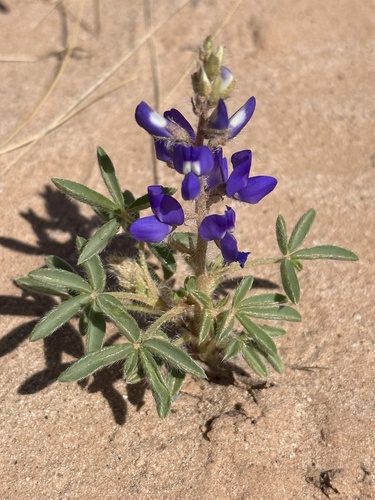
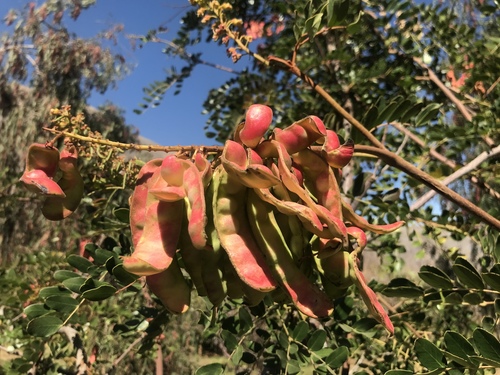
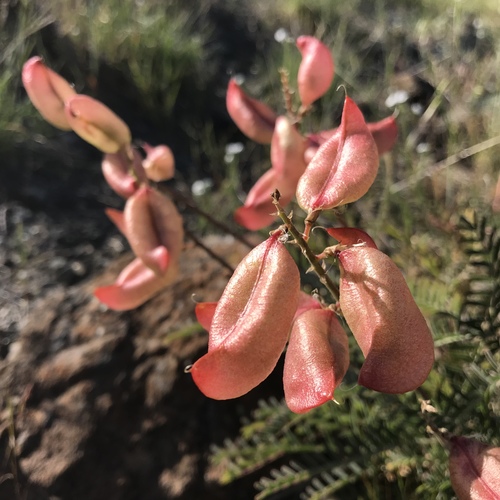
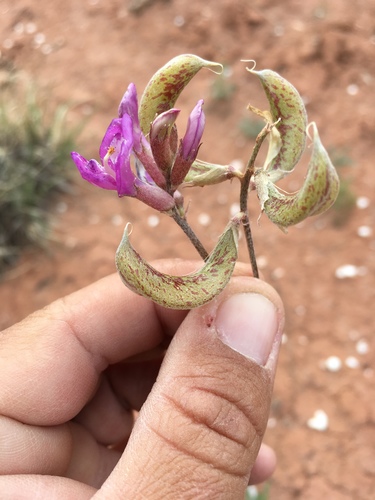
Astragalus amphioxys A.Gray produces flowers that range in color from pink-purple to reddish-purple. These irregular flowers grow in elongated clusters, and the plant blooms between March and June. It rarely flowers during its first year of growth. Its petals are roughly twice as long as its sepals. Its compound leaves range in color from green to silvery-white, with a round or oval shape. Leaves are smooth and arranged alternately along the stem. Both the spineless leaves and stem are covered in hair, with equal amounts of hair on opposing sides. The plant produces fruit in the form of pods. The pods only have one chamber, and their lower seam sits within a groove, a feature that distinguishes this species from similar related species. This plant is most commonly encountered between April and June. There are 4 accepted subspecies of Astragalus amphioxys. Astragalus amphioxys var. amphioxys is native to Nevada, Utah, Arizona, and New Mexico, and is ranked secure in all four states. Astragalus amphioxys var. modestus is native to Nevada, Utah, and Arizona, and is classified as critically endangered. Astragalus amphioxys var. musimonum is native to Nevada and Arizona; it is imperiled in Nevada and critically endangered in Arizona. Astragalus amphioxys var. vespertinus is native to Nevada, Utah, Arizona, Colorado, and New Mexico.
In terms of distribution and habitat, Astragalus amphioxys grows in deserts, arid grasslands, and piñon-juniper areas. It occurs in the Desert Scrub, Interior Chaparral, Semidesert Grasslands, Pinyon Juniper Woodland, and Montane Conifer Forest plant communities, at elevations between 2000 and 7000 feet. Most observations of the species fall within its known general range in the Southwestern United States, though GBIF.org records one observation in Northeastern Alaska. It can be found in Arches National Park, specifically around the visitor center and on the Portal trail outside the park. It has a global conservation rank of G5, meaning it is very secure globally. It is ranked secure in Arizona and Nevada, but ranked very endangered within Texas. All other states with known occurrences do not have a state-level rank for this species.
The Zuni people use this plant medicinally. A medicine man chews the fresh or dried root before sucking out snakebite venom, and a poultice of the root is applied to the wound.