About Astelia nivicola Cockayne ex Cheeseman
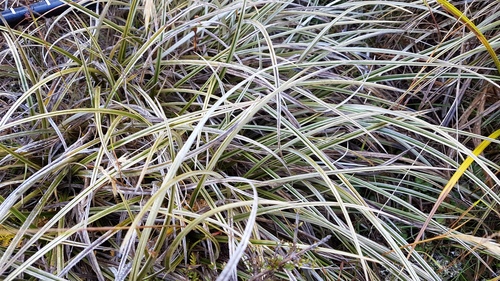
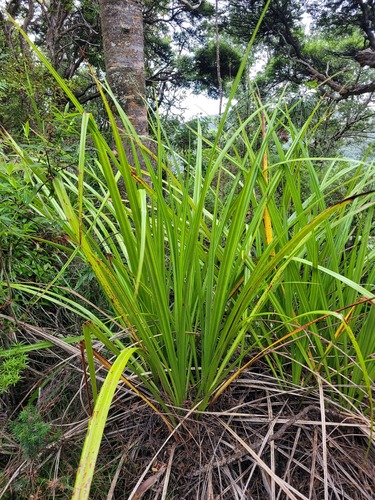
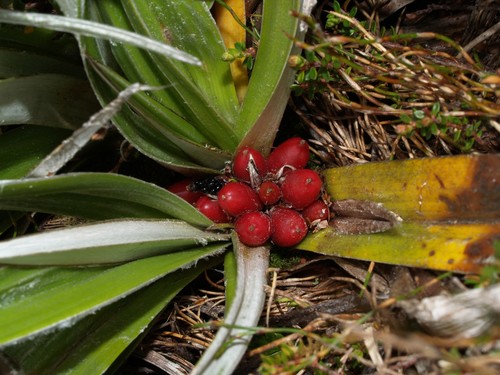
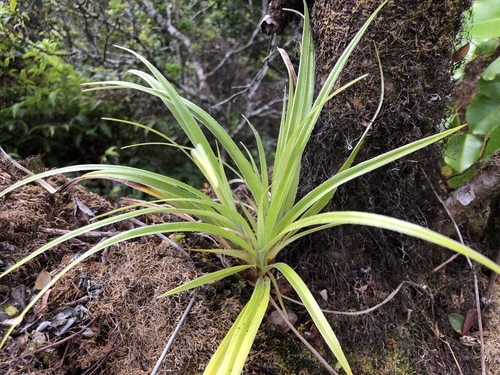
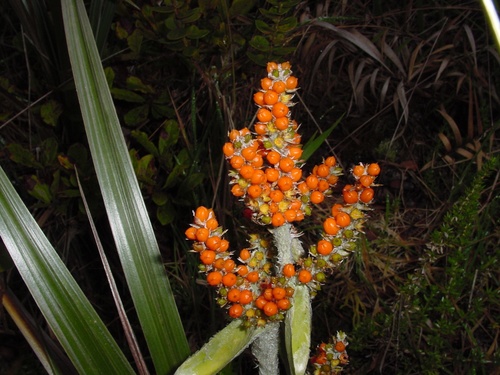
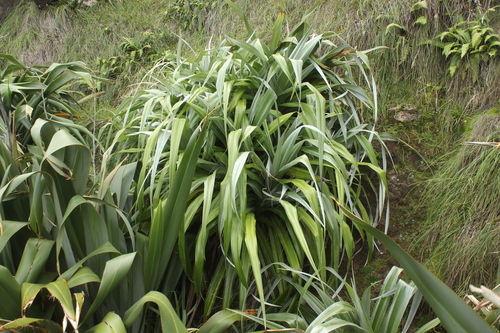
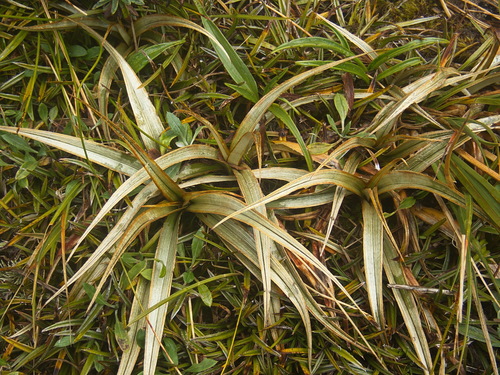
This species was formally described by Cheeseman, with the description published posthumously in 1925. Astelia nivicola is a tufted herb that grows into large extensive patches in moist alpine hollows. Its leaves are 6 to 12 inches long, 1/5 to 1/4 inch wide at the middle, and are leathery but flexible. Leaves gradually taper upwards to an acute apex, are keeled toward the base and clasp the stem, then suddenly expand into a thin, membranous, almost transparent sheath. The upper leaf surface ranges from pale bronzy-green to glaucous-green, and is covered by a membranous pellicle or is more or less covered in silky tomentum. The lower leaf surface is covered in thin, shaggy or villous whitish tomentum. Leaf veins are variable in number, usually around 6 on each side of the rather slender midrib; the midrib is sunken on the upper leaf surface but prominent on the lower surface. Flowers have not been observed for this species. Only one specimen with a fruiting panicle has been found; this structure is very short, measuring 3/4 inch long and roughly 3/4 inch wide, and is nearly sessile among the bases of the uppermost leaves. It has few, short, densely compacted branches. Berries are reportedly ovoid-globose, 1/4 to 1/3 inch long, reddish-orange, and are sunken into the persistent base of the perianth. Astelia nivicola is native to the South Island of New Zealand.