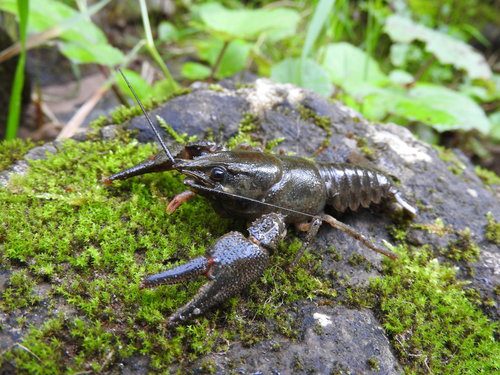
About Astacus astacus (Linnaeus, 1758)
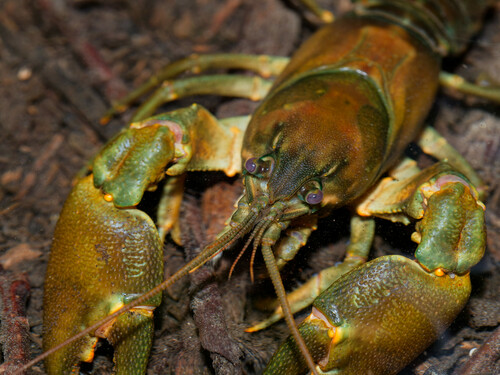
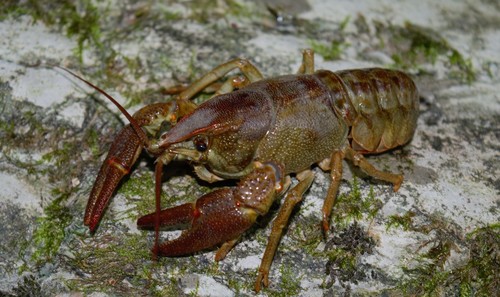
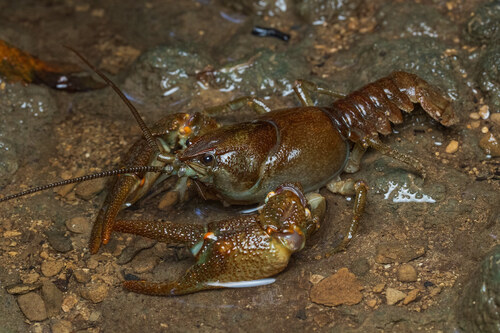
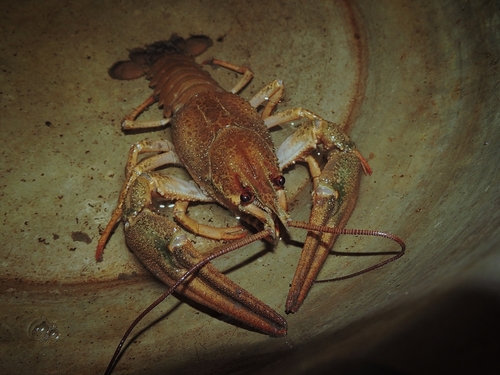
Astacus astacus, commonly called the European crayfish, noble crayfish, or broad-fingered crayfish, is the most widespread crayfish species in Europe, and has been used as a traditional food source. Like other true crayfish, A. astacus lives exclusively in freshwater, and only occupies unpolluted streams, rivers, and lakes. Its range extends from France, through Central Europe, to the Balkan Peninsula, north to Scandinavia and Finland, and east into Eastern Europe. Mature males can reach a maximum length of 16 cm (6 inches), while mature females grow up to 12 cm (5 inches).
European crayfish feed on worms, aquatic insects, molluscs, and plants. They are nocturnal, and spend daytime resting inside burrows. They prefer habitats that offer large amounts of shelter. They typically inhabit soft-bottomed waters that contain some sand, and are not usually found in muddy water.
A. astacus reaches sexual maturity after three to four years and a sequence of moults, and breeds during October and November. Females carry fertilised eggs attached to their pleopods until the following May, when the eggs hatch and the young disperse. The main predators of both juvenile and adult A. astacus are European mink, eels, perch, pike, Eurasian otters, and muskrats. Cannibalism also presents an additional risk of predation.
A. astacus is sensitive to drops in water oxygen levels, which makes it especially vulnerable to eutrophication. However, it can tolerate lower calcium levels than most other crayfish species. A. astacus is considered a keystone species in the ecosystems it occupies. As part of the freshwater food web, crayfish are important because they act as a food source for many aquatic species, and increase primary productivity by foraging on freshwater plants. The disappearance of crayfish from a freshwater environment is known to lead to excess macrophyte growth, which can contribute to eutrophication and overall decline in water quality.