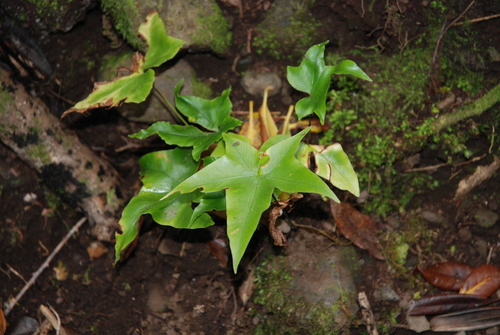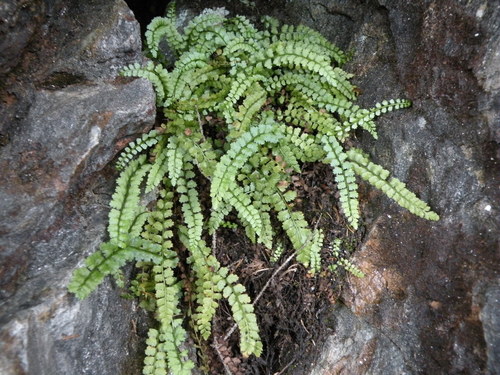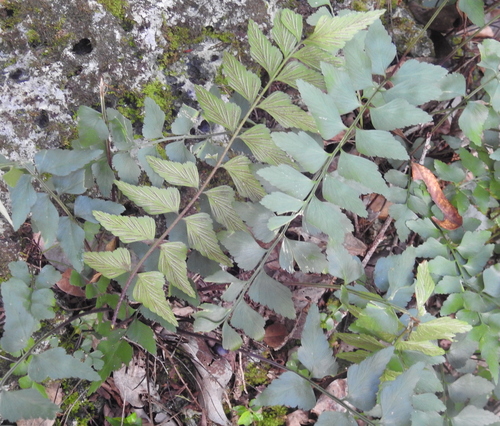
About Asplenium falcatum Lam.
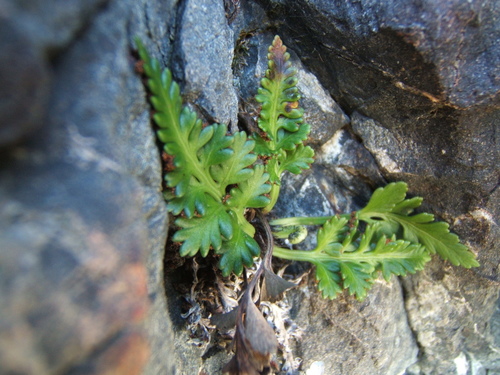
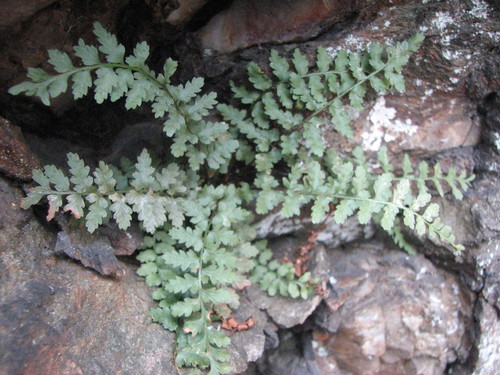
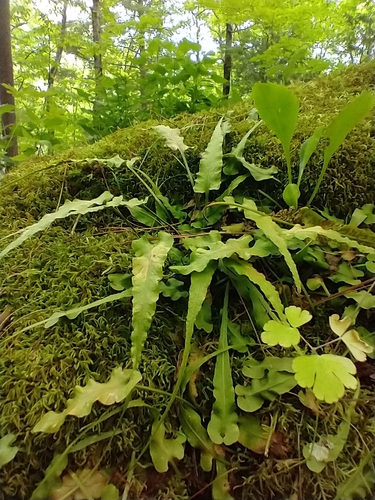
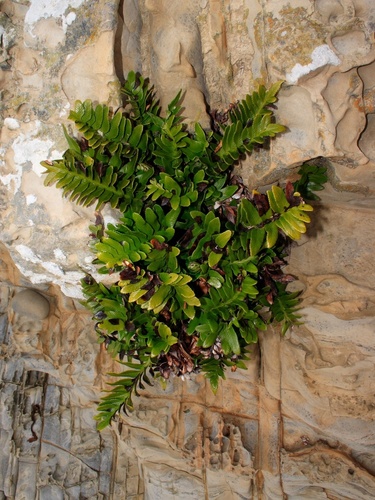
Asplenium dielfalcatum is characterized by its narrow, leathery fronds that have a distinctive falcate, or sickle-shaped, tip; this trait gives the species its name. The fronds are typically between 10 and 30 cm long. Like other members of the Asplenium genus, this fern reproduces via spores located on the undersides of its fronds, following the genus's typical reproductive pattern. Its rhizomes are short and creeping, which enable the fern to cling tightly to steep rock surfaces and form loose clusters of plants. The leathery texture of its fronds helps the plant conserve moisture in the high-humidity, low-light environments of cloud forests. This fern often grows on steep slopes, cliff faces, or in moist crevices, clinging to rock surfaces in shaded, high-humidity environments. This fern is endemic to the island of Oʻahu and has an extremely limited distribution. It is found in wet montane forest ecosystems with consistent cloud cover and high moisture levels. These habitats are increasingly fragmented and degraded due to land development, invasive plants such as strawberry guava, and the rooting behavior of feral pigs. While there is limited documentation of traditional uses specifically for A. dielfalcatum, ferns more broadly have played a role in Hawaiian culture, where they are used ornamentally and medicinally. Conservation of this species is part of larger efforts to preserve native Hawaiian biodiversity and forest ecosystems.