About Asplenium ceterach L.
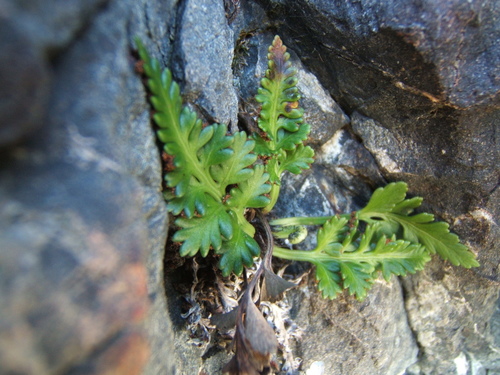
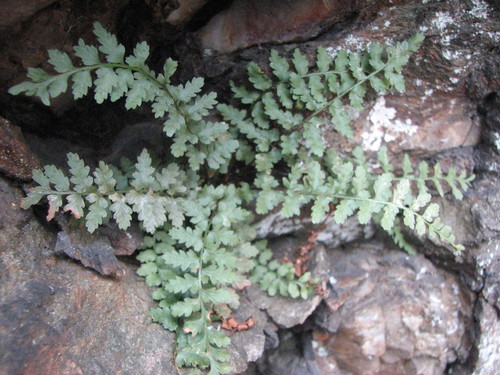
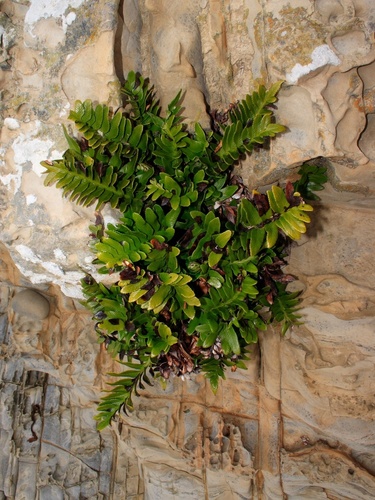
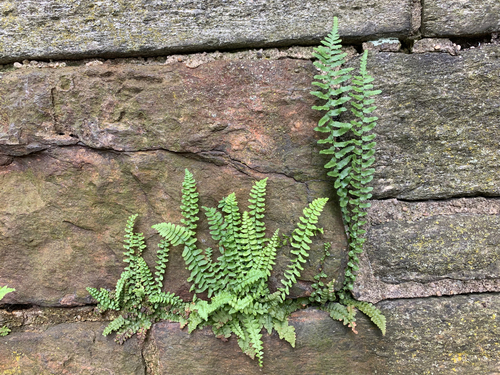
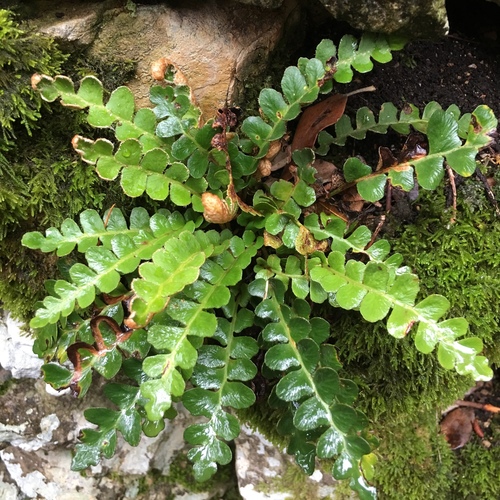
Asplenium ceterach L. is a perennial evergreen fern species. It is compact in size, with robust, intricately divided fronds that grow up to 20 cm (7.9 in) long. A dense layer of pale reddish-brown scales covers the undersides of these fronds, which is the origin of its common name. During summer, its leaves roll up to expose only the scaly undersides.
Asplenium ceterach has a broad distribution across Western and Central Europe, where it occurs in Albania, Austria, Belgium, Bulgaria, Crimea, Croatia, Cyprus, France, Germany, Great Britain, Greece, Hungary, Ireland, Italy, Kazakhstan, Malta, Netherlands, Portugal, Romania, Spain, Sweden, and Switzerland. It is also native to the European island territories of the Baleares, Corsica, Crete, Sardinia, and the Scilly Isles. It can additionally be found in the North Caucasus region and European Turkey, and is considered locally extinct in Poland. In Asia, the species grows in Afghanistan, China, Iran, Iraq, Lebanon, Syria, Pakistan, Israel, Tajikistan, Turkey, and Uzbekistan. Its range extends across the Transcaucasus region along the West Himalayas, where it also occurs in Tibet. In Africa, Asplenium ceterach is found in several North African countries: Algeria, Djibouti, Libya, Morocco, and Tunisia. It also grows on the Canary Islands, off the coast of North Africa.
This fern grows in fissures on carbonate rocks, and also colonizes the mortar of stone and brick walls. It can be found at elevations up to 2,700 m (8,900 ft) above sea level. It prefers mountainous habitats, where it typically grows on rocky walls and slopes in full sun. Unlike many other fern species, Asplenium ceterach tolerates full sun and requires little to no humidity.
Asplenium ceterach has a history of use as a traditional medicinal herb, and has historically been used to treat a wide range of human health conditions. Extracts of the species have been used as a mucoactive agent, diuretic, and laxative. It has also been used to treat kidney stones, spleen disorders, haemorrhoids, intestinal disorders, respiratory disorders, and hypertension. Laboratory tests of Asplenium ceterach extracts show they have anticancer properties: they exert a selective inhibitory effect against cervical cancer cells, and have low cytotoxicity to healthy non-cancerous human cells.