About Aspleniaceae
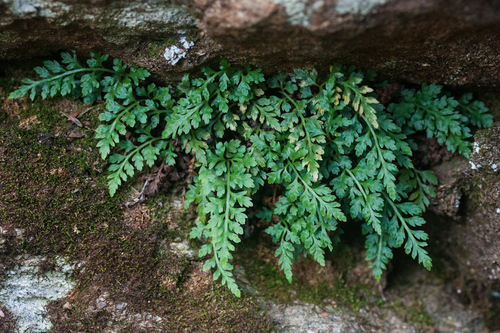
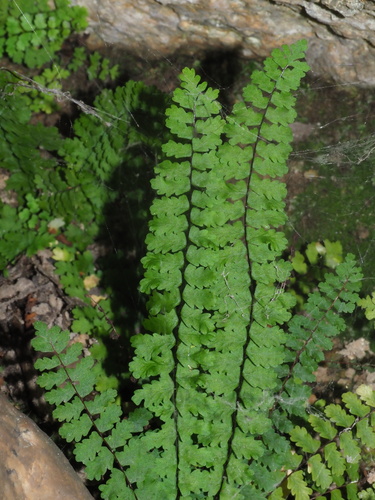
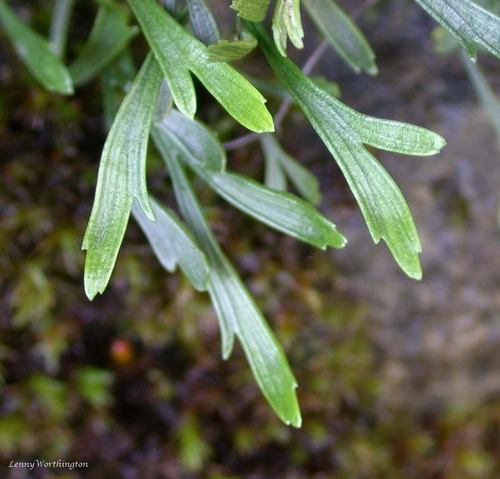
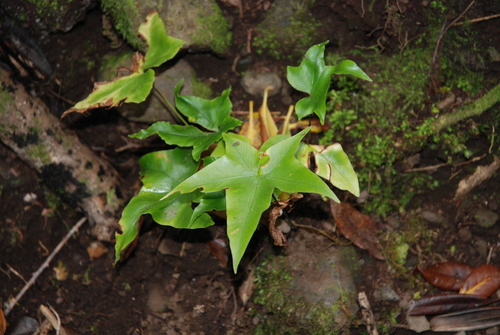
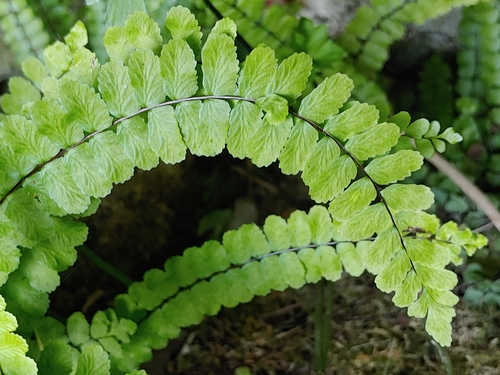
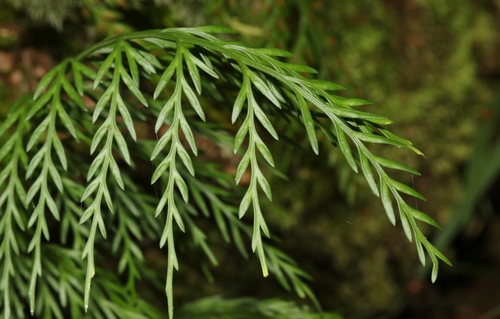
All species in the Aspleniaceae fern family grow from rhizomes. These rhizomes are either creeping or somewhat erect, usually but not always unbranched, and their scales typically have a lattice-like clathrate structure. In some species, such as Asplenium nidus, the rhizomes form a basket-like structure that collects detritus. Their leaves can be undivided or divided, with division reaching up to four-fold pinnation. Elongated sori are a defining characteristic of this family. Most sori are positioned on one side of a vein. More rarely, two sori may form on a single vein, but they never curve over the vein. A flap-like indusium grows along one edge of each sorus. The leaf stalks, called petioles, contain two vascular bundles that unite to form an X-shape in cross-section near the leaf tip. The middle of sporangia stalks are one cell wide. Aspleniaceae has a worldwide distribution. The large genus Asplenium is native to nearly all regions globally, except for Antarctica and some high Arctic areas. This family is unusual in that it has high diversity in both temperate and tropical regions, and has roughly equal numbers of terrestrial and epiphytic species. Members can be terrestrial (growing in soil), lithophytic (growing on rocks), or epiphytic (growing on other plants). Less commonly, Aspleniaceae species are aquatic, growing in moving water.