About Asparagus racemosus Willd.
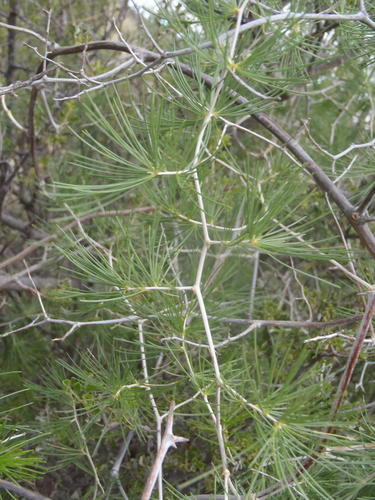
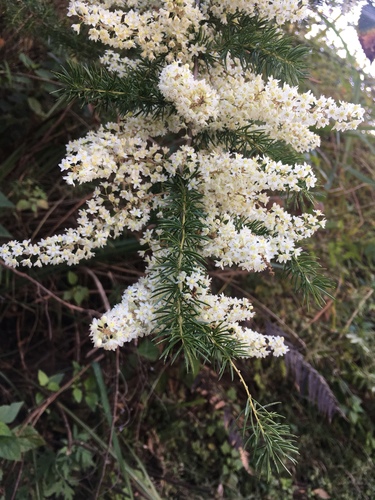
Asparagus racemosus Willd., commonly called shatavari, is a climbing plant with stems that can grow up to 4 meters long. It has a mix of fibrous and tuberous roots; its adventitious root system produces roughly dozens of tuberous roots per plant, each about one meter long and tapering at both ends. Its photosynthetic branches, called phylloclades, are small, uniform, shiny green, and resemble pine needles. In July, it produces tiny white flowers on short, spiky stems, and by September it develops globular, blackish-purple berries. While shatavari is used in Indian traditional medicine, there is no high-quality clinical evidence to support it as a safe or effective treatment for any health condition. Research into its effects on lactation has found no significant benefits, and its overall safety has not been thoroughly studied; only two small trials have detected no adverse effects in mothers or their infants. In the Moyle River area of Australia's Northern Territory, Aboriginal people (specifically the Ngan'gi people, who call the plant yerrwuwu) boil its roots to make a liquid that is used as an external wash to treat colds and other sicknesses.