About Asparagus aethiopicus L.
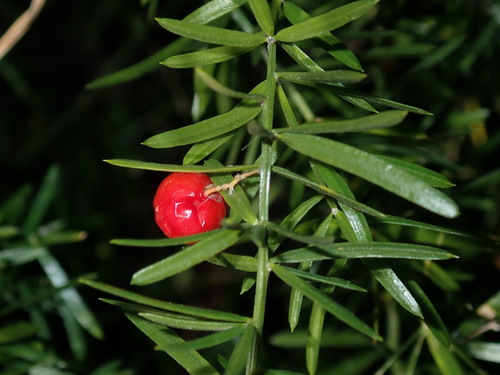
Asparagus aethiopicus L. was originally formally described by Carl Linnaeus in 1767. Its common name 'Sprenger's Asparagus' honors Carl Ludwig Sprenger, who popularized the species as an ornamental plant in Europe. This plant is a branching perennial herb, with tough green aerial stems that have sparse spines. What appear to be oval-shaped leaves are actually leaf-like cladodes; these structures measure 0.8–2 cm long and 0.1–0.2 cm wide, and grow in groups of four or more from the stem. Small white or pinkish-white flowers, each 0.3–0.5 cm long, grow in clusters off the stem and bloom in spring. After flowering, small round berries 0.5 cm in diameter develop in summer; each berry holds a single black seed 3 mm in diameter. Berries start out green, and mature to red in winter. Its root system forms a mat of fibrous roots with bulbous water storage tubers, growing from a toughened 'crown' at the base of the foliage. The crown, including any of its fragments left in the ground, can resprout. Asparagus aethiopicus is native to southern South Africa, where it occurs mainly in the Western Cape, Eastern Cape, and the Northern Provinces. Its natural habitat is rocky shale slopes and coastal scrub in relatively dry areas. Outside its native range, it has been classified as a weed in Hawaii and Florida in the United States, and in New Zealand. It has also become established around major urban areas in Australia including Sydney, Wollongong, the Central Coast, Southeastern Queensland, and Adelaide, as well as on Lord Howe Island and Norfolk Island. The plant's seeds are spread by fruit-eating birds and improper disposal of garden waste; the pied currawong is a specific seed vector in Sydney. The species can be eradicated by using situation-appropriate herbicides, or through manual removal of the woody crown located at the junction of leaves and roots. Non-reproductive water storage tubers can be left safely in the ground to decompose. Asparagus aethiopicus is grown as an indoor plant in cooler climates, and as an ornamental garden plant in urban gardens, rockeries, and containers. Two cultivars are commonly grown in cultivation: 'Sprengeri' is a scrambling form with sparser foliage, while 'Meyeri' has more erect stems that grow up to 70 cm (28 in) tall and has denser foliage. Eating the berries of Asparagus aethiopicus can cause gastrointestinal symptoms including diarrhea, vomiting, and abdominal pain. Skin contact with the plant may cause dermatitis, and the plant is toxic to domestic cats and dogs.