About Asimina parviflora (Michx.) Dunal
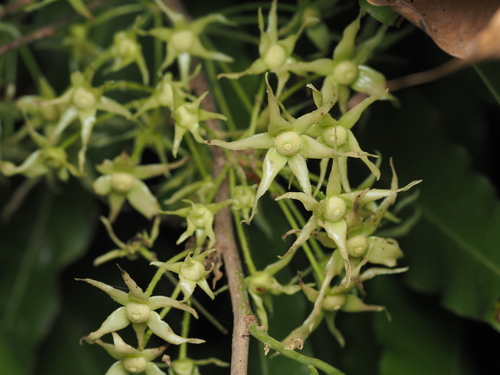
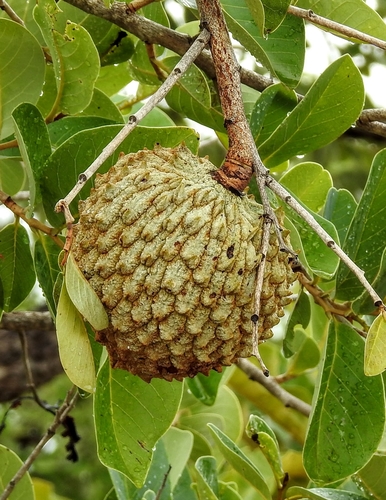
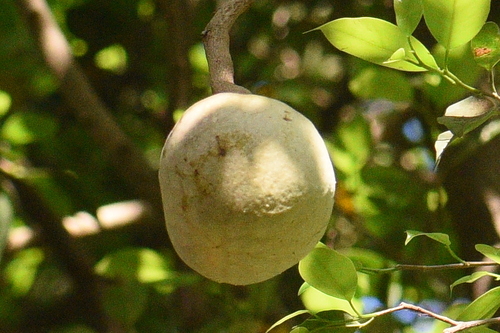
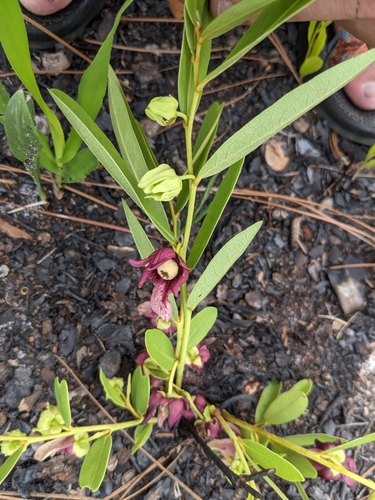
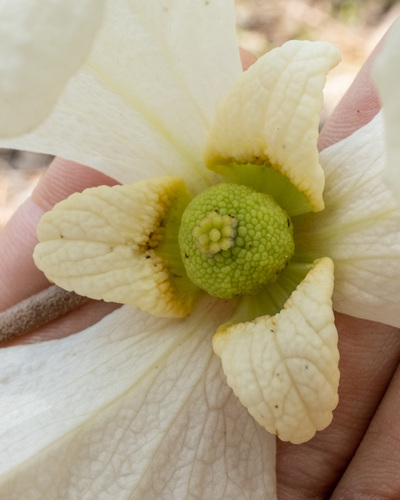
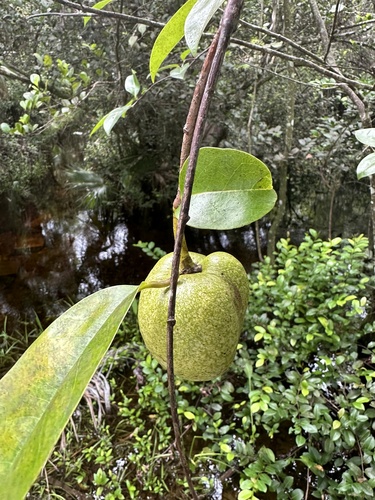
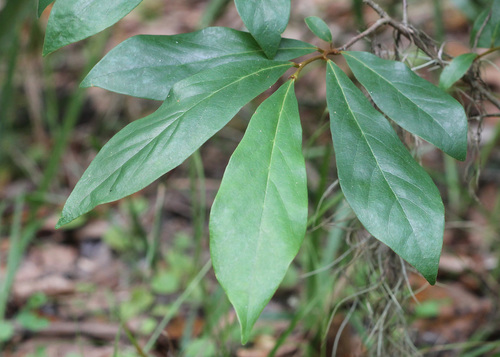
Asimina parviflora, commonly called small-flower pawpaw, grows as a shrub rather than a tree. Most individuals reach 1 to 3 feet in height, with only a few growing taller. Its leaves are dark green, smooth in texture, alternately arranged, simple, and shaped from oblanceolate to oblong or obovate. Leaves can grow up to 8 inches long. This species produces maroon fleshy flowers in spring. Flowers start as brown buds, swell into green immature flowers, and turn burgundy or brown when fully mature. Most flowers are smaller than 2 centimeters across, and plants can bear flowers from February to May, with some individuals observed flowering in June. Its pollen is released as permanent tetrads. It produces edible fruit that is smaller than the fruit of its relative Asimina triloba, the common pawpaw. Small-flower pawpaw is native to the Southeastern United States, occurring from Texas to Virginia. It grows most often in sandy areas, alluvial areas, and dry woods, and is most commonly found in habitats with loamy or moist sands including woodland slopes, floodplains, and hardwood forests. The edible fruit can be eaten raw or used in baking. Powdered seeds from the fruit are used medicinally to induce vomiting and as a remedy for head lice, and fruit juice has been used as a treatment for intestinal worms.