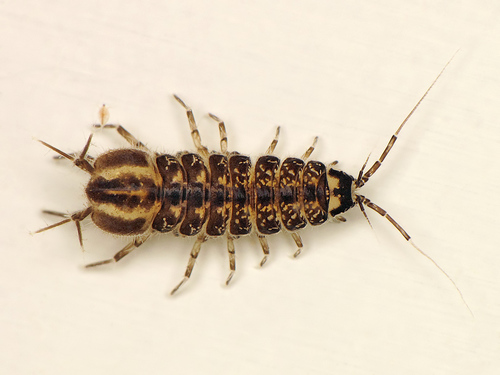
About Asellus aquaticus (Linnaeus, 1758)
Asellus aquaticus (Linnaeus, 1758) is a freshwater crustacean that looks similar to a woodlouse. It has several common names: pond slater, water louse, aquatic sowbug, water hoglouse, and cress bug. In ecology, this species is common across the temperate zone, including Europe and Russia. It lives in rivers, streams, and standing water, especially in areas with abundant stones that it uses for hiding. It does not occur in strongly acidic water. It is a detritivore, and it is relatively tolerant of many different pollutants, so it has been used as an indicator of water quality. For its life cycle and reproduction, Asellus aquaticus can breed year-round when temperatures are high enough, and it does not breed in cold temperatures. It can reach maturity in just a few months under warm summer temperatures, but in permanently cold water bodies such as high-latitude or mountain waters, maturation can take up to two years. Its life span varies in the same pattern: it lives 9 months in South Africa, and up to 20 months in Northern Europe. Females carry their eggs in brood pouches located underneath their body.

