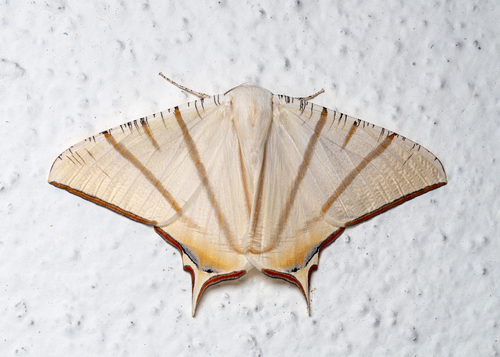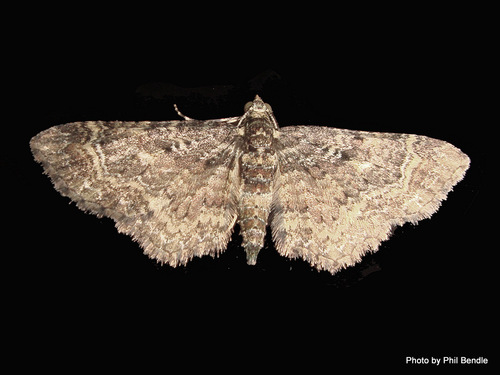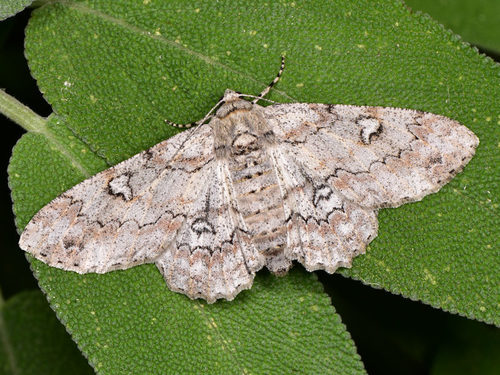
About Ascotis selenaria (Denis & Schiffermüller), 1775
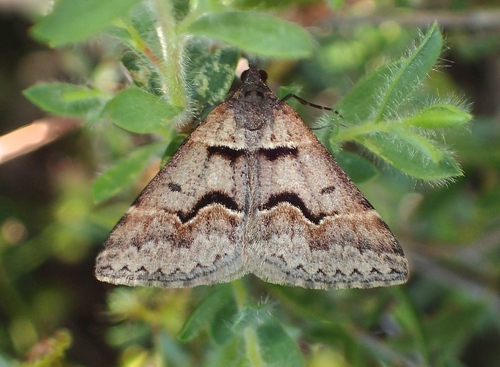
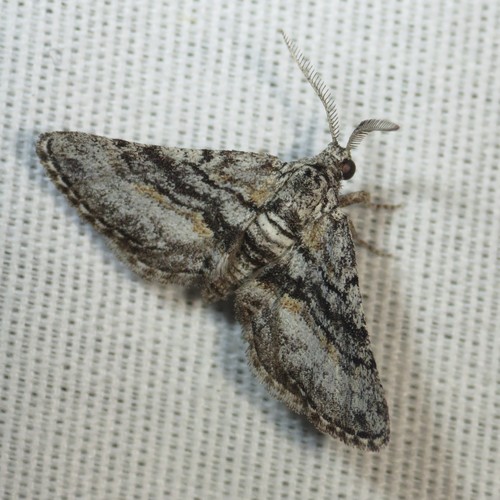
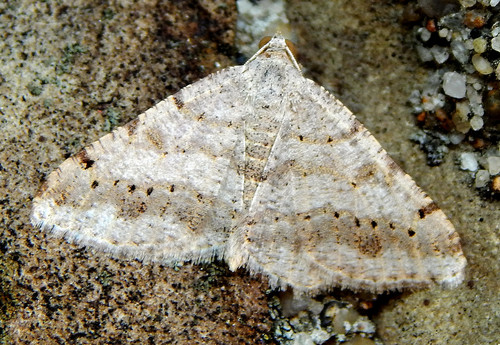
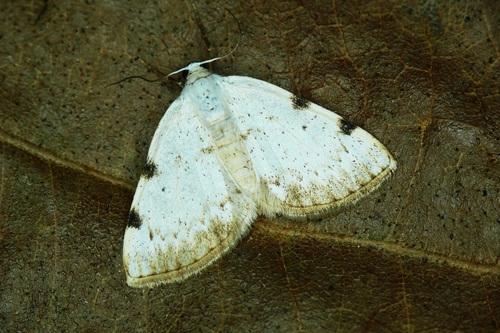
Ascotis selenaria, the giant looper, has an adult wingspan of 38–48 mm. Its forewings have a yellowish-white base color, marked with numerous dark grey patches and two sharp, toothed brownish transverse lines. Both the forewings and hindwings have distinct moon-shaped spots. Caterpillar color and pattern varies, ranging from green to yellow-green or brown, with a twig-like appearance. Caterpillars have a characteristic bulbous swelling on the thorax, and move in a looping motion, which is typical for measuring worms. Fully grown caterpillars can reach a maximum length of 55 millimeters. In southern Europe, this species has two generations per year, with adults flying from April to May, and again from July to August. Caterpillars of the first generation occur from September to October, and caterpillars of the second generation are found in June and July. In more northern regions, the species typically only produces one generation per year, with moths flying from late June to early August, and caterpillars active from August to September. Adult giant looper moths are nocturnal, and are attracted to light. This species overwinters as a pupa in the soil. Caterpillars of Ascotis selenaria are polyphagous, and feed primarily on field wormwood (Artemisia campestris), Sambucus species, roses (Rosa sp.), blackberry (Rubus fruticosus), common broom (Cytisus scoparius), dandelions (Taraxacum sp.), birches (Betula sp.), Arbutus species, Pimpinella species, sweet clovers (Melilotus sp.), spurges (Euphorbia sp.), Mimosa longifolia, Mimosa dealbata, sages (Salvia sp.), and Salix glabra. In India, this moth has been reported as a pest that infests Prosopis juliflora, Delonix regia, and sal (Shorea robusta). A nucleopolyhedrovirus that suppresses Ascotis selenaria populations has been recorded in India. In many regions, Ascotis selenaria is considered an agricultural pest that causes serious damage to crops. This species is distributed across Southern Europe, from Spain and the western Mediterranean through the Balkans, as well as Central Europe and Eastern Europe extending to the Ural mountains. It is also found in Africa, Anatolia from the Caucasus Mountains to the Altai Mountains, Korea, Japan, and India (recorded from Dehra Dun in the north and Coimbatore in the south). It was found once in Öland, Sweden in 2019, and has been recorded a small number of times in Denmark after 2022, mostly on Bornholm. Giant looper moths prefer habitats including rocky slopes, bushy forest edges, and sandy pine forests.