About Asclepias californica Greene
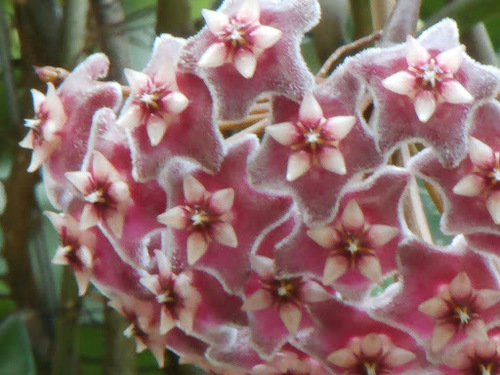
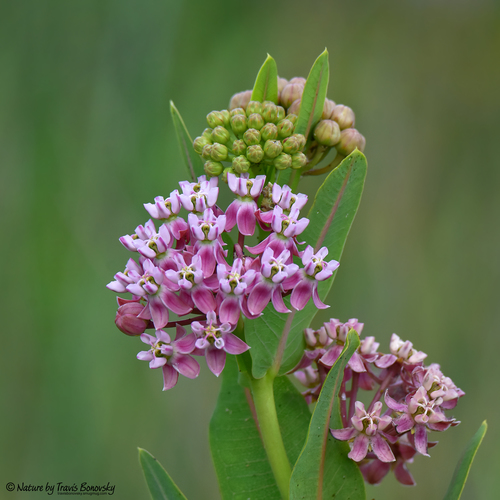
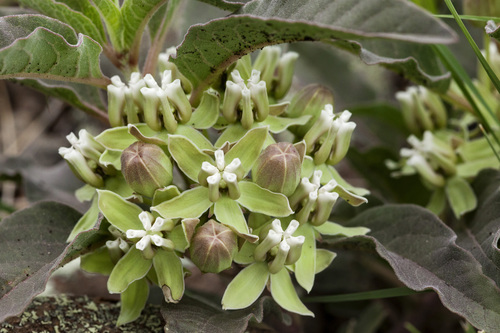
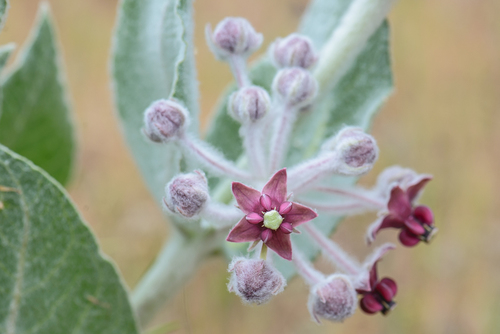
Asclepias californica Greene is a flowering perennial plant native to California and northern Baja California. It has thick, white, woolly stems that either bend or grow along the ground; it can also grow a stout, erect stem that reaches 1 to 3 feet tall. The plant has an overall grey-green color that helps reduce water loss. Its leaves are long, lance-shaped, and have a waxy texture. Its abundant hanging flowers are rounded clusters of pink and purple blooms, each with reflexed corollas and starlike arrangements of bulbous anthers. These clustered flowers attract pollinators. After flowering, the plant produces large, elongated seed pods with silky fibers that allow seeds to disperse via wind. Asclepias californica grows most frequently in dry, sloping areas at elevations ranging from 600 to 7,000 feet (182 to 2,134 meters). This broad elevation range allows it to tolerate varied temperature and precipitation conditions, which supports its broad distribution across California and Baja California. It also thrives in coastal sage scrub and chaparral habitats, both of which are defined by low rainfall and well-drained soils. This plant favors well-drained soils that still retain moderate moisture. Ecologically, Asclepias californica is an important host plant for monarch butterfly caterpillars, and also acts as a habitat plant for monarch chrysalises. When caterpillars ingest cardiac glycosides from this plant, the compounds are retained in the adult butterflies, making the butterflies unpalatable to predators. The plant attracts a wide diversity of pollinators, including bees and other butterfly species. Its flowers are rich in nectar, which serves as a critical food source for many insects, and the plant also provides insect shelter, contributing greatly to overall pollinator health in its native region. Indigenous Kawaiisu tribes of California ate this plant as candy: the milky sap inside its leaves is flavorful and chewy when cooked, but is poisonous when raw.