About Ascarosepion mestus (Gray, 1849)
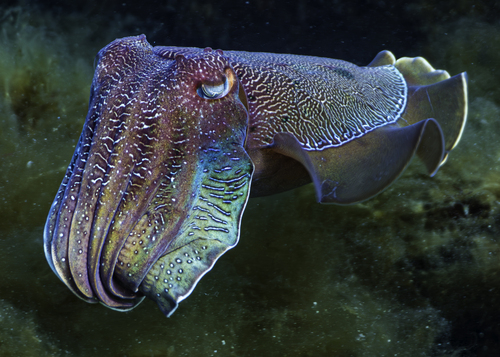
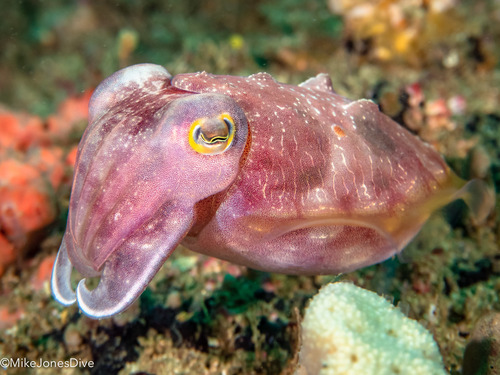
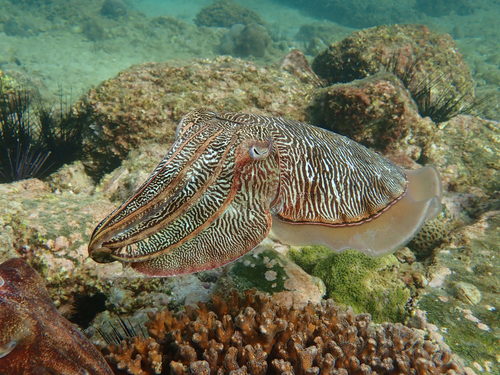
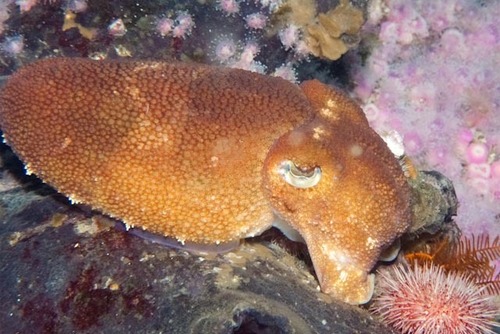
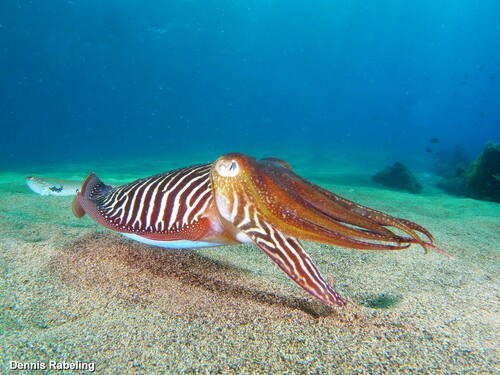
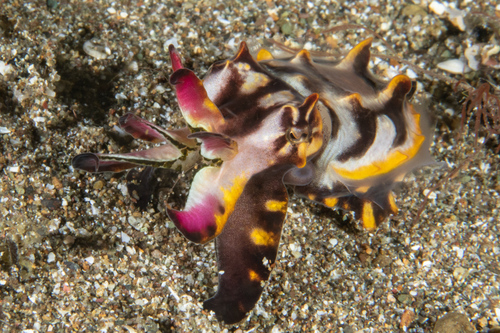
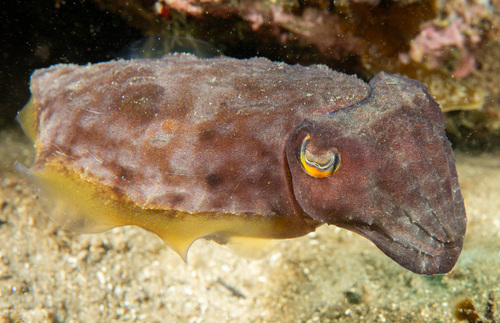
Ascarosepion mestus (first described by Gray in 1849), commonly called the reaper cuttlefish or red cuttlefish, is a species of cuttlefish native to the southwestern Pacific Ocean. Its confirmed native range extends along Australia's east coast, from Escape Reef off Queensland (at 15°47′S 145°47′E) south to Murrays Beach off Jervis Bay, New South Wales (at 35°08′S 150°46′E). The species is endemic to Australia. Earlier reports of this species from China and Vietnam are now confirmed to be misidentifications. This cuttlefish lives at depths between 0 and 22 meters (up to 72 feet), inhabits tropical climates, and typically occupies rocky reefs, where it is most often found under ledges. Ascarosepion mestus shows clear sexual dimorphism in size: females reach a mantle length (ML) of 124 millimeters (4.9 inches), while males do not grow larger than 77 millimeters (3.0 inches) ML. The type specimen of the species was collected off the Australian coast, and it is currently held in the collection of The Natural History Museum in London. In 2023, the genus Ascarosepion was revived; because the genus was formally described using a specimen of this species, Ascarosepion mestus (originally published as Sepia mestus) is the type species of the genus Ascarosepion. Ascarosepion mestus is one of many cuttlefish species found in Australian waters. Documented predators of A. mestus include bluefish, summer flounder, and black seabass. The prey of A. mestus, similar to other cuttlefish, includes multiple species of shrimp, crabs, and young fish. Like almost all cephalopods, Ascarosepion mestus is gonochoric. To attract females for mating, males perform a variety of courtship displays. After successfully attracting a mate, the male inserts his hectocotylus into the female's mantle cavity to fertilize her eggs. The female then lays her eggs close to the mating site. Like all cuttlefish, A. mestus attaches its eggs to surfaces on the sea floor, most often on or under hard substrates such as rock and coral. Both adult males and females typically die shortly after spawning and brooding is complete. After an embryonic development period of around two months, eggs hatch. Newly hatched cuttlefish stay in a planktonic stage for a short time before maturing into adult individuals.