About Ascarosepion apama (Gray, 1849)
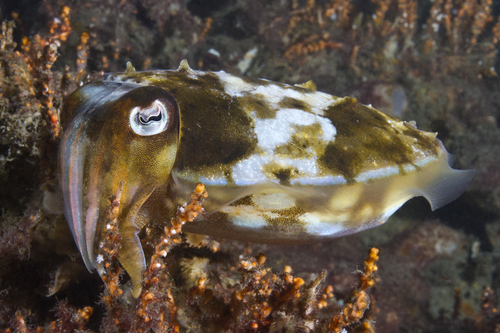
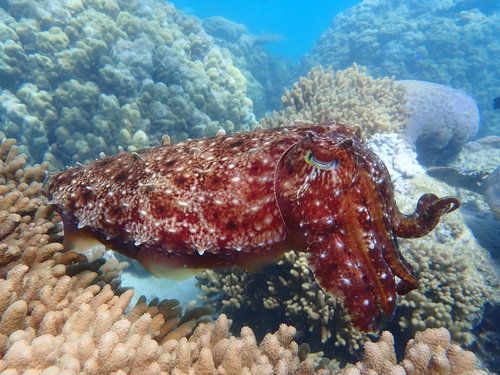
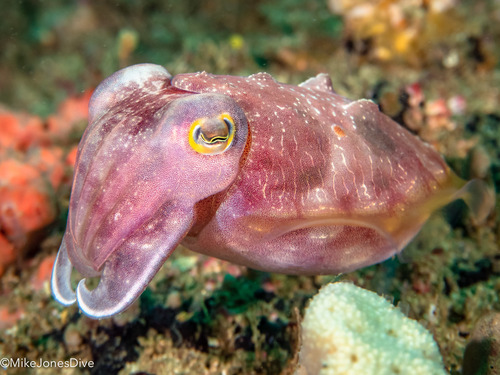
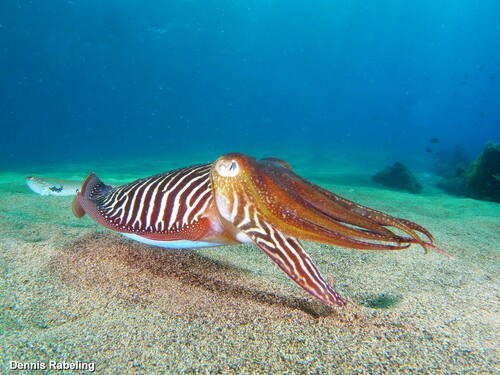
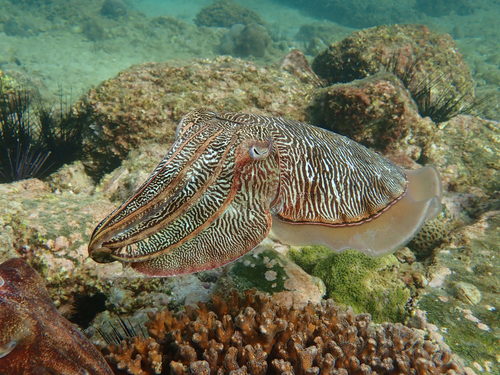
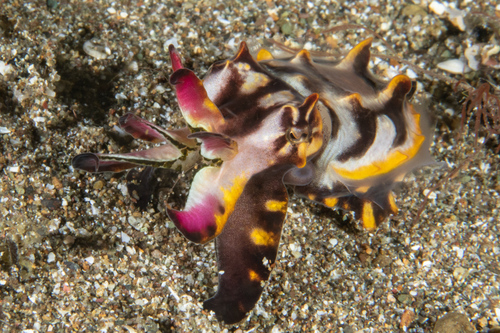
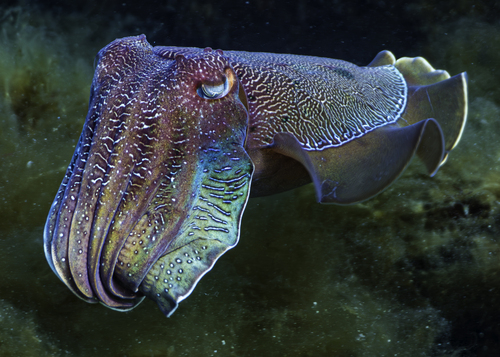
Ascarosepion apama, commonly called the giant cuttlefish or Australian giant cuttlefish, is the world's largest cuttlefish species. It can reach 50 cm (20 in) in mantle length, up to 100 cm (39 in) in total length including outstretched tentacles, and can weigh over 10.5 kg (23 lb). Like all cuttlefish, it has eight arms, two feeding tentacles, blue blood, and three hearts. It uses specialized cells called chromatophores to change color instantly, creating spectacular displays. This species is native to temperate and subtropical Australian waters, ranging from Brisbane in Queensland south to Tasmania, and west to Shark Bay in Western Australia. It lives on rocky reefs, seagrass beds, and sand or mud seafloors at depths up to 100 m (330 ft). The genetically distinct population in Upper Spencer Gulf is the most heavily studied, and has become a popular tourist attraction. Giant cuttlefish have a lifespan of one to two years. Breeding occurs at the start of the southern winter. Males leave their usual camouflaged cryptic colouring, and use rapidly shifting bright colors and striking patterns to attract females. Females are polyandrous, and collaborative research shows they tend to prefer using male genetic material stored in spermatangia over material placed directly in sperm receptacles for reproduction. After mating, females attach their eggs to the undersides of rocks in caves or crevices, where the eggs hatch three to five months later. Ascarosepion apama is semelparous, meaning individuals die shortly after completing a single mating cycle and laying eggs. Compared to most aquatic invertebrates, this species has poor anaerobic capability, and a lack of food triggers catabolism of body tissue. Stomach content analysis confirms that giant cuttlefish fast during the breeding season. Since the species can only catabolize up to 50% of its body weight, individuals gradually lose physical condition through the breeding season and eventually die. Across most of the species' range, giant cuttlefish breed in pairs or small groups, laying eggs in appropriate caves or rock crevices. Loose spawning aggregations may form, but these rarely contain more than 10 individuals. The only known exception occurs in Upper Spencer Gulf, where hundreds of thousands of giant cuttlefish aggregate along rocky reefs between Whyalla and Point Lowly. Surveys show that juvenile cuttlefish leave these spawning grounds after hatching, but no information is currently available about their subsequent movement or juvenile lifestyle strategies. Adult cuttlefish return to the aggregation site the following winter, or may delay their return for an additional year.