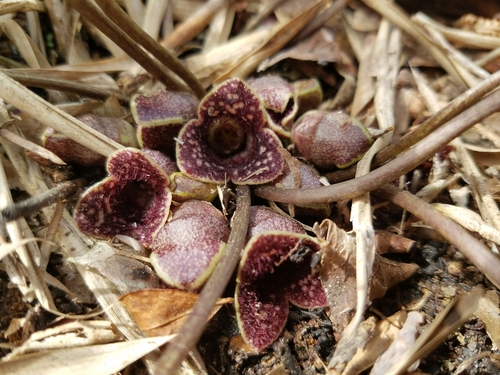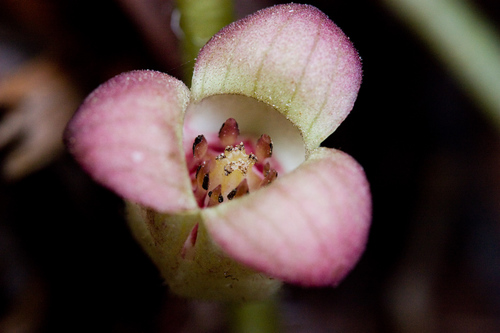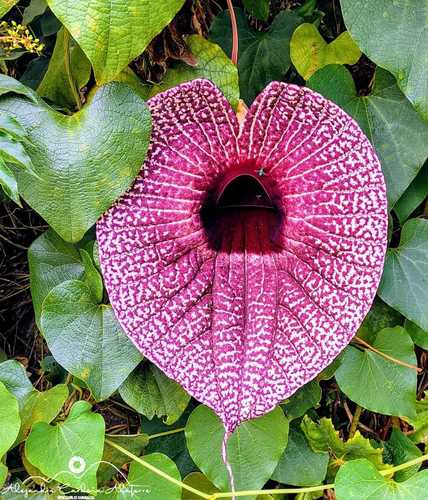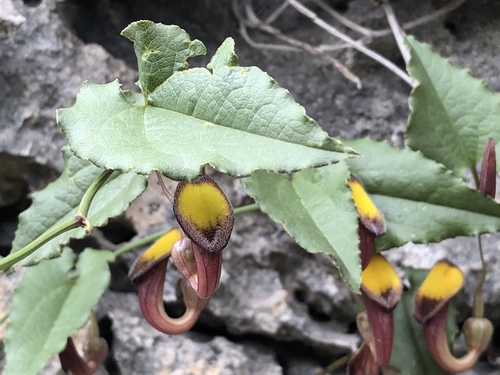
About Asarum canadense L.
Asarum canadense, commonly called Canada wild ginger, Canadian snakeroot, Indian Ginger, Coltsfoot, and Broad-Leaved Asarabacca, is a herbaceous perennial plant. It should not be confused with the closely related species Asarum reflexum, or with Asarum acuminatum, which is a variety of A. canadense. It forms dense colonies in the understory of deciduous forests across its native range in eastern North America, and it is protected as a threatened species in Maine due to habitat loss. Historically, Native American tribes used this species for cooking and medicine, though recent research indicates that compounds in the plant may cause negative health effects. Its native range extends across eastern North America, from the Great Plains east to the Atlantic Coast, and from southeastern Canada south to around the Fall Line in the southeastern United States. In shaded habitats, ramets survive longer and genets are more genetically unique, but plants growing in shadier environments are thought to have less energy available to invest in defenses against herbivores. Extensive logging in Maine is considered the cause of the species' threatened status within the state. The primary mode of reproduction for A. canadense is clonal spread via rhizomes, though it can also produce genetically distinct seedlings through self-pollination. Individuals produced through asexual reproduction use energy more efficiently and grow larger leaves, but the trade-offs between sexual and asexual reproduction are thought to be insignificant. Even when local populations are at risk of extirpation, they can be reestablished from low initial plantings. Historically, Native Americans used this plant as a medicinal herb to treat a wide range of ailments, including dysentery, digestive problems, swollen breasts, coughs and colds, typhus, scarlet fever, nerve conditions, sore throats, cramps, heaves, earaches, headaches, convulsions, asthma, tuberculosis, urinary disorders, and venereal disease. They also used it as a stimulant, an appetite enhancer, a charm, and an admixture to strengthen other herbal preparations. Tribes that used this species for medicinal and culinary purposes include the Chippewa, Iroquois, Ojibwe, Meskwaki, Menomini, Potawatomi, Cherokee, Abnaki, and Micmac. In more recent times, it has been recommended as a native shade-tolerant ground cover. Because it reproduces asexually, it can be propagated by cutting rhizomes that have a dormant shoot bud and roots.