About Arvicola amphibius (Linnaeus, 1758)
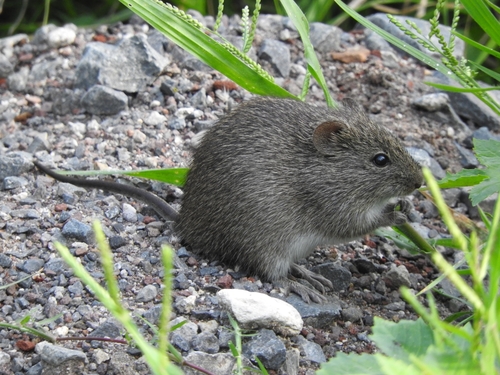
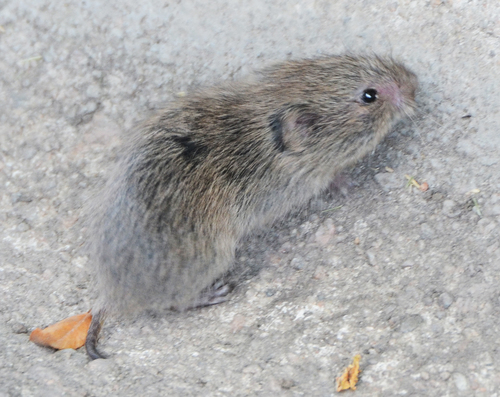
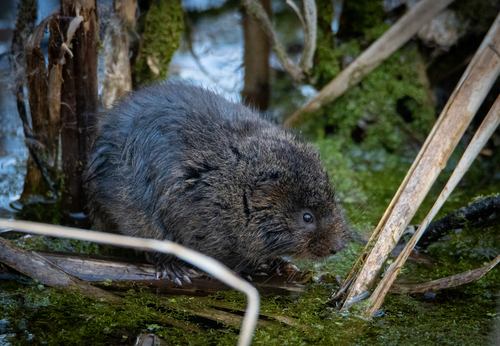
Arvicola amphibius, commonly known as the European water vole or northern water vole, is a semi-aquatic rodent. It is often informally referred to as the water rat, though it only looks superficially similar to a true rat. Compared to rats, water voles have rounder noses, deep brown fur, fuller faces, and short fuzzy ears. Unlike rats, the tails, paws, and ears of water voles are covered in hair. In the wild, water voles have an average lifespan of around five months, while the maximum recorded longevity for captive individuals is two and a half years. The European water vole’s range covers most of Europe, Russia, West Asia, and Kazakhstan. In Britain, water voles live in burrows dug into the banks of rivers, ditches, ponds, and streams. Their burrows are typically found next to slow-moving, calm water, which the species prefers. If there are no suitable banks to dig burrows in, water voles will live in reed beds and weave ball-shaped nests above ground. Water voles prefer dense riparian vegetation, which provides important cover to hide them when they are above ground near bodies of water. They generally avoid heavily grazed and trampled riparian habitats. The growth of introduced riparian woodland and scrub can displace water voles, as they prefer more open wetland habitats with no tree cover. In addition to occupying typical lowland wetland habitats dominated by thick marginal aquatic vegetation, water voles are equally comfortable living in upland peatland vegetation. In these areas, they use suitable small ditches, rivers, and lochs surrounded by moorland up to 1,000 m (3,300 ft) above sea level, an example of this being northern Scotland. In parts of Europe and Russia, water voles may enter woods, fields, and gardens. They live under snow during the winter. As a threatened species, water voles are currently being reintroduced in Yorkshire, England. In the Massif Central region of France, however, farmers are campaigning for action against water voles, as plagues of these rodents cause major damage to crops.