About Artibeus planirostris (Spix, 1823)
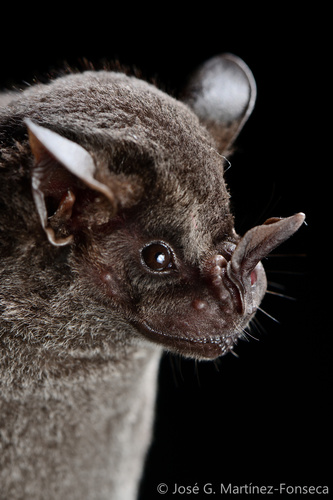
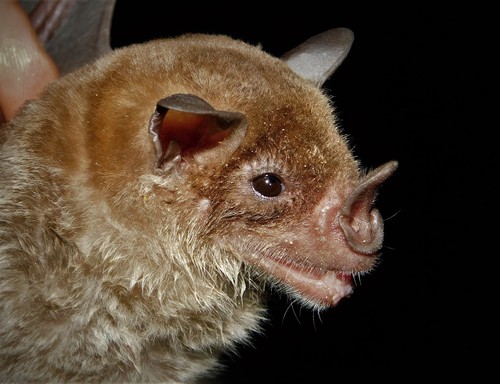
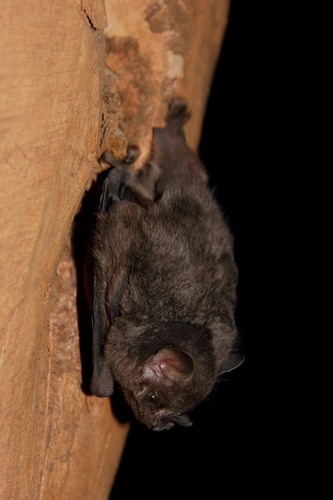
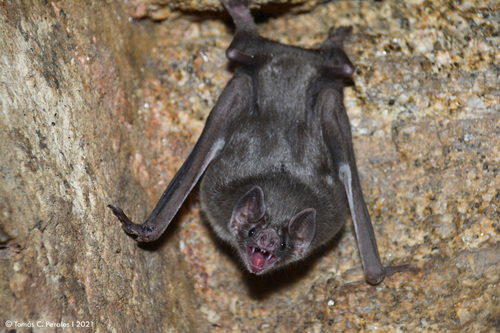
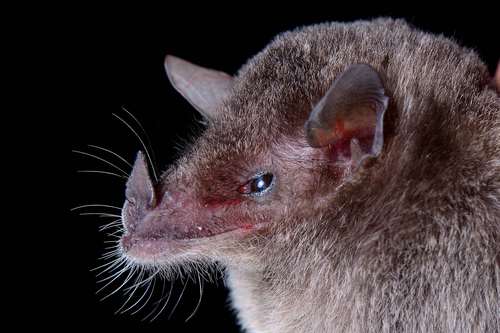
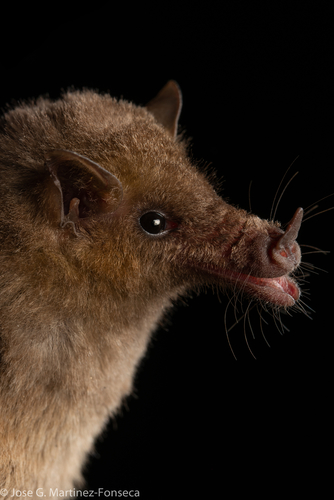
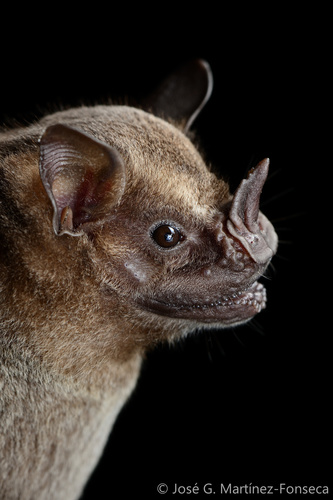
Flat-faced fruit-eating bats (Artibeus planirostris) are moderately sized bats. Adult individuals have a total length of 8 to 11 centimetres (3.1 to 4.3 in) and weigh 40 to 69 grams (1.4 to 2.4 oz). Most of their body is covered in brownish-grey fur, which shifts to grey on the underparts, and they have faint whitish stripes on the face. As their common name indicates, they have a broad skull with a short snout. Their ears are triangular with rounded tips, and are shorter than the ears of many other bat species; they also have a small tragus. A prominent triangular nose-leaf grows on the snout. The wings are dark brown or blackish, with white tips. A well-developed uropatagium stretches between the bat's legs, but no tail is visible. This species is found across most of northern and central South America, east of the Andes. It lives in a range of forested environments from sea level up to 2,000 metres (6,600 ft) in elevation, including montane, transitional, and lowland tropical forests, as well as open cerrado habitats. Three subspecies are currently recognised: Artibeus planirostris planirostris, found in eastern Brazil and Paraguay; Artibeus planirostris fallax, found in southern Venezuela and Colombia, the Guyanas, through central and western Brazil to eastern Bolivia, and extreme northern Argentina; and Artibeus planirostris hercules, found in eastern Peru and eastern Ecuador.