About Artibeus phaeotis phaeotis
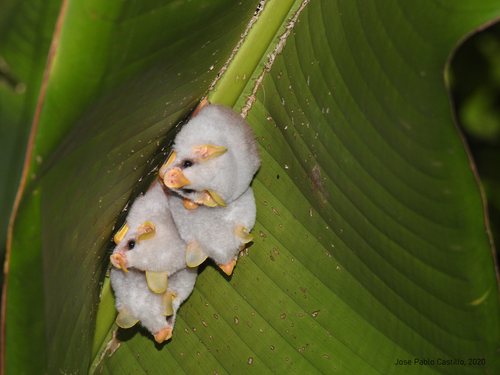
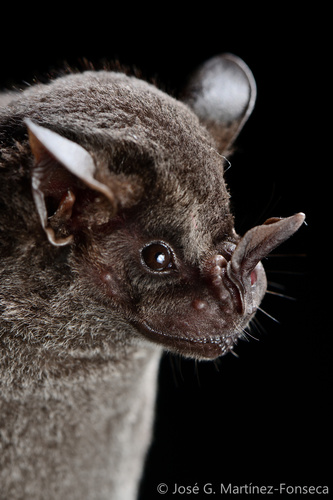
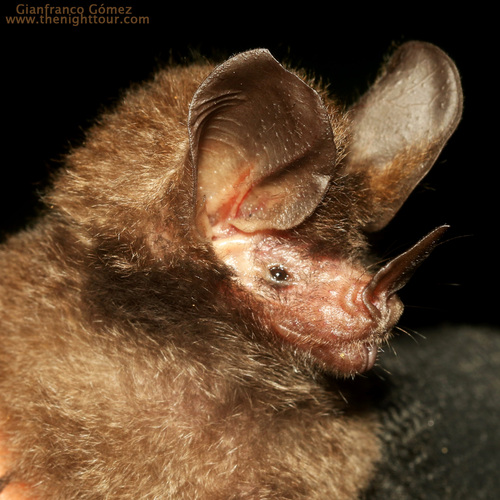
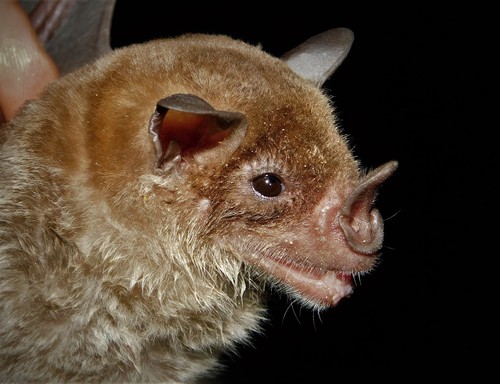
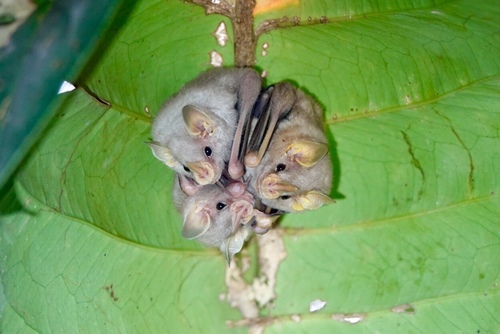
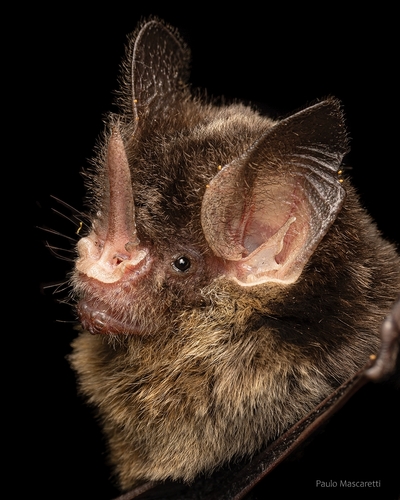
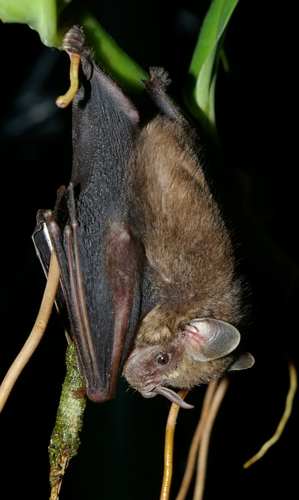
This species (here referenced under synonyms D. phaeotis and Dermanura phaeotis, with the scientific name given as Artibeus phaeotis phaeotis, common name pygmy fruit-eating bat) is identified by uniform dark brown or pale grayish brown fur that extends to the base of the forearms. The fur is soft and moderately thick. It has moderately sized, round, brown ears that usually have a white edge. It is a very small mammal, with a body length of about 51–60 millimetres (2.0–2.4 in) and a weight between 8 and 15 grams (0.28 and 0.53 oz). The reproductive pattern of this species is seasonal. Its gestation period lasts 112–120 days, and can be extended further due to dormancy. This bat species is native to tropical deciduous forest in Central America. As flying mammals, they are primarily frugivorous, matching their common name, but will also eat pollen and insects. Population densities are low, but the species is widespread across its range and evenly dispersed. They are nocturnal, and modify leaves to create "tent" roosts to shelter under during the daytime.