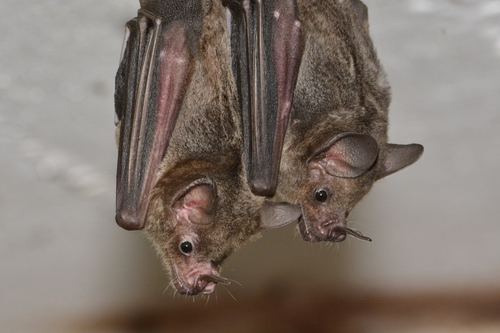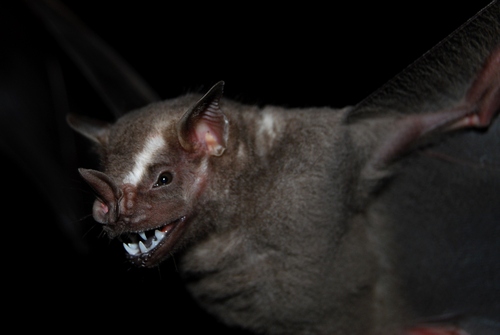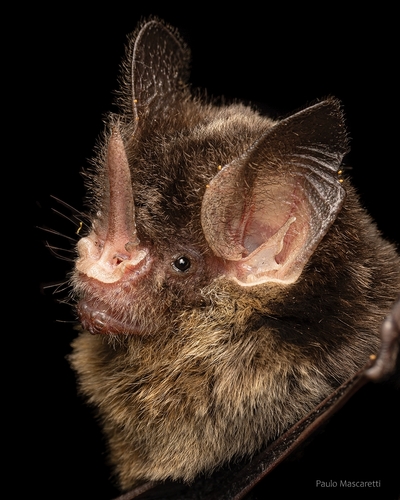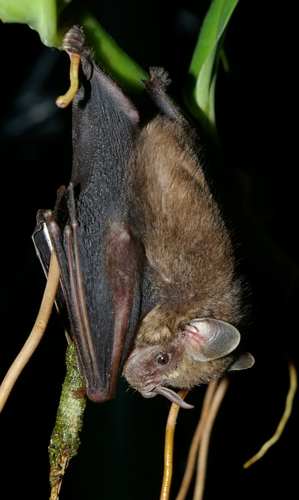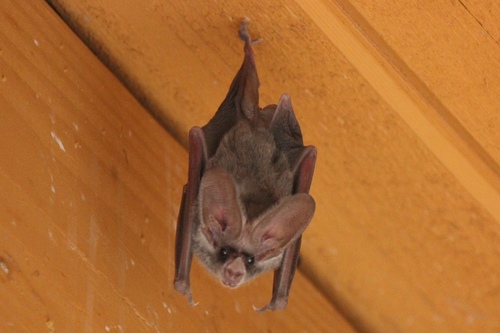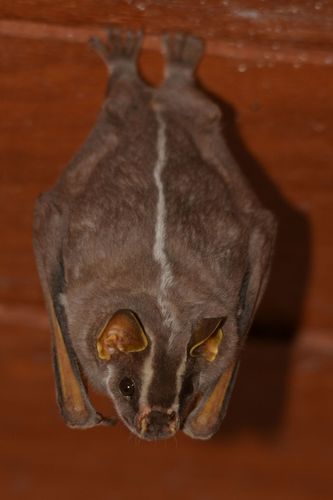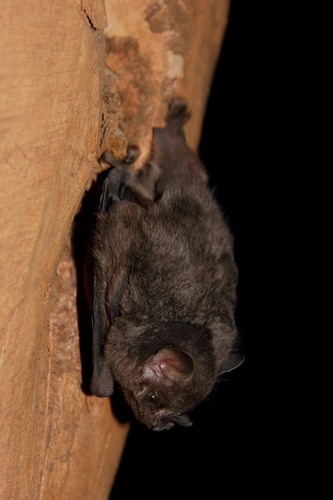
About Artibeus aztecus aztecus
This subspecies, Artibeus aztecus aztecus, is one of the largest members of its genus and has no tail. Individuals have a forearm length of 35–41 mm (1.4–1.6 in) and a body weight of 18–24 g (0.63–0.85 oz). Its dental formula is 2.1.2.2 / 2.1.2.2, giving it a total of 28 teeth.
Artibeus aztecus aztecus occurs in multiple countries across Central America, including Costa Rica, El Salvador, Guatemala, Honduras, Mexico, and Panama. It has been recorded at elevations ranging from 600–3,000 m (2,000–9,800 ft) above sea level; in Mexico, it is most often found around 2,000 m (6,600 ft) above sea level.
This subspecies is nocturnal: it forages during the night, and roosts in sheltered sites during the day, including abandoned mines, old wells, and tree branches. Its diet consists of fruits from plant species such as Crataegus mexicana and Prunus serotina, cones from genera such as Cupressus and Juniperus, and insects.