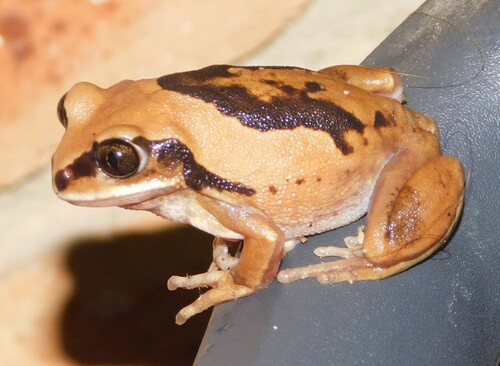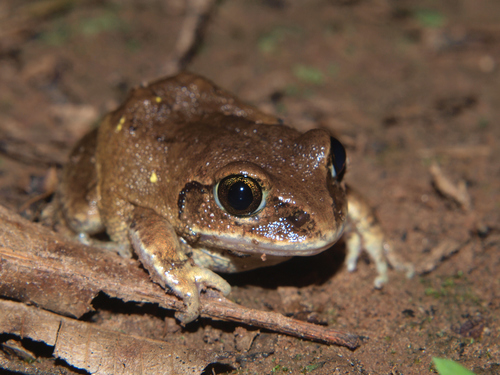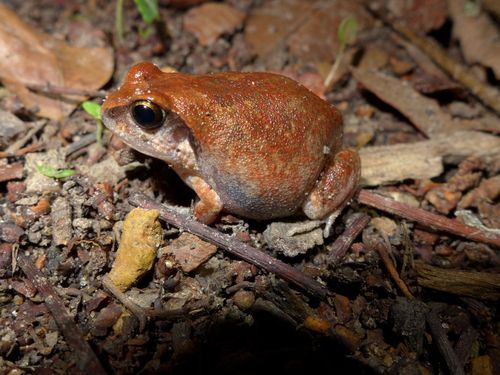
About Arthroleptis stenodactylus Pfeffer, 1893
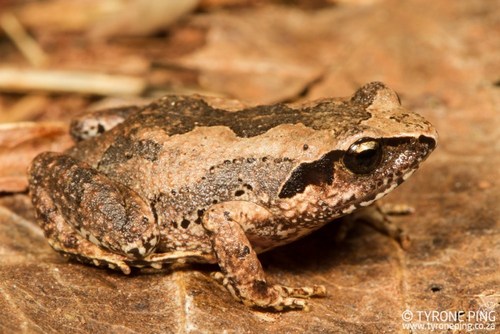
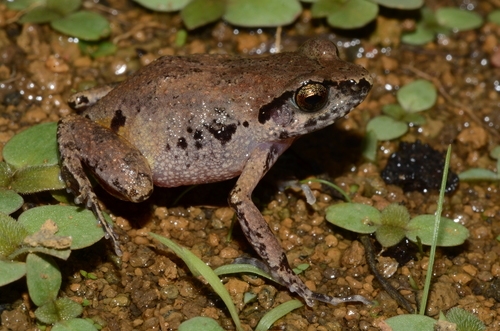
Arthroleptis stenodactylus Pfeffer, 1893, commonly called the common squeaker, dune squeaker, narrow-footed humus frog, savanna squeaking frog, or shovel-footed squeaker, is a species of frog in the family Arthroleptidae. This frog has a wide distribution across Sub-Saharan Africa. Its confirmed range extends from coastal Kenya, and eastern and southern Tanzania (including Zanzibar), south to Malawi and Mozambique, and southwest to Zambia, southern Democratic Republic of the Congo, western Angola, northern Botswana, Zimbabwe, and northeastern South Africa. An isolated population recorded in Uganda is likely a separate undescribed species, and the current definition of Arthroleptis stenodactylus may include additional unrecognized cryptic species. Arthroleptis stenodactylus lives in a very broad variety of habitats, including forests, savanna woodlands, thickets, and suburban areas. It occurs at elevations up to 1,500 m (4,900 ft) above sea level, and may be found at even higher elevations. Individuals are typically found in leaf litter. This species breeds via direct development, and its breeding does not require standing water. Eggs are laid in hollows or burrows in damp earth. Arthroleptis stenodactylus is an abundant species that is not currently facing any significant threats.