About Artedius corallinus (Hubbs, 1926)
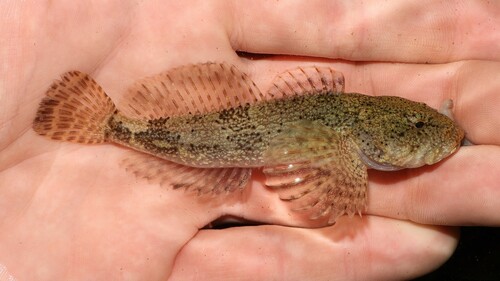
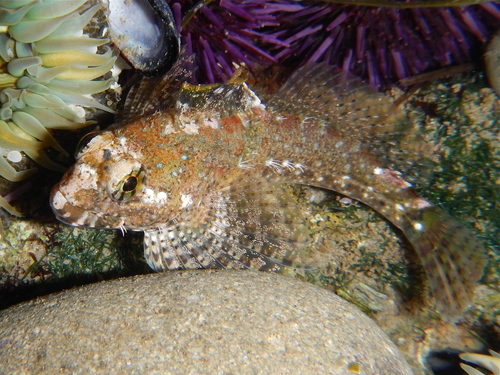
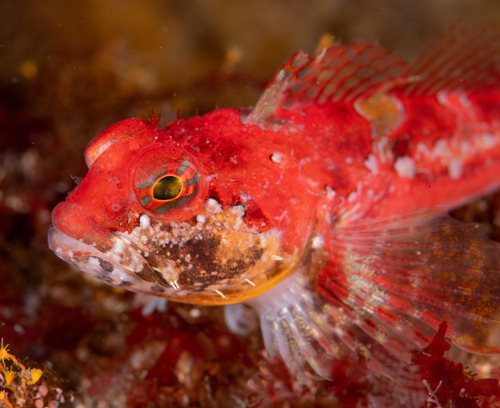
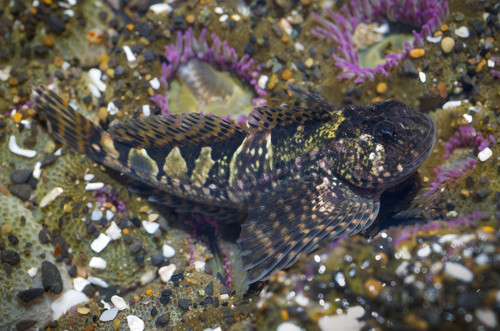
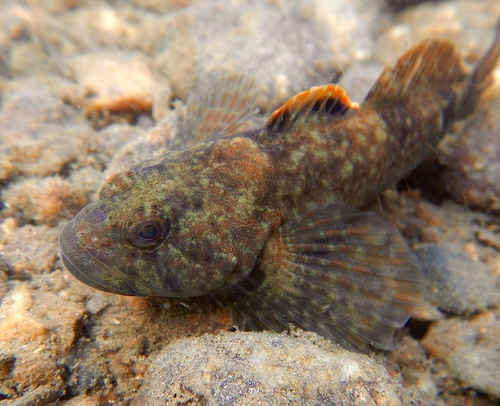
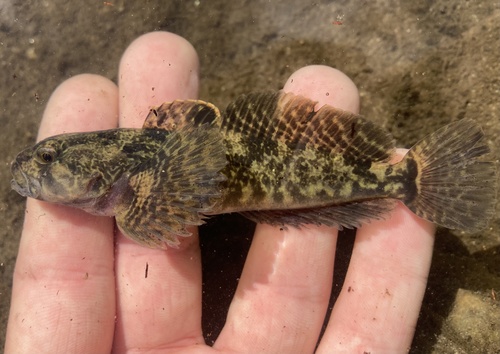
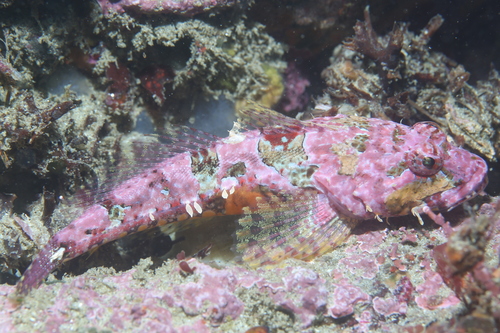
Artedius corallinus, commonly known as the coralline sculpin, has a large, wide, flattened head, with a mouth that extends to the rear edge of its large eyes. The upper body and head are colored dark gray to rufous. It has two distinct white bands on the head, with a reddish-brown band between these two bands, and a clearly visible white spot at the base of the caudal peduncle. Unpaired fins are transparent, with brown spines and rays. Pelvic fins are also transparent, but are marked with brown barring. A row of circular white spots sits just above the anal fin. The first dorsal fin is supported by 9 spines, while the second dorsal fin holds 15 to 16 soft rays. The anal fin has 12 to 13 soft rays. The pelvic fin contains one spine and 3 soft rays, the pectoral fins have 15 to 16 soft rays, and the caudal fin is truncate in shape. The maximum published total length for the coralline sculpin is 14 cm (5.5 in).
Artedius corallinus occurs in the eastern Pacific Ocean, ranging from Orcas Island in Washington state south to Isla San Martín, Baja California. This species lives in cracks and under boulders in rocky habitats, from the intertidal zone down to a depth of 21 m (69 ft).