About Artamus superciliosus (Gould, 1837)
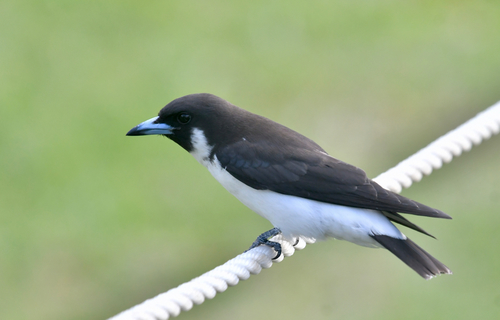
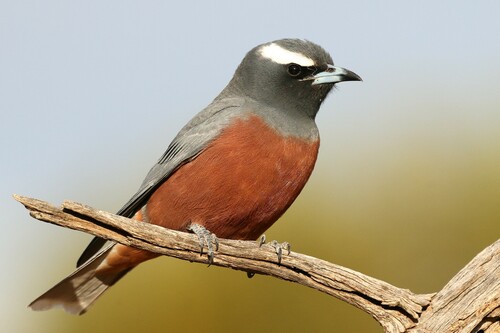
The white-browed woodswallow, scientifically named Artamus superciliosus (Gould, 1837), is a medium-sized passerine bird around 19 centimeters long, and it is endemic to Australia. This species has very distinct plumage: a white brow sits above a black head, the upper body is deep blue-grey, and the underbody is chestnut. Females are paler than males. Like most woodswallows, the white-browed woodswallow has a bifurcated, or divided, tongue. White-browed woodswallows are highly nomadic. They travel alone, in pairs, or in flocks ranging from hundreds to thousands of birds. They wander irregularly across inland Australia, generally moving north to the Northern Territory and central Queensland for winter, and returning south in spring to nest. They regularly associate with flocks of the masked woodswallow, Artamus personatus. The white-browed woodswallow occurs across Australia, with higher population concentrations in central New South Wales. The IUCN Red List classifies this species as Least Concern. Their habitats include rainforest margins, woodlands, inland and coastal scrubs, golf courses, vineyards, suburban streets, and arid areas of Australia. Their call is a 'tchip-tchip', similar to the call of masked woodswallows. Breeding takes place between August and December, or after rain. The species builds its nests in shrubs, tree forks, hollow stumps, or posts. Nests are typically constructed from twigs, grass, and rootlets. Eggs are white or grey, with brown-grey spots or blotches. A clutch usually contains 2 to 3 eggs.