About Arremon schlegeli Bonaparte, 1850
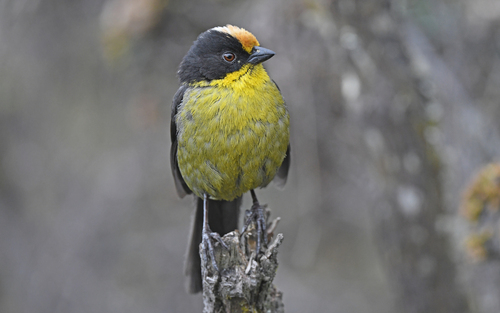
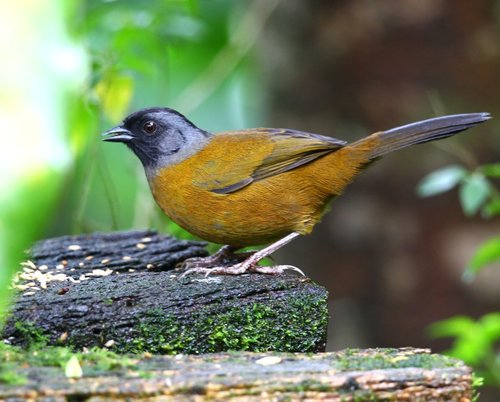
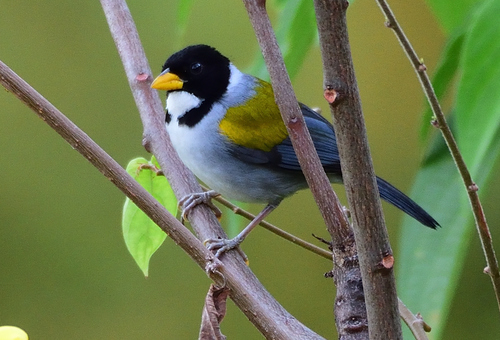
The golden-winged sparrow, scientifically named Arremon schlegeli Bonaparte, 1850, can be identified by its black head, long yellow bill, gray upperparts, and a green patch on its back. It is the only sparrow within its range that has a fully black head. Its eyes are either brown or black; adult birds have yellow bills, while juvenile birds have black bills. For male golden-winged sparrows, the face, malar region, and chin are black, with a white throat, gray nape, and green on the back. Female golden-winged sparrows have buffier underparts than males. On average, this species measures 150 mm in total length. Females weigh approximately 23 grams, and males weigh approximately 32 grams. The golden-winged sparrow lives in terrestrial ecosystems, including subtropical or tropical dry forests, subtropical or tropical shrubland, and subtropical or tropical heavily degraded former forest (both artificial and terrestrial). It also inhabits woodlands and dry areas from lowlands up to 1400 meters in elevation, where it resides in forests, second-growth areas, thickets, ravines, and hillsides. To date, three subspecies of Arremon schlegeli have been recognized. A. s. schlegeli is found along the Caribbean coasts of Colombia and Venezuela. A. s. fratruelis occurs in Serranía de Macuira on the Guajira Peninsula of northern Colombia. The third subspecies, A. s. canidorsum, lives in the northern Colombian Andes, specifically on the west slope of the eastern Andes in Colombia’s Magdalena Valley. A. s. fratruelis is larger and has a longer bill than A. s. schlegeli. A. s. canidorsum has gray upperparts and white underparts, and lacks the green patch on the back that is seen in the other two subspecies.