About Arocatus melanocephalus (Fabricius, 1798)
Arocatus melanocephalus differs from many other Lygaeinae species: only ten days after feeding on the cardenolides [3H]-ouabain or [3H]-digoxin, it stores less than 7% of these substances. A 2015 phylogenetic study of the subfamily Lygaeinae included four Arocatus species (A. aenescens, A. rusticus, and A. melanocephalus, with A. rusticus sampled twice), and placed A. melanocephalus in a clade with A. longiceps — the other Arocatus species that also cannot store cardenolides.
This species has been found on elm (Ulmus) species, old world sycamore (Platanus orientalis), and poplar (Populus) species, as well as inside empty butterfly pupa covers. It has also been recorded on oak (Quercus) and alder (Alnus) species.
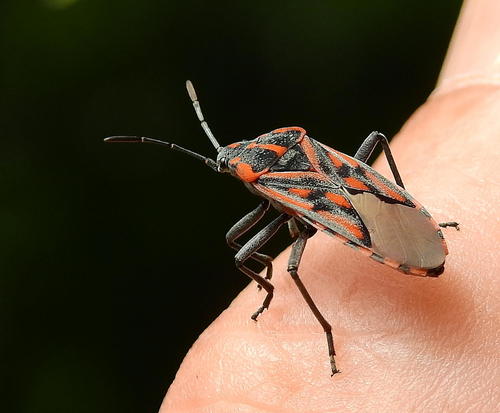
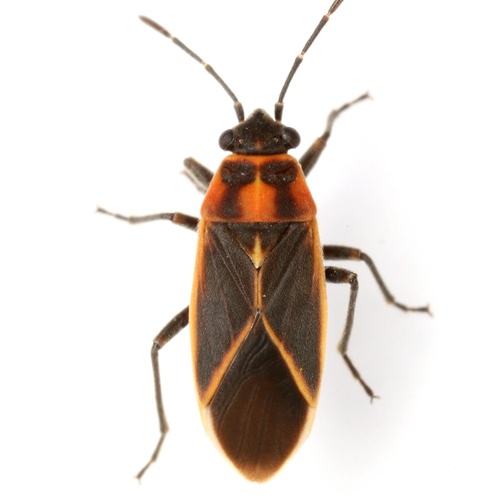
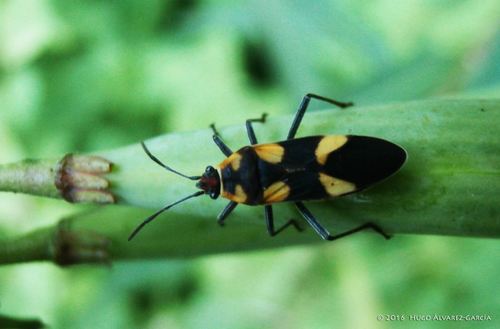
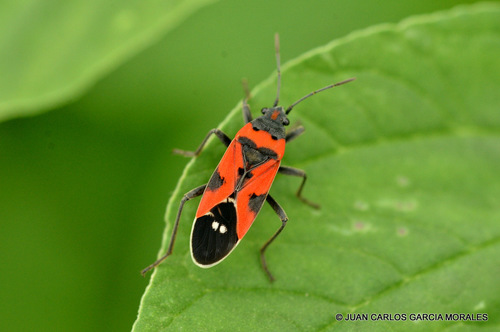
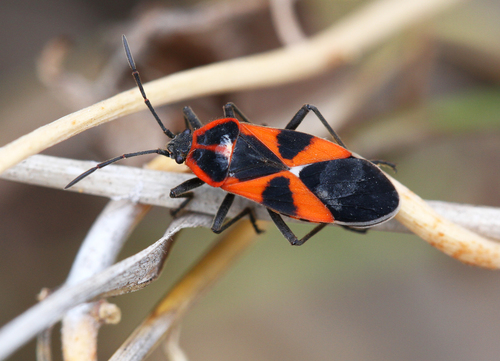
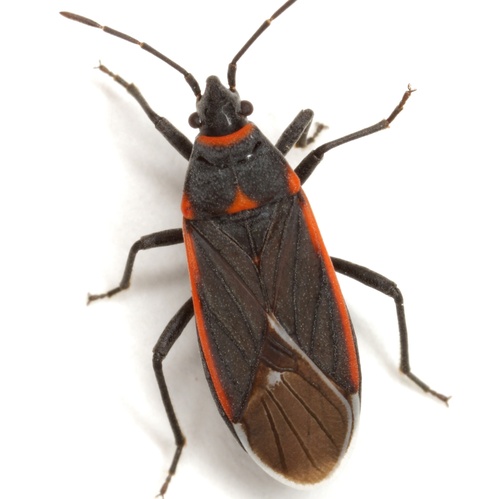
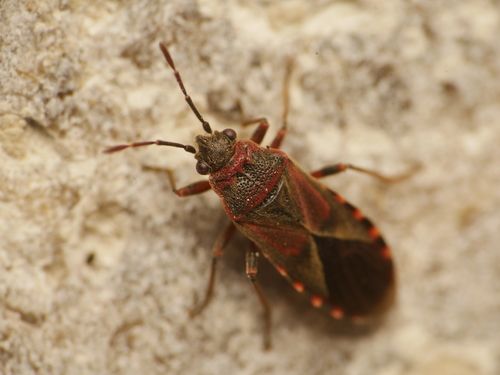
Adults produce a strong, unpleasant smell reminiscent of bitter almonds. The openings of the scent glands are located on the metathorax, between the second and third pairs of legs. The body is dark red and covered in short hairs. The head is black, and the antennae are also mostly black, though segments III and IV are sometimes partially red. The pronotum has a distinct M-shaped spot. The underbelly is orange, and adult individuals measure 8.4 mm (0.33 inches) in length.
Within Europe, A. melanocephalus has been recorded in Andorra, Austria, Belgium, Bosnia & Herzegovina, Bulgaria, Croatia, Czech Republic, France, Germany, Greece, Hungary, Italy, Moldova, Montenegro, the Netherlands, Poland, Portugal, Romania, Russia, Serbia, Slovakia, Slovenia, Spain, Switzerland, and Ukraine. Most of these central European records are old, dating to the late 19th and early 20th centuries. It is thought the species became rarer across Europe in the late 20th century because Dutch elm disease killed large numbers of European elms. Starting in 1999, A. melanocephalus has infested buildings in northern Italian cities, particularly in the regions of Emilia Romagna, Veneto, and Friuli-Venezia Giulia. These infestations happen each summer, beginning in late May or early June and ending in late September. Some Italian researchers hypothesize this activity is linked to global warming, and that the insects enter buildings to escape summer heat. In 2007, the species’ population increased in Turin even as chemical insecticide use rose; etofenprox is effective against A. melanocephalus, but pyrethrum and rotenone are not. Mass occurrences of the species also became more common in Germany in the early 21st century.
In Asia, this species has been found in Armenia, Azerbaijan, Georgia, Turkey, China, and Iran, with recorded indoor occurrences in Yining, Xinjiang, China. In North America, A. melanocephalus has been found in the Canadian province of British Columbia, and the U.S. states of Washington, Oregon, Idaho, Michigan, Utah, and Colorado. It was introduced to the Nearctic realm in the 2000s.