About Arnetta vindhiana (Moore, 1883)
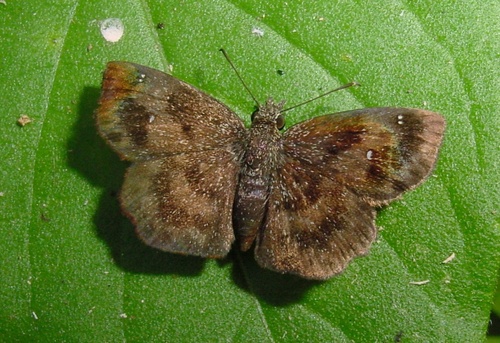
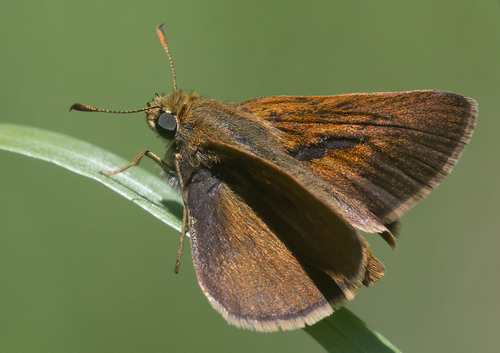
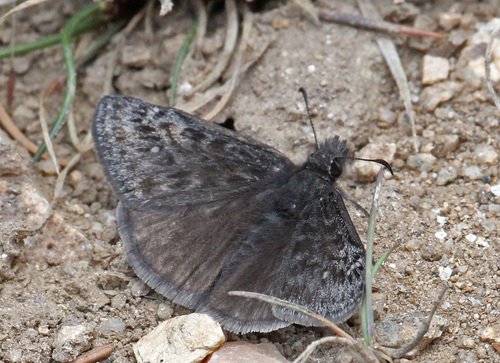
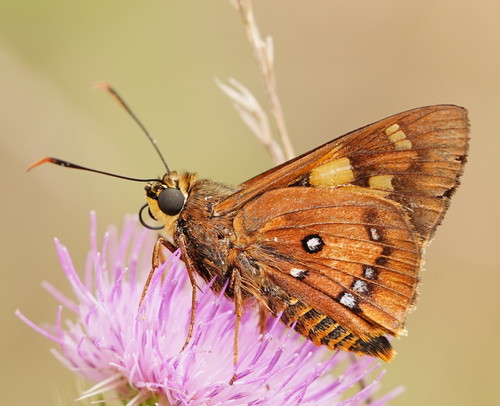
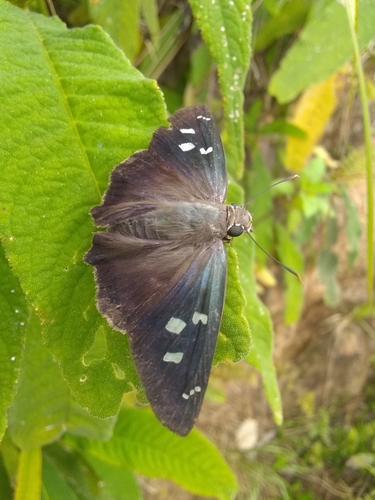
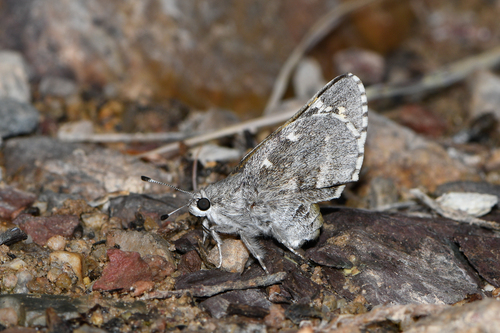
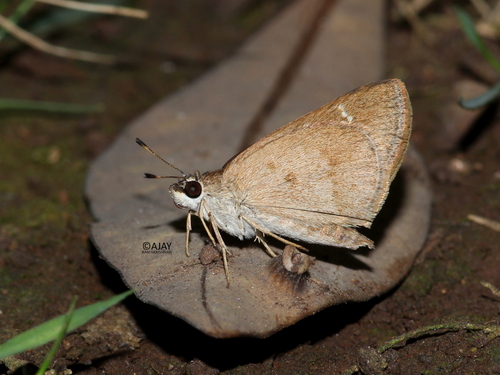
Male Arnetta vindhiana have a dark olive-brown upperside, with ashy grey (cinereous) cilia. On the forewing upperside, there is a small yellow semi-transparent spot at the upper end of the cell, three connected subapical spots, two discal spots, and a small oval spot above the submedian vein. The upper edge cell spot on the forewing upperside may sometimes be absent. Males have no tuft on the underside of the forewing. The underside is dusky ochreous. On the forewing underside, the posterior area is broadly black, and spots match those seen on the upperside. On the hindwing underside, spots are obscure; there is a yellow lunule at the end of the cell, a small spot above this lunule, and five discal spots. Wingspan ranges from 25 to 32 mm. This species has been reported from Palni Hills, Nilgiri Hills, Meghamalai, Wayanad, Coorg, Konkan, west Khandesh, Mhow, Thana, Surat Dangs and Madhya Pradesh. It is apparently absent from the heavier jungle country between Bombay and Coorg, and is presumed to also occur in the Vindhyan range. T. R. D. Bell noted that Arnetta vindhiana occurs in dry, bamboo-growing hilly country, and that it is common in the Surat Dangs, where individuals sit on the ground on dry leaves and grass blades, and also visit flowers. However, Wynter-Blyth found the species not uncommon on the western slopes of the Nilgiris during September and October in the wettest, thickest jungle, and it appears to occupy similar habitat in Coorg. George Francis Hampson also recorded this species from the Nilgiris; he considered Arnetta vindhiana, A. modesta, and A. nilgiriana to be a single species, with A. vindhiana as the dry-season form, A. nilgiriana as the wet-season form, and A. modesta (described from one specimen collected by Mr. Lindsay) as a variant. Specimens are held in the collections of the Indian Museum and Lionel de Nicéville.