About Armadillidium nasatum Budde-Lund, 1885
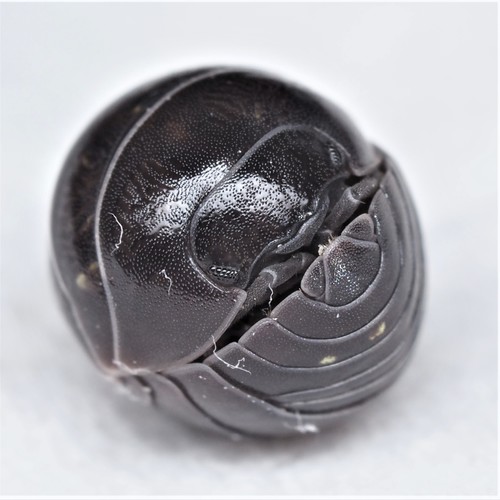
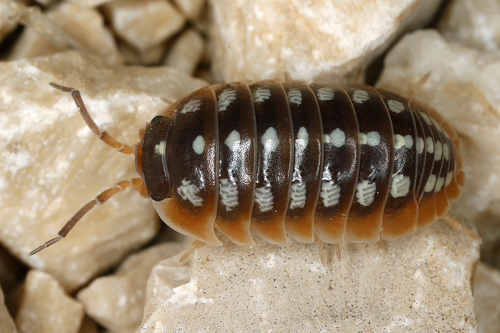
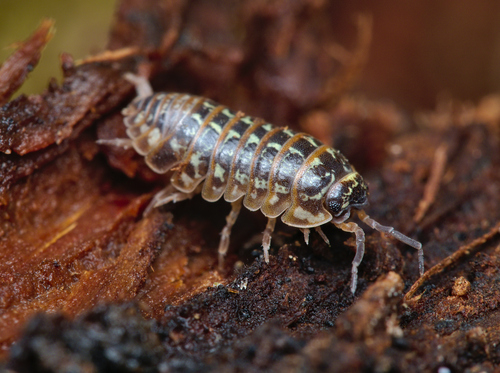
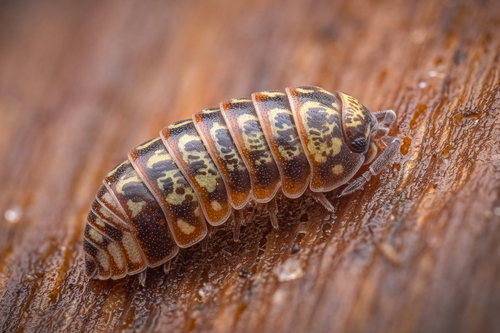
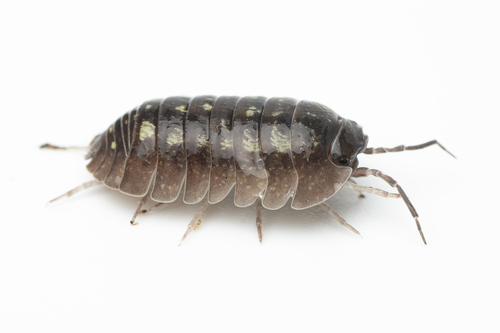
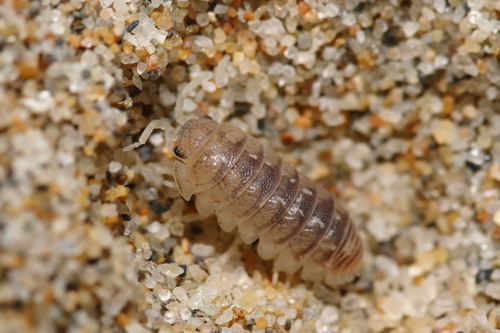
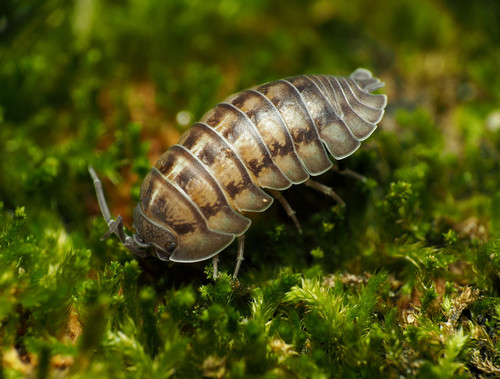
Armadillidium nasatum can reach a maximum length of 21 millimetres. Like Armadillidium depressum, it cannot form a complete ball when it enrolls its body. While it shares a similar outward dark grey appearance with Armadillidium vulgare, its main distinguishing characteristic is a rectangular-shaped protrusion commonly called a "nose" near the apex of the head. Its telson, or tail, has a rounded tip with incurved sides, unlike most other species in the genus Armadillidium which have smaller, flat tails. Some individuals have pale longitudinal stripes that run from the head to the rear end of the body; this trait is variable and cannot be used to diagnose the species.
In terms of distribution, Armadillidium nasatum occurs in patchy populations across southern England, with concentrated populations within its range and sporadic sightings in Ireland. Compared to most other woodlice, it lives in drier habitats. It is synanthropic, and is frequently found in uninhabited areas such as railway lines and industrial waste ground. Like other woodlice, it can be found under stones and wood.