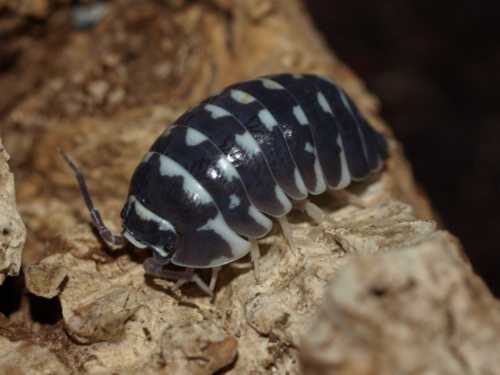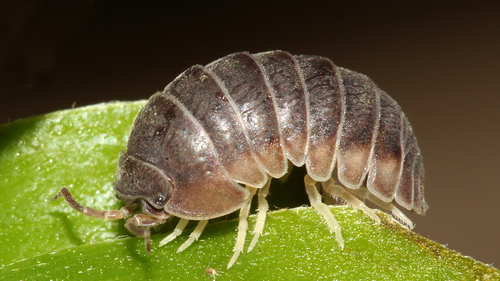
About Armadillidium gestroi Tua, 1900
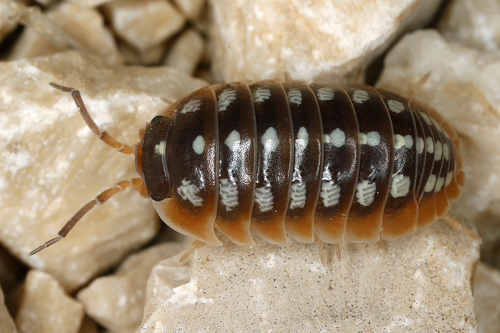
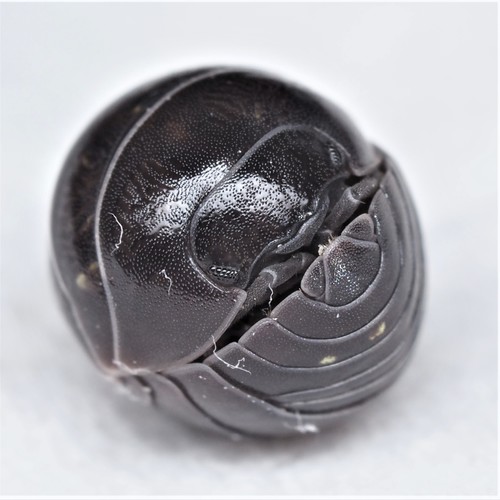
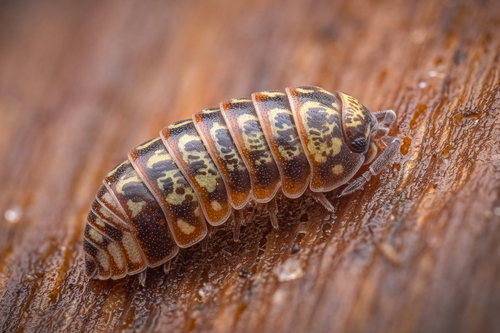
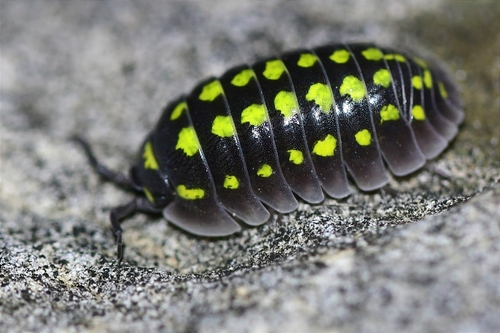
Armadillidium gestroi Tua, 1900 is a relatively large woodlouse species, reaching up to 22 millimeters in length and 10 millimeters in width, with a rounded cross-section. Its body is dark gray or brown, marked with rows of yellow spots. Like other species in the Armadillidium genus, it can roll into a ball when disturbed, a defensive behavior called volvation. This species is endemic to the Liguria region of northwestern Italy, where it is found specifically between Ceriale and Bergeggi. Armadillidium gestroi lives under stones and decaying plant matter in coastal shrubland, in the strip of land between the beach and barren mountain slopes. Its native range is limited by the specific combination of Triassic limestone, humid and stable temperatures from Mediterranean Sea influence, and the species’ requirement for ample vegetation. A. gestroi has aposematic coloring, and can produce a strongly unpleasant odor from its lateral plate glands. Great tits display visible discomfort behaviors such as drinking water and bill-cleaning after eating A. gestroi, but do not show these behaviors after eating other types of prey. This observation suggests that A. gestroi has some form of chemical protection against predators.