About Arjona patagonica Hombr. & Jacquinot ex Decne.
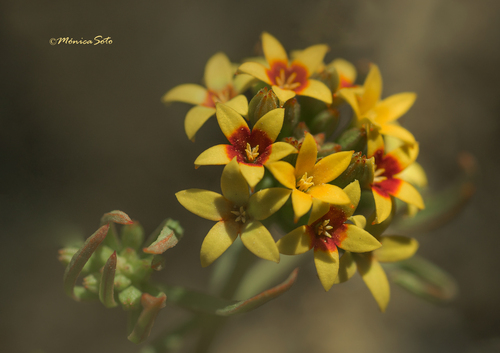
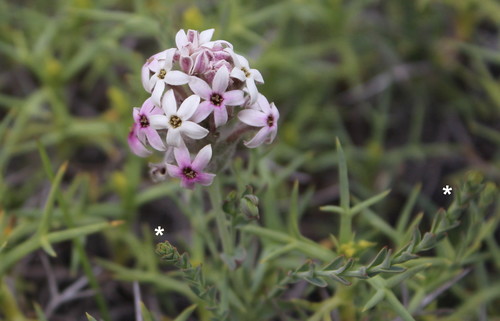
Arjona patagonica Hombr. & Jacquinot ex Decne. is a species of flowering plant in the family Schoepfiaceae, native to southern South America. In Argentina, this species has been collected in the provinces of Buenos Aires, Chubut, La Pampa, Mendoza, Neuquén, Río Negro, San Juan, Santa Cruz and Tierra del Fuego. In Chile, it has been collected in the regions of Araucanía, Coquimbo, Libertador Bernardo O'Higgins, Magallanes and Valparaíso. According to a 1968 ethnobotanical report by Martínez Crovetto on former plant uses, Arjona patagonica was an important dietary component for the Selkʼnam people. The Selkʼnam called this species téen in their language, and it was one of their only sources of carbohydrates. The tubers of Arjona patagonica measure 5 to 9mm wide, and grow up to 20 cm long. The tubers shrink to 2mm in diameter during spring flowering, and are best harvested in the fall months of March and April. The tubers contain mostly water, with some polyphenols. The plant is eaten by livestock. Per the 1987 Lara & Cruz system, this species is rated as nutritionally extremely poor as a fodder, in terms of palatability, digestibility, and crude protein content.