About Aristolochia grandiflora Sw.
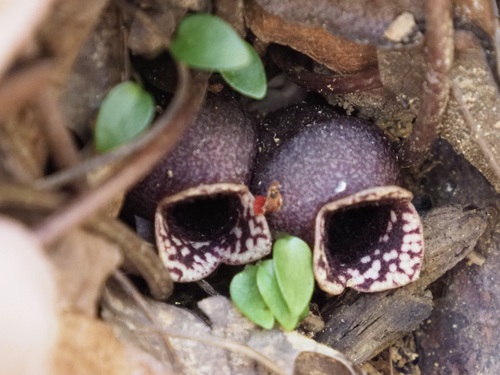
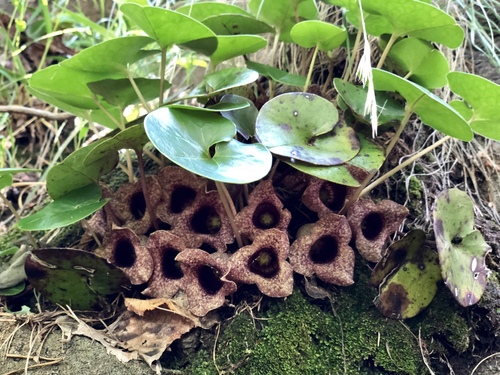
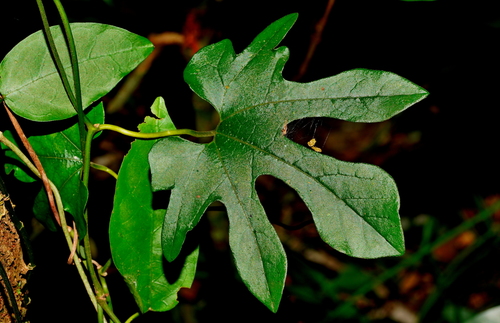
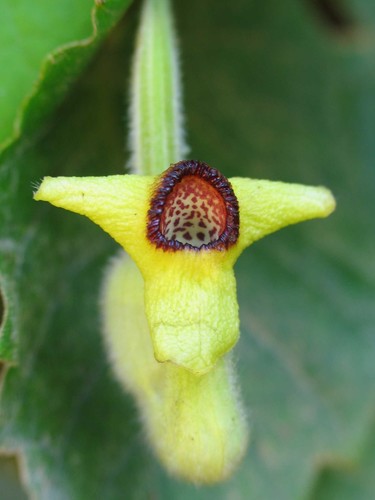
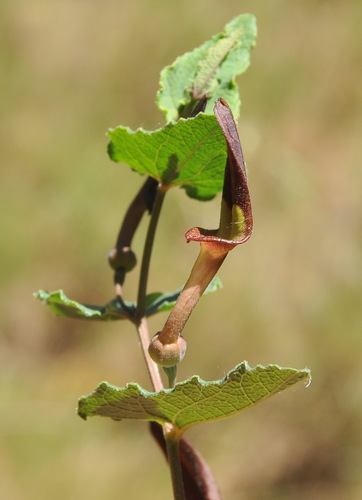
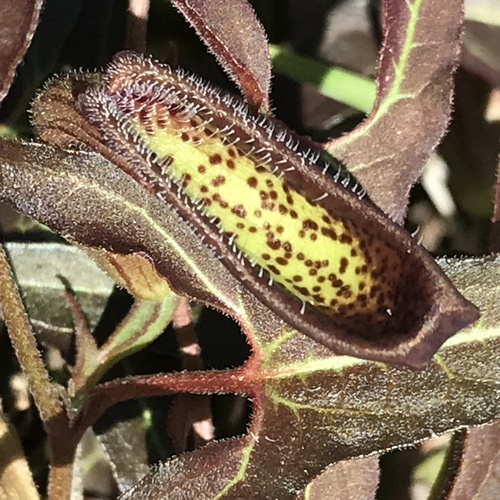
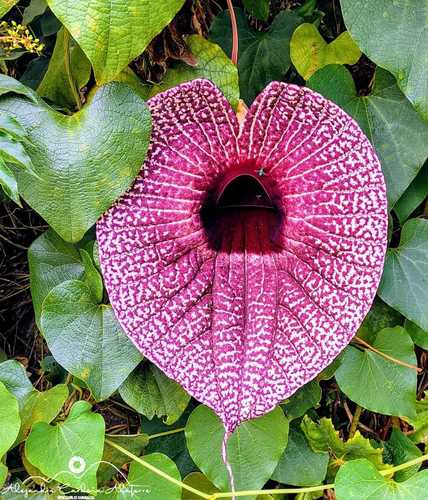
Aristolochia grandiflora Sw. produces large solitary flowers from leaf axils. Its leaves are cordate, and can grow up to 25 cm (9.8 in) wide. Its flowers are heart-shaped, 10–20 cm (3.9–7.9 in) wide, and bear tails that reach up to 60 cm (24 in) long. The flowers are green and white with purple or brown veins, and have a darker-colored center. This dark center, along with a distinctive odor associated with the flower's reproductive parts, attracts pollinators. Like all members of the Aristolochiaceae family, its flower has three distinct sections: the utricle, the tube, and the limb. This plant is native to the Caribbean and Central America, and has been introduced to Florida in the United States to act as a butterfly attractor. It grows in tropical forests near streams and gullies. Aristolochia grandiflora is pollinated by breeding flies that are drawn to an odor produced by the flower, which is a combination of essential oils. Flies travel down the tubular section of the flower to the utricle, where the plant's reproductive organs are located. The tube is lined with trichomes that guide flies down into the utricle and prevent them from leaving. Its full reproductive process occurs in three main phases over the course of two days, ending with flower senescence and abscission. In the first phase, a fly carrying pollen from other A. grandiflora flowers pollinates the carpel. In the second phase, which lasts one day, the stamens mature and deposit pollen onto the trapped fly. While trapped inside the flower, the fly feeds on nectar produced along the walls of the utricle. After the second phase, the trichomes receive a signal to wither, which allows the pollen-carrying fly to escape and pollinate other flowers. Aristolochia grandiflora has three main uses: it is grown for ornamental purposes, used as a food source, and used in traditional medicine. It serves as a food source for swallowtail butterfly larvae. When these larvae consume the terpenes present in this plant, the adult butterflies that develop from them become unpalatable to predators.