About Aristolochia chilensis Bridges ex Lindl.
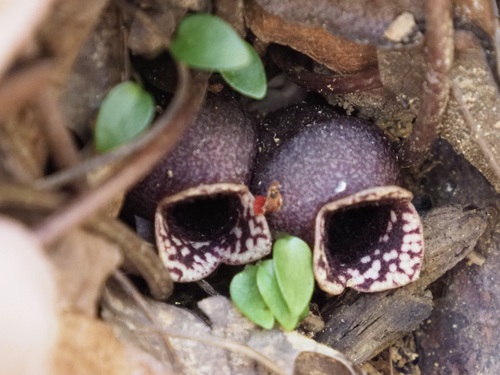
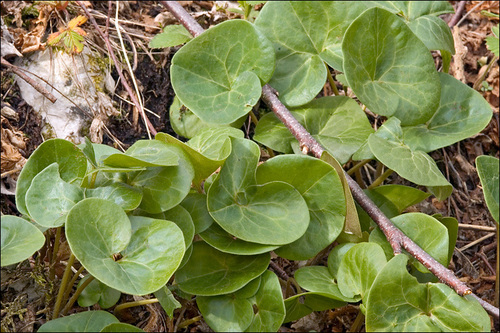
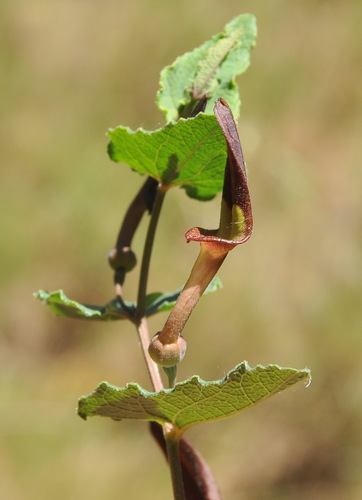
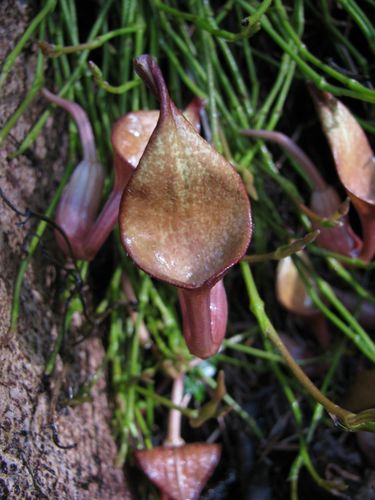
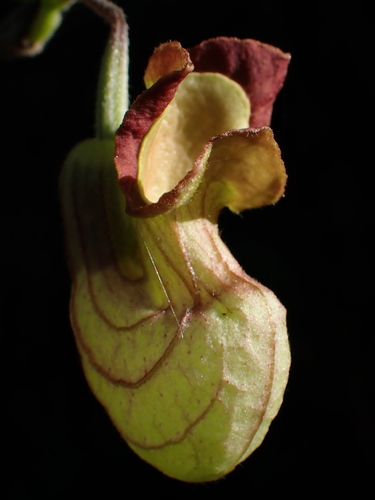
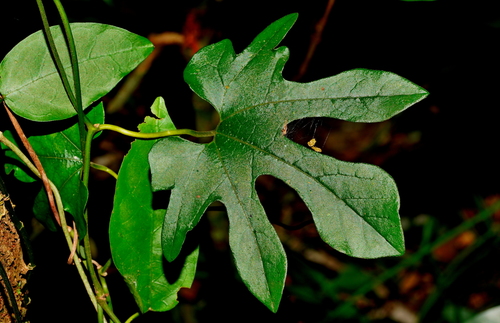
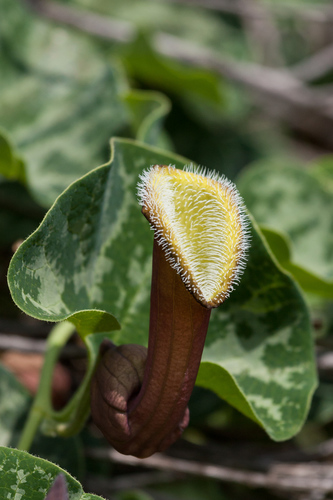
Aristolochia chilensis, formally classified as Aristolochia chilensis Bridges ex Lindl., is a perennial vine. Its climbing stalks can reach around 1 meter (3.3 feet) in length, and it bears alternate, boomerang-shaped leaves. Flowers of this species may be yellowish or brownish-purple, and produce an unpleasant odor that attracts the flies that pollinate it. Downward-pointing (retorse) hairs on the flower, similar to the hairs on pitcher plants, prevent flies from leaving. Once flies are trapped inside the flower’s sac-like utricule, pollen from the plant’s stamens is deposited onto the flies; any pollen the flies brought with them is deposited onto the flower’s stigmata when the flies enter. Flies are sustained by the flower’s nectaries for one day, while the stamens ripen and the flower begins to wither. This process releases tension in the retorse hairs and allows the flies to leave. The flower itself typically grows 15–30 cm (6–12 in) tall, with scrambling vines reaching about 1 meter (3 feet) in length. All members of the genus Aristolochia are known for fly pollination, and their pollination strategy resembles that of pitcher plants and flytraps. The key difference is that pitcher plants and flytraps digest insects to gain nutrients, while Aristolochia species primarily use insects for pollination. Every part of Aristolochia chilensis is poisonous if eaten by humans or animals. Caterpillars and swallowtail butterflies feed on the plant’s leaves, flowers, and shoots. Caterpillars are able to tolerate the acids the plant contains, and processing these acids makes the caterpillars poisonous to their own predators. Aristolochia chilensis has zygomorphic flowers, which are typically foul-smelling: the scent attracts fly pollinators and repels predators, aiding the plant’s survival. This species is native exclusively to Chile, where it grows in low-altitude valleys and coastal mountains. It occurs in coastal areas from 0 to 500 meters above sea level, and in mountains between 500 and 2000 meters in altitude. It grows well in very dry areas with little to no rainfall, and tolerates drought conditions. It requires full sun exposure, and only grows on level or northern-facing slopes. It cannot survive sustained snow cover, but can tolerate brief freezing temperatures of approximately −5 °C, the typical temperature of morning frost in Chile. It also needs adequate drainage to develop properly. Like the related species Aristolochia bridgesii, Aristolochia chilensis acts as a larval food source for the gold rim swallowtail butterfly, Battus polydamas. Aristolochia chilensis has both ornamental and medicinal uses, and researchers have isolated the new 4-aryltetralone (−)-aristotetralone from the species. As a member of the family Aristolochiaceae, Aristolochia chilensis contains aristolochic acid. Aristolochic acid was traditionally used in traditional Chinese medicine to treat a range of conditions from mouth ulcers to arthritis. However, due to studies demonstrating that aristolochic acid is carcinogenic, mutagenic, and nephrotoxic, causing more harm than benefit, its use for medicinal purposes has been banned in Europe since 2001 and in China since 2003. Despite its unpleasant scent, Aristolochia chilensis is frequently used as a groundcover in xeriscaping.