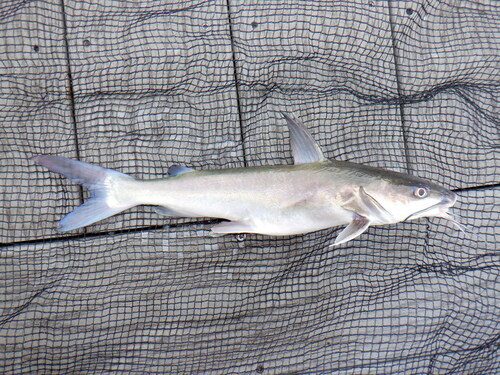
About Ariopsis felis (Linnaeus, 1766)
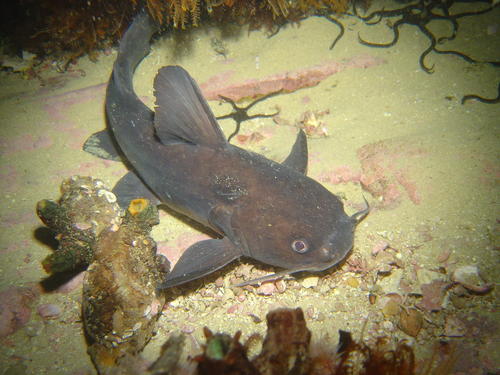
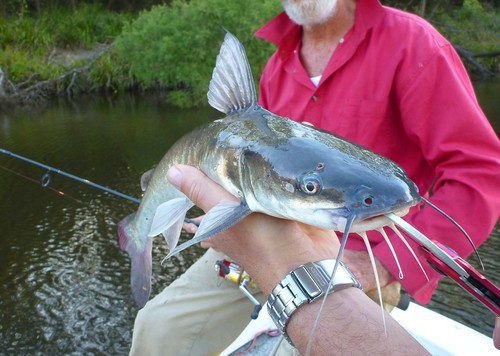
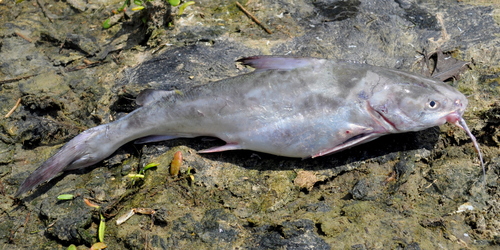
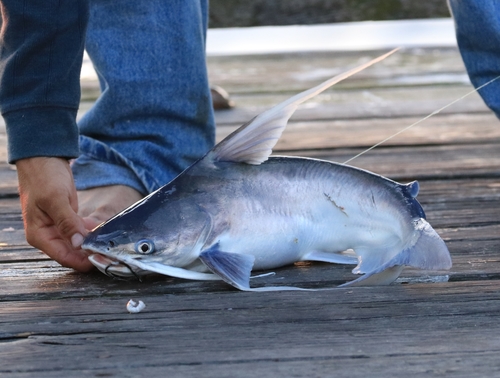
Hardhead catfish (Ariopsis felis) are found mostly in near-shore waters of the Western Atlantic Ocean, around the southeast coast of the United States, the Florida Keys, and the coast of the Gulf of Mexico. They also occur in brackish estuaries and river mouths with sandy or muddy bottoms, and only occasionally enter freshwater. In winter months, they typically move from shallower waters to deeper waters. This species is generally common to abundant across its range. The hardhead catfish has four barbels under its chin, plus two more at the corners of the mouth. These barbels help the fish locate crabs, fish, and shrimp in the muddy or sandy bays it inhabits. Its head is slightly flattened, and hides a hard plate between the eyes and dorsal fin. The dorsal and pectoral fins each are supported by a sharp, slime-covered, barbed spine. The dorsal spine is normally held erect when the fish is excited, and a tennis shoe or even a leather-soled shoe provides little protection against it. The gafftopsail catfish is similar in appearance to the hardhead catfish, but the gafftopsail's dorsal and pectoral spines have a distinctive fleshy extension that resembles the fore-and-aft topsail of a ship. The reproductive season of hardhead catfish runs from approximately May to September. Both males and females reach sexual maturity before they turn 2 years old. Mature females are around 12.6–26.5 cm (5.0–10.4 in) long, while mature males are typically slightly larger, around 25 cm (9.8 in). When mature, females develop flap-like fatty tissue near their pelvic fins, which makes their pelvic fins larger than those of males. These modified pelvic fins may act as the site of fertilization, and help move fertilized eggs to males, who incubate them by mouthbrooding. It is also possible that males pick up eggs from depressions in sand, since hardhead catfish eggs are generally demersal. The maximum lifespan of this species has not been confirmed, but individuals can live for more than 24 years.