About Arion fasciatus (Nilsson, 1823)
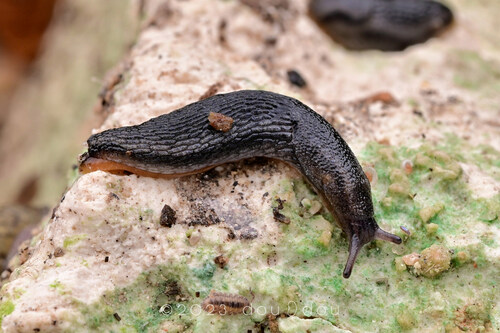
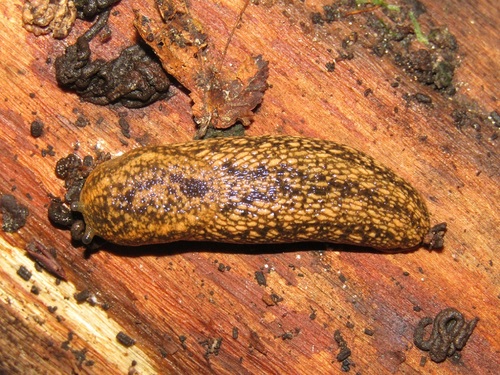
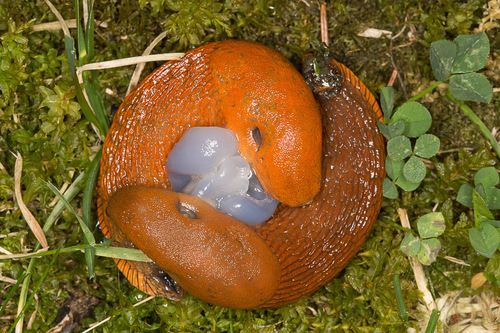
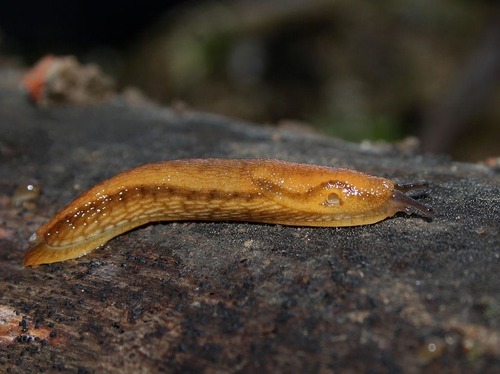
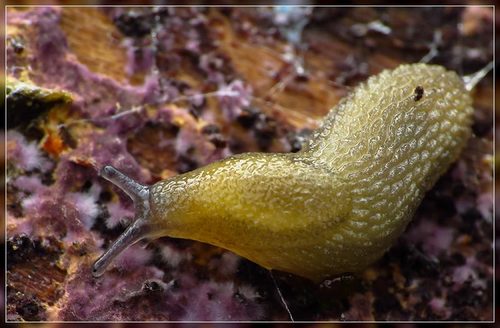
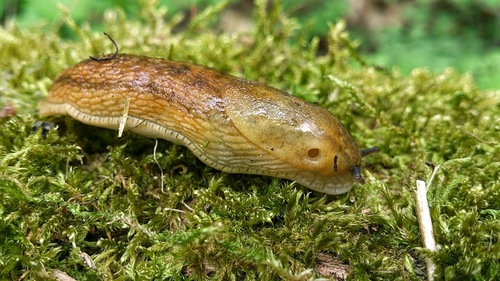
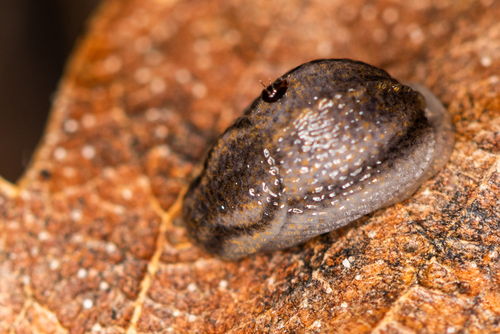
Arion fasciatus, also called the orange banded arion, shares many traits with most other stylommatophoran slugs. Like other slugs in this group, it is hermaphroditic, and has a distinct head, mantle, and foot. Two pairs of retractable tentacles grow on its head: the upper pair bears light-sensing organs, while the lower pair functions in sensing smell. The mantle covers most of the top of the first third of the slug’s body, and its breathing pore, the pneumostome, sits on the front right portion of the mantle. The mouth and radula are located on the lower section of the head. This species has a dark stripe that runs the full length of the body and mantle along both sides of its body. Its base body color is gray, off-white, or tan, and it has a very light-colored foot. When moving, Arion fasciatus reaches approximately six centimeters in length. It normally secretes clear mucus, which it leaves behind as a visible trail. When the slug is disturbed, however, its mucus becomes thicker and stickier. Research has found that this thicker mucus can protect the slug from predation by Carabid beetles, but this specialized mucus supply is exhausted after three minutes of continuous stimulation. After exhaustion, it can take up to a full day for the slug to restore mucus production to pre-attack levels, leaving it vulnerable to other predators during this time. Arion fasciatus is native to Northern Europe, but it has spread to other cool, wet climates, including the British Isles, Canada, and the Northern United States. It is thought to have first been carried across the Atlantic Ocean during the colonial era. This species is most commonly found in ecotonal habitats.