About Aria edulis (Willd.) M.Roem.
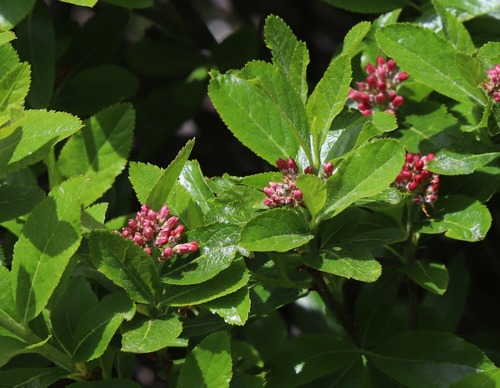
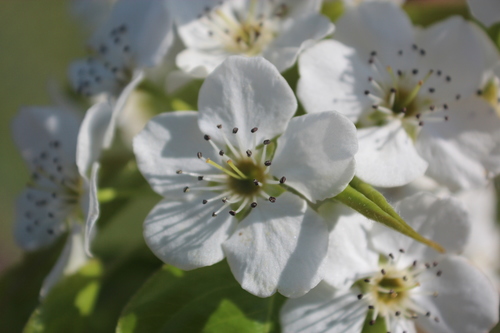
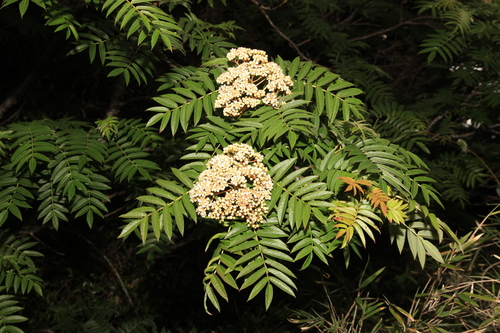
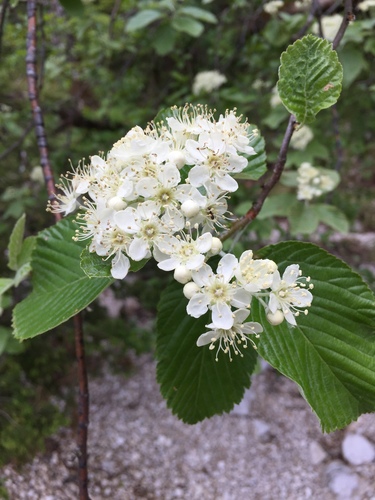
Aria edulis, commonly known as whitebeam or common whitebeam, is a species of deciduous tree belonging to the Rosaceae family. This tree often produces new shoots around its trunk. It is typically compact with a rounded domed shape, and has a small number of upswept branches. Its leaves have an almost-white underside. Hermaphrodite cream-white flowers bloom in May, and are pollinated by insects. These flowers develop into scarlet berries, which are commonly eaten by birds. Aria edulis is native to most of Europe, North Africa (specifically Algeria, Morocco, and Tunisia), and temperate Asia (specifically Eastern Turkey, Armenia, and Georgia). It generally prefers growing on dry limestone and chalk soils. Two cultivars of this species, A. edulis 'Lutescens' which has very whitish-green early leaves, and A. edulis 'Majestica' which has large leaves, have both earned the Royal Horticultural Society's Award of Garden Merit. The berries of Aria edulis are edible once they have become overripe, a state called bletting.