About Argyroneta aquatica (Clerck, 1757)
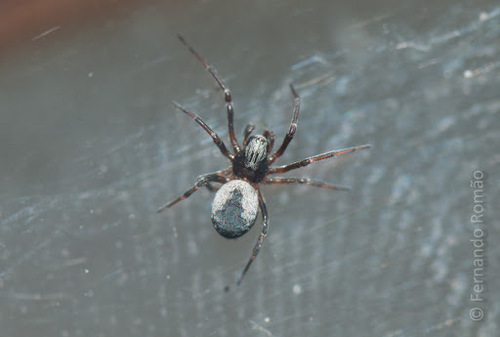
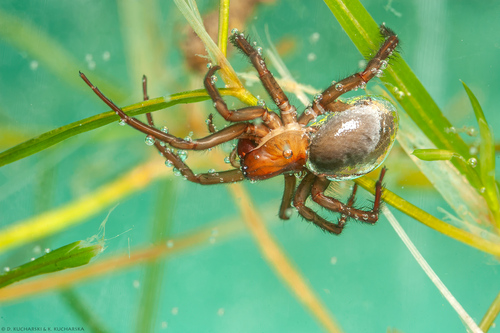
The diving bell spider, also called the water spider, has the scientific name Argyroneta aquatica (Clerck, 1757). It is the only spider species known to live almost entirely underwater, and the only member of the genus Argyroneta, which is the type genus of the family Argyronetidae. When out of water, this spider ranges in color from mid to dark brown. The hairs covering its abdomen give it a dark grey, velvet-like appearance. It is native to freshwater habitats in Europe and Asia. Argyroneta aquatica occurs in clean freshwater habitats that contain aquatic vegetation, including lakes, ponds, canals, marshes, and slow-moving streams. Its range covers most of mainland Europe, with no recorded populations in Portugal, Greece, and Albania. It also lives in the British Isles and from central to northern Asia, extending as far south as Iran and as far north as Siberia, up to latitude 62°N. The nominate subspecies inhabits most of the species' overall range, while Japan has its own distinct, very similar subspecies called A. a. japonica. In South Korea, the Yeoncheon Eundaeri water spider habitat is a protected area set aside for this endangered species. Like all other spiders, Argyroneta aquatica breathes air. When it is submerged, a dense layer of hydrophobic hairs on its abdomen and legs traps an air bubble, which gives the abdomen a silvery look. In captivity, this spider lives for around two years. Argyroneta aquatica can stay submerged for long periods thanks to a silk-built structure it creates to hold an oxygen supply; this structure is named for resembling a diving bell. The species shows size variation among individuals. Female body size may be limited because females invest more energy into building and maintaining their larger diving bells. Males are more active than females, and are on average almost 30% larger. Males have a head-and-body length of 10–15 mm (0.39–0.59 in), while females have a head-and-body length of 8–12 mm (0.31–0.47 in). This sexual size dimorphism, where males are larger, is unusual for spiders; most spider species have larger females. Existing theories propose that males' more active hunting style needs greater strength to counteract water resistance and the buoyancy of their mobile air supplies. Larger male body size is also linked to longer front legs, which have been shown to affect diving ability and give males better diving capabilities than the more sessile females. Additionally, females build larger air bells than males, because the bell is also used to care for offspring. This requires females to collect air from the water surface much more frequently. A larger body also traps more air on the abdomen, which increases the amount of buoyancy that must be overcome. As a result, larger females have higher energy costs than both males of the same size and smaller females, and this could limit how many offspring they are able to produce. Diving bell spiders prey on aquatic insects and crustaceans, such as mosquito larvae and Daphnia. They are themselves preyed on by frogs and fish.