About Argyresthia curvella (Linnaeus, 1761)
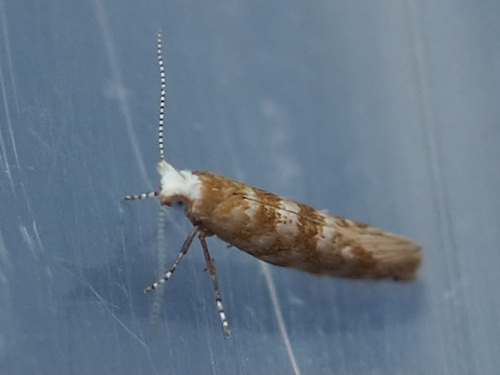
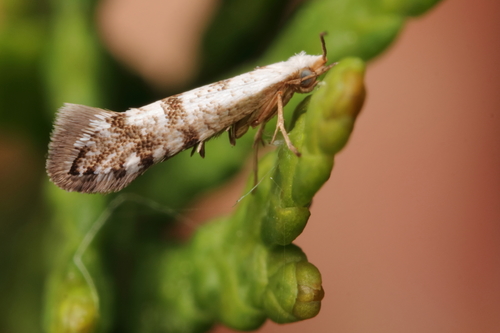
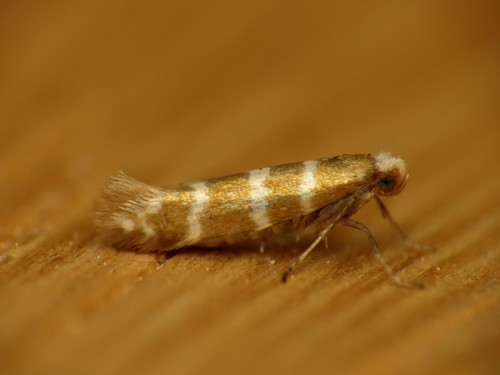
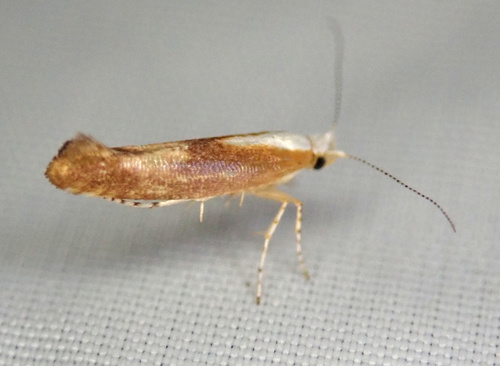
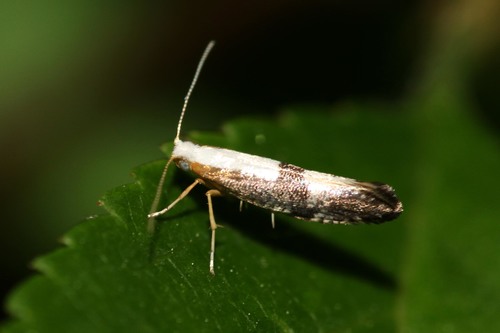
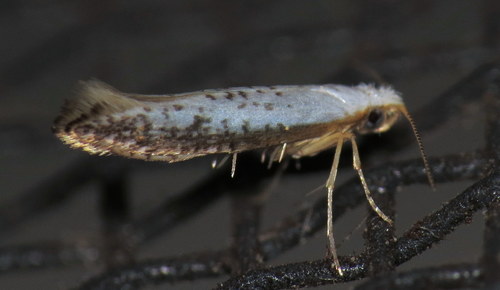
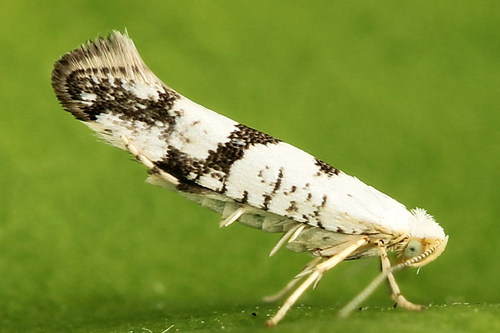
Argyresthia curvella is a species of ermine moth in the family Yponomeutidae. It is classified in the subfamily Argyresthiinae, which some authorities treat as a separate full family within the superfamily Yponomeutoidea. Its common name, apple blossom tineid, comes from an early belief that it was a member of the tineid moth family Tineidae. This small moth is widespread across northwestern Eurasia. It is not found in Iberia, and is likely absent from the whole of the Balkans; its range generally extends south only to the northern Mediterranean region, and a possibly isolated population is found in the Caucasus. Where the species occurs, it is usually not rare, and may sometimes be abundant. Nocturnal adult moths are attracted to light sources, and are active in flight around June and July, or somewhat later, depending on their location. Adult moths have a wingspan of 10–12 mm. As is typical for Yponomeutidae, the forewings have a distinct black-and-white pattern, though this pattern fades easily in museum specimens. The pattern is made up of a thick oblique black line that runs from the center of the forewing's dorsal margin to a point closer to the apex on the costal margin. A thinner, often somewhat irregular black band extends from the apex to meet this first line. The remaining areas of the forewings are heavily dotted with small black blotches. The hindwings and the moth's body are a pale greyish colour. The caterpillars feed on apple (Malus) trees, eating the tree's blossoms; it is also suspected that they occasionally feed on rotting apple wood. When present in large numbers, the caterpillars can become a pest in apple orchards.