About Argyranthemum tenerifae Humphries
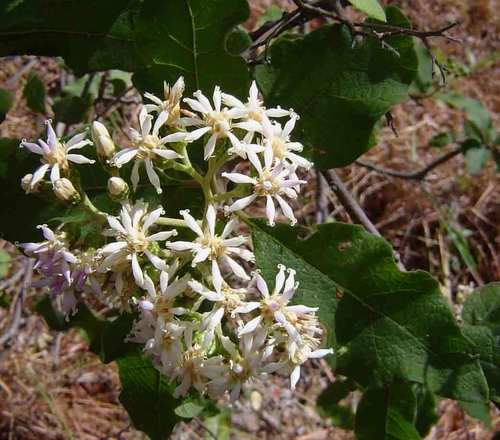
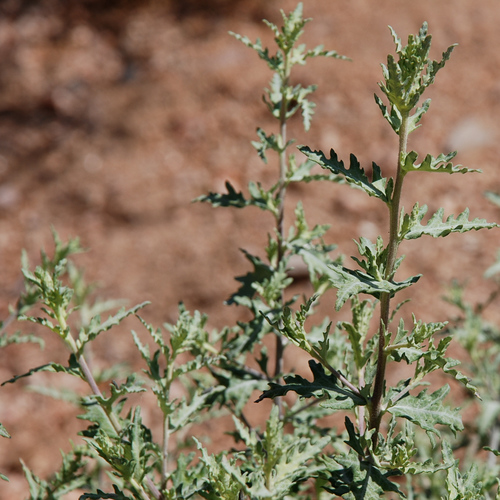
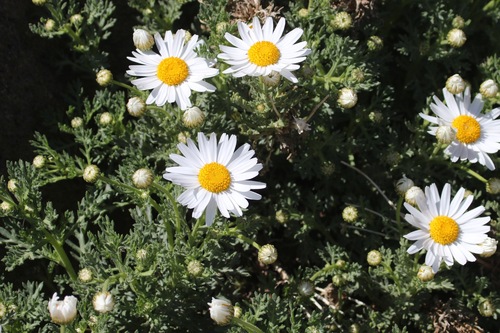
Argyranthemum tenerifae Humphries has glabrous to scabrous, ascending stems that grow 30–50 cm tall and branch from the base. Its leaves are obovate to oblong in outline, pinnatisect to bipinnatisect, glabrous to scabrous, and measure 2–6 cm long by 0.3–1.6 cm wide. The inflorescence is a corymb holding 2–12 flower heads, with peduncles reaching up to 30 cm in length. Flower petals are white, while flower discs are yellow. It flowers from March to October, and fruits from April to October. Like all other taxa in the genus Argyranthemum, its chromosome count is 2n = 2x = 18, consisting of 14 meta- to submetacentric chromosomes and 4 subtelocentric, satellited chromosomes. This alpine species is found only in Caldera las Cañadas on the Canary Island of Tenerife. It grows at altitudes between 1900 and 2300 m, with some individual plants growing as high as 3700 m. Its growing range extends from El Portillo in the northeast to Llana de Ucanca and Boca de Tauce in the south. It occurs less commonly on the northwestern slopes of Teide, and in the areas of Llano de Maja, Izaña and Siete Fuentes. The species grows on volcanic rock fields, in small soil-filled fractures, on top of pumice substrate, and in nitrophilous habitats such as road margins. This species is one of the three preferred food plants for Ovis ammon musimon in both high mountain open shrub and Canary pine forest; Ovis ammon musimon were released on Tenerife in 1971. Argyranthemum gammacytorhabdovirus, a novel plant virus in the family Rhabdoviridae, has been identified from publicly available plant RNA-seq data from this species.