About Argosarchus horridus (White, 1846)
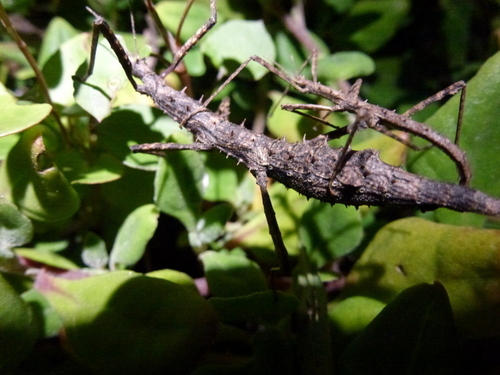
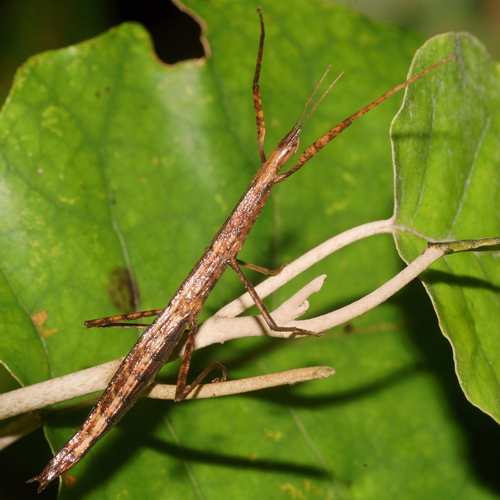
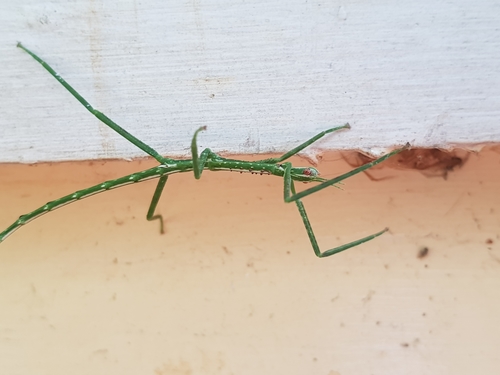
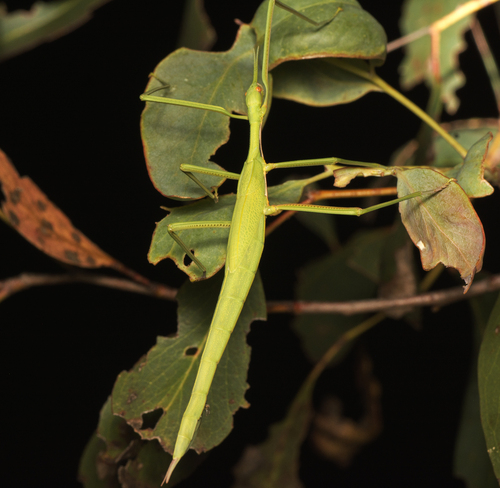
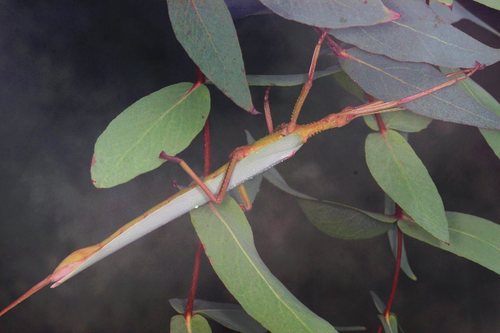
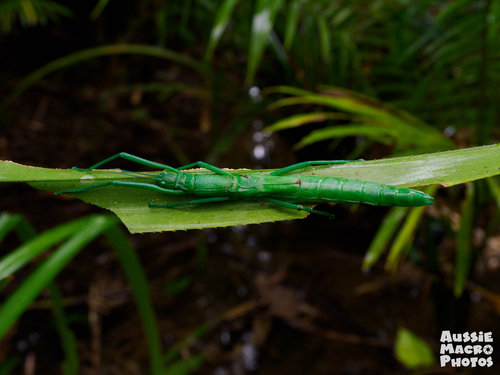
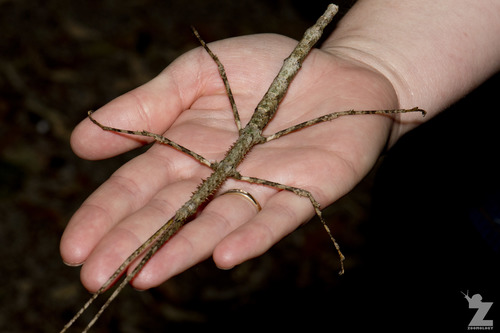
Argosarchus horridus (White, 1846) is an insect species endemic to New Zealand, and it is the longest insect found in New Zealand. Females of this species grow to an average of 12–15 centimetres, and can reach a maximum length of 20 centimetres (7.9 in). Females are much larger than males, and have a visibly spiny thorax. Males are much skinnier and shorter than females, usually reaching a maximum of 10 centimetres (3.9 in). A distinguishing feature of A. horridus is that the coxa of its two forelegs are purple or pink. The body colour of A. horridus ranges from pale white to dark brown; females are usually grey, while males are usually dark greenish-brown or dark brown. Males have longer spines than females, but have fewer spines overall.
This species is found throughout most of the North Island of New Zealand, and in some parts of the South Island. It occurs in coastal areas from sea level up to at least 900 m above sea level, and is absent from central South Island and all high-altitude areas. It has also been recorded on a number of New Zealand offshore islands, including the Chatham Islands. Only females occur in the Chatham Islands population, which was once classified as a separate species named Argosarchus schauinslandi. A. horridus can be found in gardens on ramarama (Lophomyrtus bullata), and in the wild on native and introduced Rubus species in the Rosaceae family, and climbing rātā (Metrosideros perforata). Because it occupies a wide distribution, uses a range of host plants, and lives in many different habitat types, A. horridus is considered an ecological generalist.
Like many other New Zealand stick insects, A. horridus is facultatively parthenogenetic. This means some populations are made up entirely of females that reproduce asexually, while other populations include both males and females that can reproduce either asexually or sexually. Adults hatch in early summer, and can be found feeding while hanging from their host plant. They are most active at night; males actively search for female mates. Males mate by climbing onto the female's back, and use toothed claspers near their genitalia to attach and begin copulation. Males may remain clasped to a female even when not mating, as a form of mate-guarding. Throughout their adult lives, mature females lay eggs continuously, dropping them indiscriminately onto the ground. The large eggs of A. horridus resemble plant seeds, and are well-camouflaged on the forest floor. Eggs hatch in early spring, and nymphs look like miniature versions of adult A. horridus. Like other stick insects, A. horridus is hemimetabolous; nymphs grow through moulting, going through six instar stages before reaching full adulthood.