About Argonauta nodosus (Lightfoot), 1786
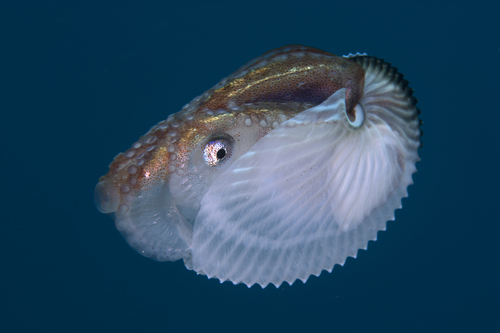
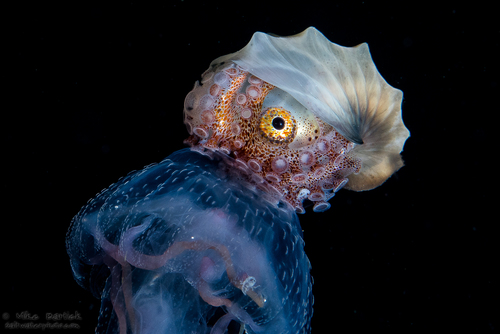
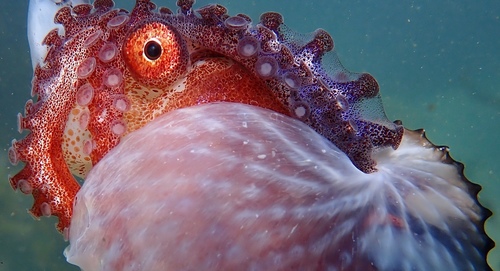
Argonauta nodosus (Lightfoot), 1786 shows strong sexual size dimorphism: mature females reach 100 mm mantle length and 300 mm total length, while males do not grow longer than 40 mm. This species has a specialized pair of webbed arms covered in many chromatophores; researcher Mark Norman has recorded that the colour of these webs can change rapidly from maroon red to reflective silver. In southern Australia, egg clusters laid by A. nodosus have been reported to be clearly divided into three portions, with all eggs within each portion at a similar developmental stage. This pattern of development is also seen in the egg masses of the related species Argonauta bottgeri. A. nodosus has a relatively broad distribution that spans the Indo-Pacific region and the eastern coast of South America, and it is found exclusively in the Southern Hemisphere. It is most common in the waters of southern Australia, New Zealand, and South Africa. The type specimen of A. nodosus was collected off the Cape of Good Hope, and the location of its repository is unknown. This species is occasionally found in mass strandings along the coastlines of South Africa and southern Australia. These strandings are seasonal, typically occurring between April and August, towards the end of the species' spawning season.