About Argonauta argo Linnaeus, 1758
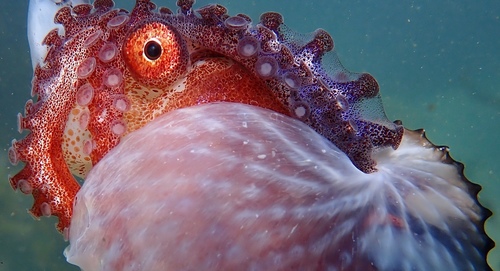
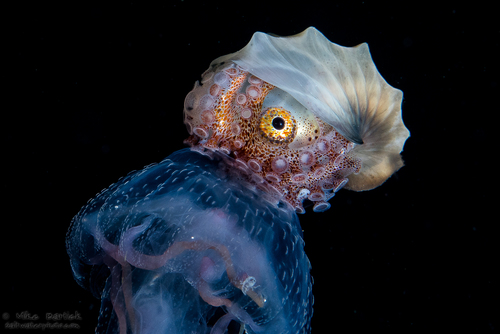
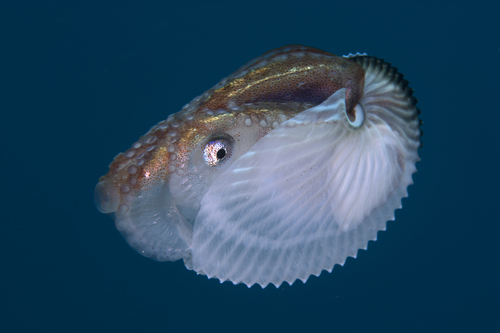
Argonauta argo, first described by Linnaeus in 1758, is the largest species in its genus, and it also produces the largest eggcase among members of the genus. When alive, individuals of this species have a distinctive blue sheen on their first pair of arms and around their eyes.
The eggcase of A. argo has several defining features: two rows of small, sharp tubercles run along a narrow keel, smooth ribs cross the shell walls, and the shell aperture is thickened, which forms distinct protrusions called 'horns' on either side of the aperture. Argonauta cygnus, described by Monterosato in 1889, was originally based on a shell that did not have these protrusions, but this name is now considered a junior synonym of A. argo. The largest measured A. argo eggcase on record reaches 300 mm in size. A damaged beak from a female A. argo with a 40.0 mm mantle length, caught at 20°56′N 175°33′W, that measures 4.3 mm in hood length and 7.8 mm in crest length is documented in *A Handbook for the Identification of Cephalopod Beaks*.
A. argo is a cosmopolitan species found in tropical and subtropical waters across the globe. A smaller dwarf form of this species that occurs in the Mediterranean Sea was originally described as the subspecies Argonauta argo mediterranea by Monterosato in 1914, but this taxon is now considered invalid.