About Argemone mexicana L.
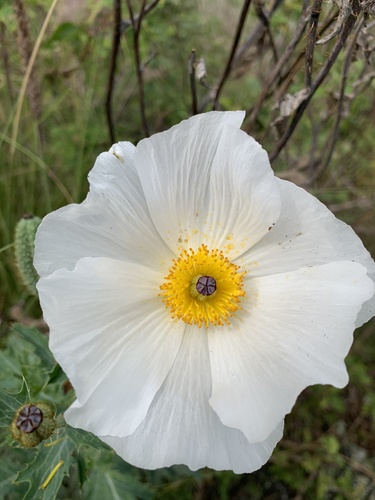
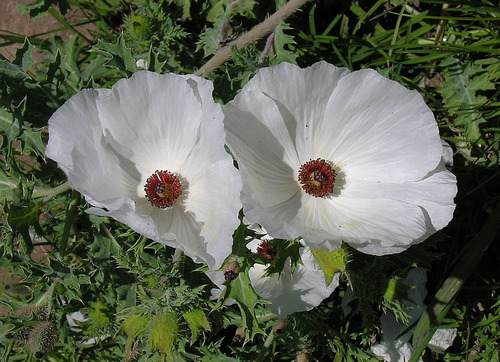
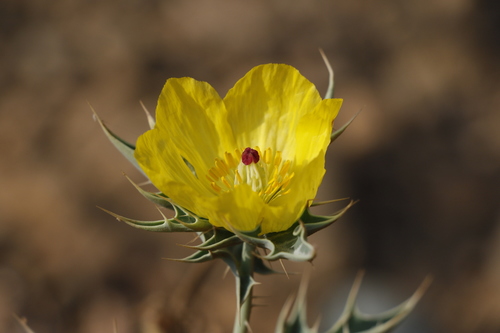
Argemone mexicana L. has common names including Mexican poppy, Mexican prickly poppy, flowering thistle, cardo, and cardosanto. This poppy species is native to Mexico and is now widely naturalized across many regions of the world. It is an extremely hardy pioneer plant that tolerates drought and poor soil, and it is often the only vegetation covering new road cuttings or road verges. It produces bright yellow latex. The plant is poisonous to grazing animals and is rarely eaten, but many groups of people have used it medicinally; these include populations from its native range, indigenous peoples of the western United States, populations across parts of Mexico, and communities in many parts of India. In India, this species reaches its peak flowering phase in March, when the Holi festival is held. During the Holika Dahan festival, adults and children worship by offering its flowers, and the species is called "Kanteli Ka Phul" and "Satyanashi" in local Indian names. All parts of the Argemone mexicana plant are poisonous. Its seeds look very similar to the seeds of Brassica nigra, or mustard, so mustard supplies are sometimes adulterated with argemone seeds, which makes the adulterated mustard poisonous. Several major outbreaks of katkar poisoning have been recorded in India, Fiji, South Africa and other countries; the last major outbreak in India happened in 1998. It has been shown that 1% adulteration of mustard oil by argemone oil is enough to cause clinical disease. In India, argemone oil is often illegally mixed with sunflower oil and sesame oil to increase the total volume of oil for sale, but this adulteration causes health problems. Well-known edible oil brands in India therefore label their products "no argemone oil" to confirm their purity. Katkar oil poisoning causes epidemic dropsy, with symptoms including extreme swelling, most noticeably in the legs. Ingesting any part of the plant can cause perianal itching, pneumonia, myocarditis, congestive cardiac failure, ascites, sarcoid-like skin changes, alopecia, and hepatomegaly. In traditional medicine, the Seri people of Sonora, Mexico use the entire plant both fresh and dried. They make an infusion from it to relieve kidney pain after childbirth. When Spanish settlers arrived in Sonora, they named the plant cardosanto and used it as a laxative. In Mali, an Argemone mexicana tea is used to treat malaria. In Indian traditional medicine, the yellow sap of A. mexicana and the whole plant are used as a proposed treatment for jaundice. Researchers have demonstrated that biodiesel can be produced from A. mexicana seed oil using crystalline manganese carbonate.