About Arge ochropus (Gmelin, 1790)
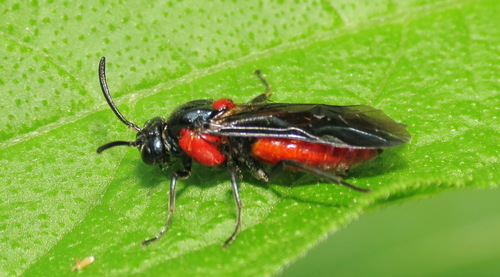
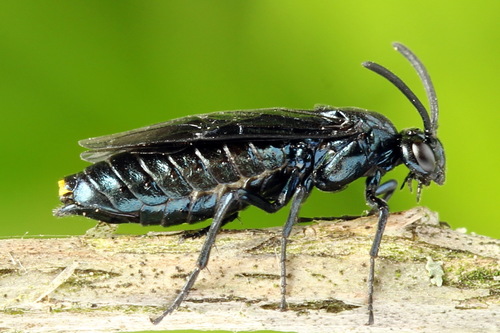
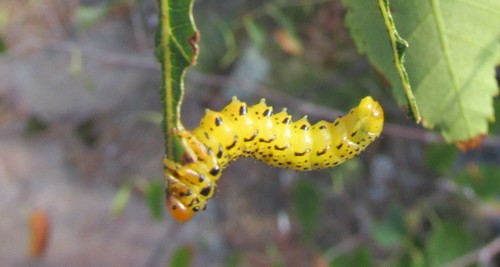
Adults of Arge ochropus (Gmelin, 1790) reach 7–10 millimetres (0.28–0.39 in) in length, and are active from April to May. The species' head and thorax are black, while its abdomen and wings are reddish orange. Larvae are yellow, bristly, and marked with black spots. This species is very similar to Athalia rosae of the family Tenthredinidae. The key difference is that Arge ochropus has antennae made of three sections, with the third section being greatly elongated, while Athalia rosae has antennae with 10–11 segments. Arge pagana, a related species, is mostly black across its upper body. This sawfly is naturally distributed across Europe, Asia Minor, the Caucasus, Turkmenistan, Northern Iran, and Western Siberia extending as far east as Lake Baikal. It has also been introduced to the northeastern United States and Eastern Canada. Adult Arge ochropus feed on nectar and pollen from Tanacetum vulgare, Angelica sylvestris, and Heracleum sphondylium. This species produces two generations per year. Females lay approximately 16–18 eggs on rose stems, and larvae feed on the leaves of several species in the genus Rosa, including Rosa canina, Rosa majalis, and Rosa pimpinellifolia.