About Arenaeus cribrarius (Lamarck, 1818)
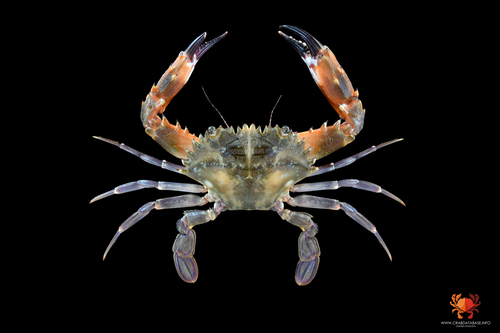
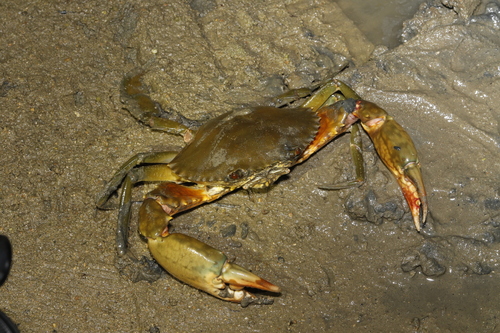
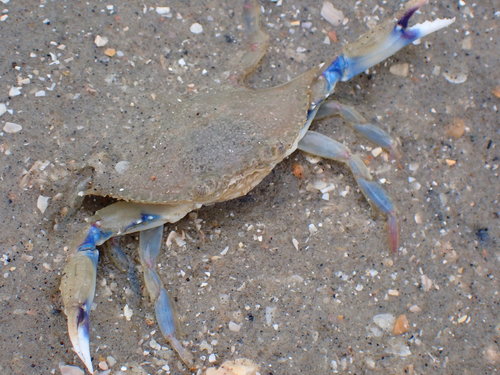
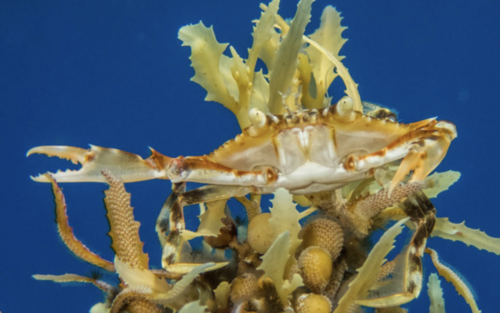
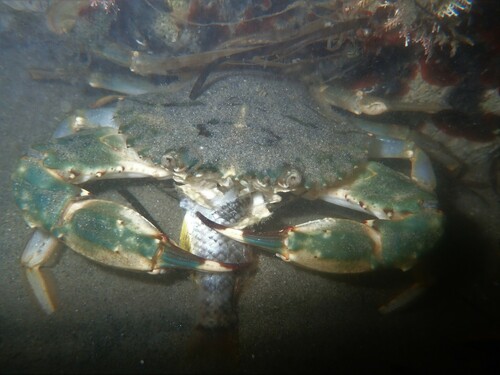
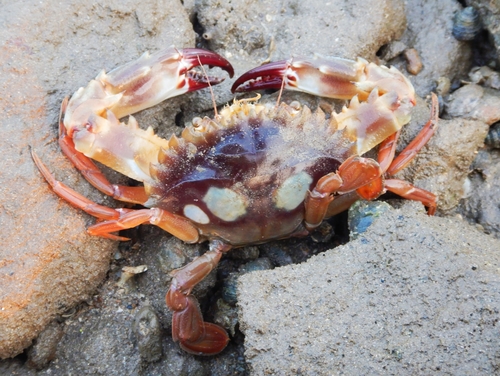
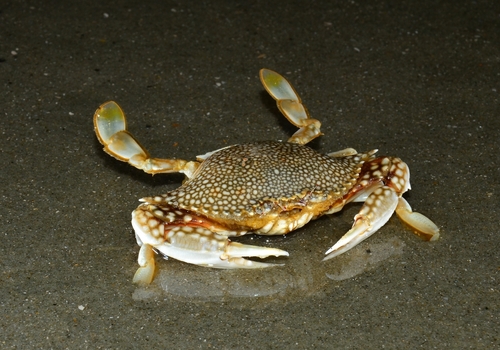
Arenaeus cribrarius, commonly called the speckled swimming crab, is a species of swimming crab that belongs to the family Portunidae. This crab species ranges along the Atlantic coast from Massachusetts in the United States down to areas of Argentina. They are most commonly found in shallow sandy areas of ocean beaches, but can occur at depths up to 200 feet, or 61 meters. They typically inhabit temperate or tropical waters with temperatures between 11 and 29 degrees Celsius, and salinity between 28 and 35 PSU. Arenaeus cribrarius often buries itself completely in sand, leaving only a gap to allow water to flow to its gills. It maintains this gap by clearing sand away using its claws and the hairs around its mouth. Arenaeus cribrarius is a nocturnal and solitary organism, and only interacts with other members of its species during breeding periods. When Arenaeus cribrarius reaches sexual maturity at around five to seven years of age, it begins to mate. This species breeds year-round and has a polygynandrous mating system. A sexually mature male, which is between molts, will select a premolt female that is displaying courtship behavior. Individuals of this species communicate with one another through chemical, visual, and acoustic cues. The male carries the female for thirty days in a precopulatory position under his body, until the female molts. While the female's new shell is still soft, the male inverts her so that their abdomens are in contact, then transfers his spermatophores to her gonopores. After mating is complete, the female spawns eggs approximately 57 days later. The fecundity of a female speckled swimming crab ranges from 135,000 to 680,000 eggs. Nauplia hatch from the eggs around 18 days after spawning, and develop into the first crab stage 13 days after hatching. The average lifespan of a speckled swimming crab is two years.