About Ardeola grayii (Sykes, 1832)
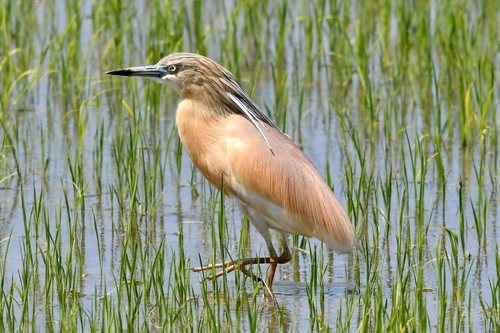
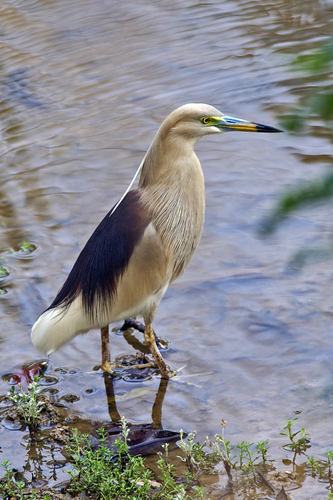
Indian pond herons, with the scientific name Ardeola grayii (Sykes, 1832), are stocky herons with short necks, short thick bills, and buff-brown backs. During summer, adult individuals develop long neck feathers. When they take flight, their appearance changes dramatically: their dull non-flight plumage is replaced by prominent bright white on their wings that stands out clearly. They are very similar to squacco herons (Ardeola ralloides), but have darker backs than this species. To the east of the Indian pond heron’s range, the species is replaced by the Chinese pond heron (Ardeola bacchus). During the breeding season, some individuals have been recorded with red legs. The number of observed individuals with this trait does not indicate that it is a normal breeding-season change for adults, and some researchers have suggested it may be the result of genetic variants. Erythristic plumage has also been noted in this species. A subspecies named phillipsi has been proposed for populations found in the Maldives, but this proposed classification has not received much acceptance. This species forms a superspecies with the closely related Chinese pond heron, Javan pond heron, and Madagascar pond heron. Indian pond herons are usually silent, but may produce a harsh croak as an alarm call when they are flushed or near their nests. This bird was first formally described by Colonel W. H. Sykes in 1832, and its scientific name was chosen to honor John Edward Gray. Karyology studies have found that pond herons of this species have 68 chromosomes (2N). In terms of behaviour and ecology, Indian pond herons are very common in India. They are usually solitary foragers, but multiple individuals may sometimes feed in close proximity during the dry season, when small wetlands have a high concentration of prey. They are semi-colonial breeders, and may also forage at garbage heaps. During dry seasons, they sometimes forage on well-watered lawns, and even in dry grassland. While foraging, they allow people and other potential threats to approach closely, and only flush away when the threat is near. They sometimes form communal roosts, often in avenue trees above busy urban areas. The feeding habitat of the Indian pond heron is marshy wetlands. They usually feed along the edges of ponds, but make extensive use of floating vegetation such as water hyacinth to reach deeper water. On occasion, they may also swim on the water surface, or fish from the air before landing in deeper water. They have been observed flying to capture fish that are leaping out of the water. Sometimes, they fly low over the water to drive frogs and fish toward the shore before settling along the shoreline. They have also been recorded picking up crumbs of bread and dropping them onto the water surface to bait fish. The primary food of Indian pond herons includes crustaceans, aquatic insects, fish, tadpoles, and sometimes leeches of the genus Herpobdelloides. Outside of wetlands, these herons feed on insects including crickets, dragonflies, and bees, fish (one study in Chandigarh noted that Barilius fish are an important food item here), and amphibians.