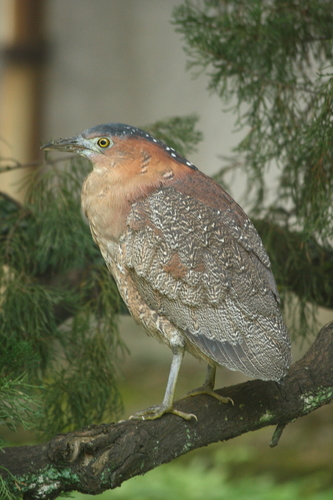
About Ardea sumatrana Raffles, 1822
The great-billed heron (Ardea sumatrana Raffles, 1822) is a large bird, typically standing 115 cm (45 in) tall and weighing up to 2.6 kg (5.7 lb). It resembles the purple heron in appearance, but is larger and darker. Most of its upper body plumage is dark grey, and it has a uniform dark grey upperwing during flight. It flies slowly with its neck retracted; this trait is characteristic of herons and bitterns, and distinguishes them from storks, cranes, and spoonbills, which extend their necks during flight. This species feeds in shallow water, spearing fish with its long, sharp bill. It will either wait motionless for prey, or slowly stalk its victim. The great-billed heron has a very large range, occurring across much of coastal Southern Asia and Australasia, including Australia, India, Indonesia, Malaysia, and the Philippines. Its habitats are largely coastal, including islands, coral reefs, mangroves, and large rivers. Occasionally, it can also be found inland in shallow ponds. It is considered native to Queensland, Australia.