About Ardea goliath Cretzschmar, 1829
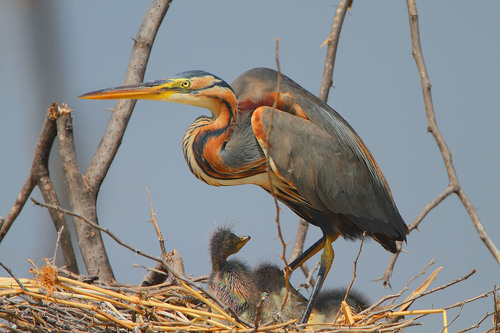
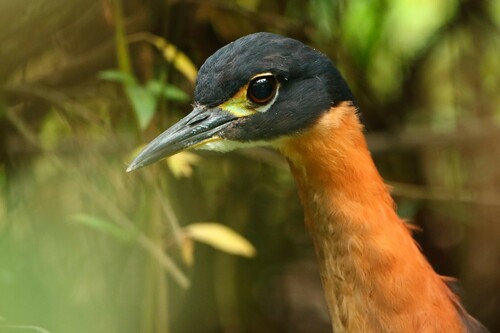
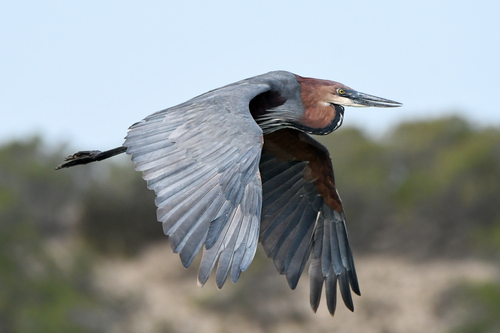
Ardea goliath, commonly known as the goliath heron, is the largest living heron species on Earth; the extinct Bennu heron was larger. Adult goliath herons measure 120–152 cm (3 ft 11 in – 5 ft 0 in) in height, have a wingspan of 185–230 cm (6 ft 1 in – 7 ft 7 in), and weigh 4–5 kg (8.8–11.0 lb). The tarsus ranges from 21.2 to 25.5 cm (8.3 to 10.0 in), the average wing chord length is around 60.7 cm (23.9 in), the culmen measures 18 to 20 cm (7.1 to 7.9 in), and the total bill length measured from the gape is around 24 cm (9.4 in). In flight, this heron moves slowly and appears rather ponderous, and unlike some other heron species, it does not hold its legs horizontally when flying. Males and females have similar plumage: the birds are overall covered in a mix of slate gray and chestnut feathers. The head, its bushy crest, face, and the back and sides of the neck are chestnut. The chin, throat, foreneck, and upper breast are white, marked with black streaks across the foreneck and upper breast. The lower breast and belly are buff with black streaks. The back and upper wings are slate-grey, with a chestnut shoulder patch at the bend of the wings when the wings are closed. The under-wing is pale chestnut. The upper mandible is black, the lores and orbital areas are yellow with a greenish tinge, the eyes are yellow, and the legs and feet are black. Juveniles have similar patterning to adults, but their plumage is paler overall. The only other heron with somewhat similar plumage coloring is the widespread purple heron, which is much smaller than the goliath heron. Despite sharing plumage traits with the purple heron, the closest living relatives of the goliath heron are the great-billed heron and the white-bellied heron, which are native to Southern Asia. Because all three species are large in size, this group is sometimes called the "giant herons". Goliath herons produce a distinctive deep bark-like call, most often described as kowoork, that can be heard from distances up to 2 km. A sharper, higher-pitched disturbance call called arrk can also occasionally be heard. The bird gives a huh-huh call during its crouched display stage, and a krooo call can be heard when it extends its neck. Organ-like duetting at nest sites has been reported, but this behavior has not been confirmed. Goliath herons are highly aquatic even for herons, and they rarely travel far from water. They prefer to fly along waterways rather than crossing over land. Key habitats for the species include lakes, swamps, mangrove wetlands, reefs that rarely have cool water, and sometimes river deltas. They typically occupy shallow water areas, but can also be seen near deep water above dense aquatic vegetation, and they may even live in small watering holes. Their range spans elevations from sea level up to 2,100 m (6,900 ft). Goliath herons generally prefer undisturbed, pristine wetlands and usually avoid areas that experience regular human disturbance.