About Arctostaphylos pallida Eastw.
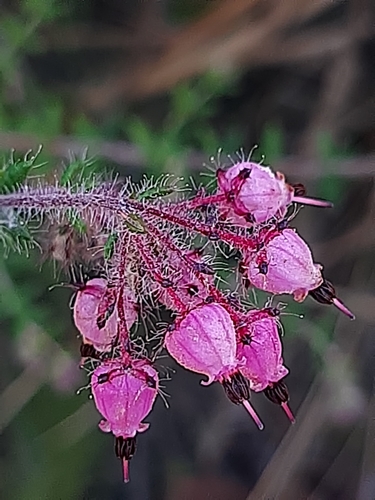
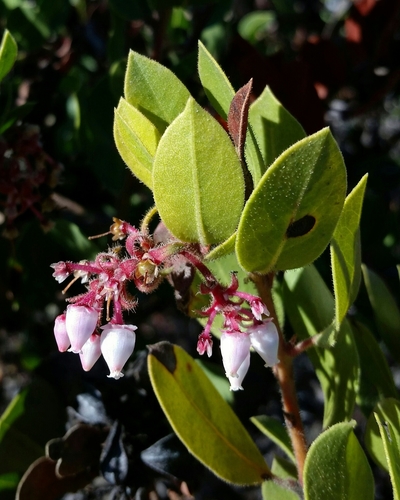
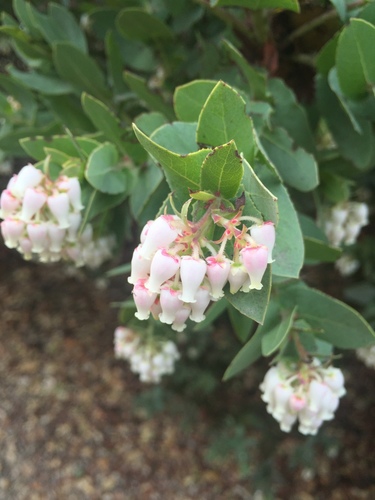
Arctostaphylos pallida Eastw., commonly called pallid manzanita, is a shrub that reaches a height of 1.8 to 4.0 meters (6 to 13 feet). Its branches are reddish or grayish, typically more often reddish, and its twigs are generally bristly. The leaves of this shrub are ovate to triangular in shape, and they are bristly, strongly overlapping, and clasping. Leaves measure 1.0 to 1.8 inches long, with a maximum length around 46 mm, and 0.8 to 1.2 inches wide, with a maximum width around 30 mm. Its dense white flowers are urn-shaped, 0.2 to 0.3 inches (7.6 mm) long, and bloom from November to March. A. pallida frequently grows alongside another manzanita, brittle leaf manzanita (Arctostaphylos tomentosa ssp. crustacea). Unlike A. pallida, brittle leaf manzanita forms burls and has spreading leaves, while A. pallida does not form burls at all. This species occurs at elevations between 200 and 445 meters (656 to 1460 feet), growing primarily on thin soils made of chert and shale. It is found in manzanita chaparral habitat within the montane chaparral and woodlands ecosystem, and it is often surrounded by oak woodlands and other chaparral shrubs. Arctostaphylos pallida is endemic to California, where it is known from around 13 populations located only in Alameda and Contra Costa counties. The two largest populations are managed by the East Bay Regional Park District, one at Huckleberry Ridge in Huckleberry Botanic Regional Preserve spanning Alameda and Contra Costa counties, and the other at Sobrante Ridge Regional Park in Contra Costa County. These two largest populations together cover approximately 82 acres (330,000 square meters) and grow in maritime sage and chaparral, a habitat with mesic soil conditions and regular maritime influence. Several other small natural and planted populations are also found within Alameda and Contra Costa counties; many of these smaller populations grow in coastal scrub.