About Arctocephalus galapagoensis Heller, 1904
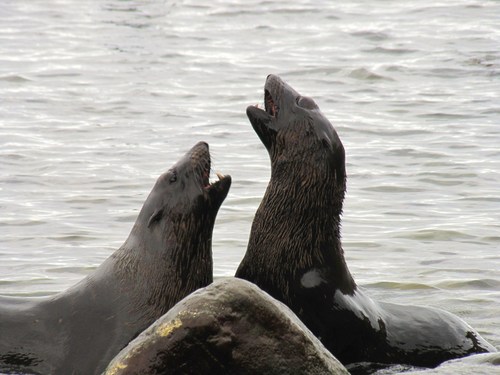
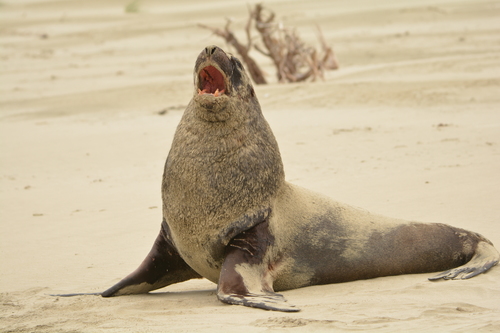
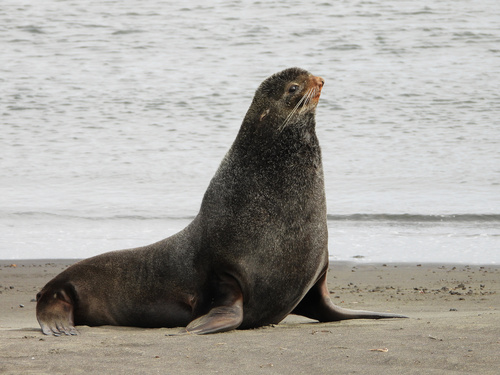
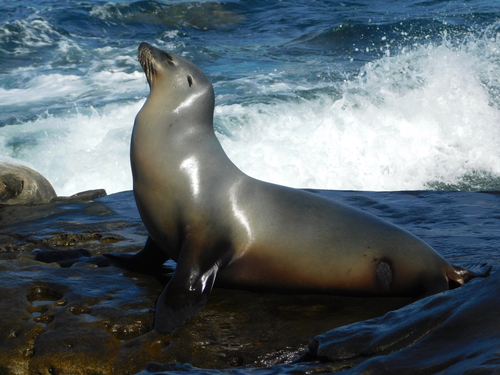
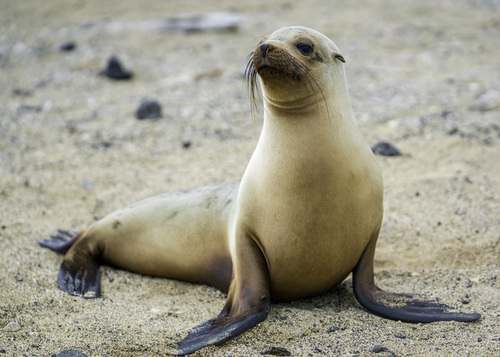
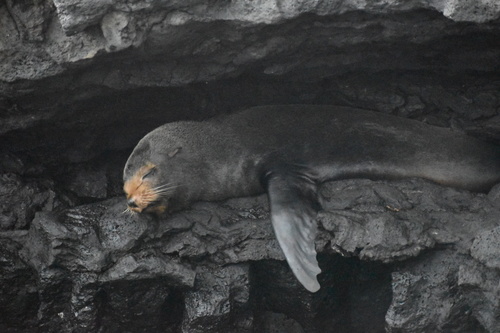
Galápagos fur seals (Arctocephalus galapagoensis Heller, 1904) are the smallest species of otariids. Pups are born with a black natal coat, which they molt to reveal a lighter brown coat before reaching adulthood. Among otariids, Galápagos fur seals show the least sexual dimorphism: males are up to twice as heavy as females, and 1 to 1.3 times as long as females. On average, adult males grow to 1.5 m (5 feet) in length and weigh around 64 kg (140 lb), while adult females average 1.25 m (4 ft 1 in) in length and weigh 27 kg (60 lb). They have large eyes that let them hunt at night. They look very similar to Galápagos sea lions, so distinguishing differences between the two are notable. The Galápagos fur seal is endemic to the Galapagos Islands, located in Ecuador, South America, and can be found on nearly all of the Galapagos islands. In this warm climate, they typically stay close to the coastline, where rock ledges and crevices provide shade. This is a non-migratory species. Lactating females do not travel long distances, and generally remain within their colony, only leaving for moderately brief outings when they do venture away. However, recent research has recorded Galápagos fur seals present in Mexico and Guatemala. Galápagos fur seals live in large colonies on the rocky beaches of the Galápagos Islands. During breeding season, which runs from mid-August to mid-November with a peak in late September and early October, males divide these colonies into individual territories. Each successfully breeding female will select a territory on the beach to give birth to her pup.