About Arctocephalus australis (Zimmermann, 1783)
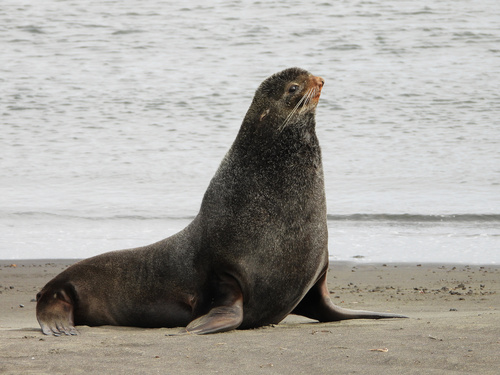
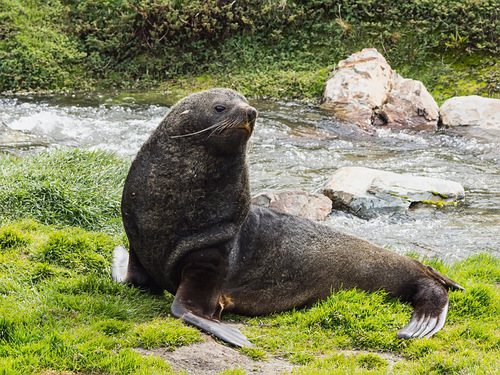
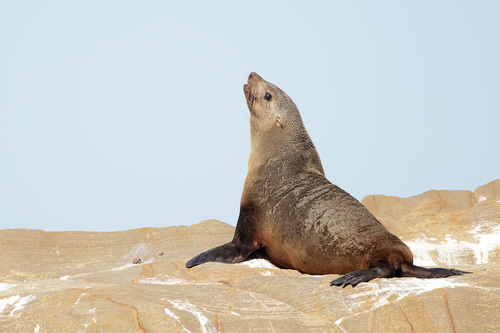
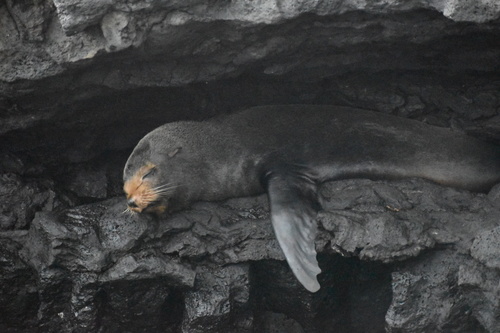
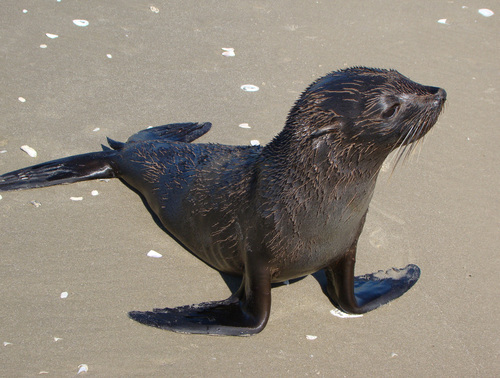
Arctocephalus australis, commonly called the South American fur seal, has a dark grey or brown fur coat. Adult males are much larger than females, with thicker necks, larger shoulders, and a mane of longer guard hairs that develops on the neck and shoulders of males. Body size varies across the species’ range; on average, adult males grow up to 2 meters long and weigh 150 to 200 kilograms, while adult females reach up to 1.5 meters long and weigh 30 to 60 kilograms. Newborn South American fur seals measure 60 to 65 centimeters long and weigh 3.5 to 5.5 kilograms. This species inhabits neotropical ocean coasts. On the Pacific coast, its range extends from the Paracas Peninsula of southern Peru south to Cape Horn, and on the Atlantic coast it reaches northward to southern Brazil. It also occurs on the Falkland Islands, Staten Island, and Escondida Island, with isolated records documented from continental Ecuador, the Galápagos Islands, and Gorgona Island (Colombia). South American fur seals prefer rocky shores and islands, especially those with steep slopes. In Peru, individuals have been found in sea caves, and some climb up to 15 meters above sea level to find resting spots. Little anatomical information is available for southern fur seals of the genus Arctocephalus, and very little is known about the foraging ecology of the South American fur seal specifically. Recent tracking studies of South American fur seals that breed at the Falkland Islands show the species uses a large portion of the Patagonian Shelf.