About Archosargus rhomboidalis (Linnaeus, 1758)
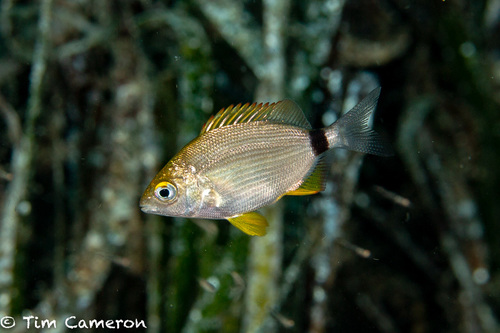
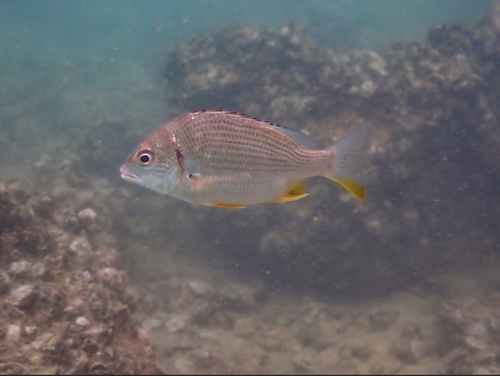
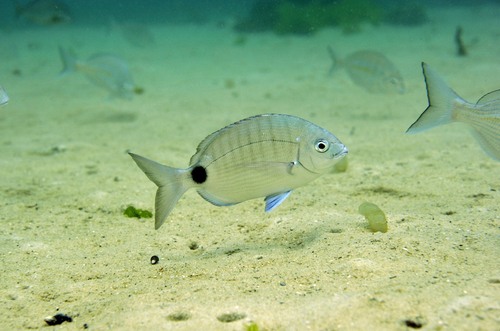
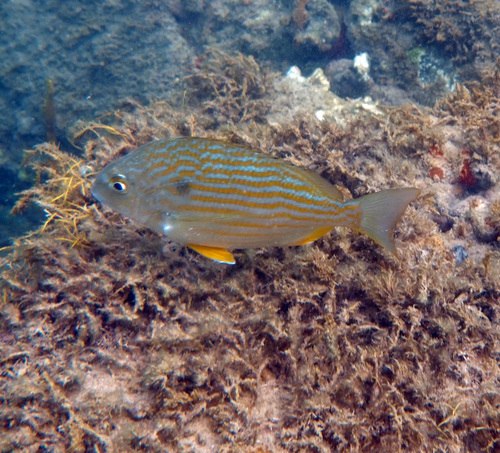
The Western Atlantic seabream, scientifically Archosargus rhomboidalis (Linnaeus, 1758), is similar to other species in its genus, including the sheepshead. It differs from related species by its smaller size, several horizontal blue streaks mixed with gold or yellow, and a dark spot at the shoulder. Like the sheepshead, it has vertical crossbars, but these bars disappear as the fish ages. The maximum published total length of this species is 33 centimetres (13 in), though most individuals grow to around 20 centimetres (7.9 in). The heaviest recorded specimen weighed 0.55 kilograms (1.2 lb). Western Atlantic seabream have nine spines and 10–11 soft rays on their dorsal fins. Their anal fins have three spines, and also 10–11 soft rays. The large intestine of the Western Atlantic seabream makes up approximately 90% of the total length of its digestive tract. Males and females can be distinguished by the color of their pelvic fins: males have partially or fully dark pelvic fins, while females have orange pelvic fins. This species occurs in the Western Atlantic Ocean, from waters off New Jersey and the northern Gulf of Mexico south to Argentina. Unusually, it is not found near the Bahamas, though it is present in many other areas of the West Indies. It is most commonly found in mangrove swamps, and on muddy or vegetated bottoms. It is occasionally encountered in brackish water, and over reefs located near mangroves. Western Atlantic seabream feed mainly on small benthic invertebrates including bivalves and crustaceans, as well as aquatic plants, and can live up to two years in the wild.